

- EC Issues Gazette for 297 Newly Elected MPs |
- 9-year-old boy beaten to death over betel nut theft in M’singh |
- BNP fast-tracks cabinet plans after resounding victory |
- Modi Calls Tarique, Pledges India’s Support |
Melting Glaciers Threaten Global Water Security
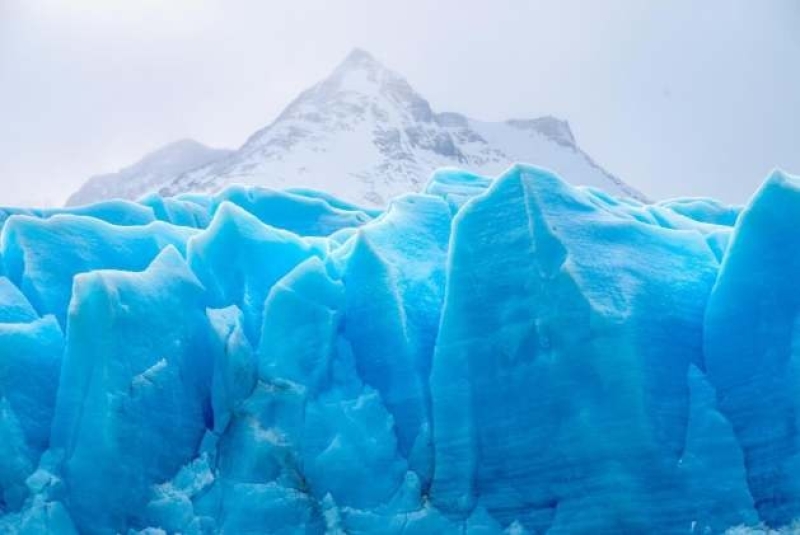
As glaciers shrink and vanish, changes in water flows pose a growing risk to the water, food and livelihood security of billions of people.
Glaciers, the world’s hidden water banks, are a source of life for billions. Seasonal melt from mountains and glaciers sustains some of the world’s most important rivers, including the Indus, the Nile, the Ganges and the Colorado. These and other mountain-fed rivers irrigate crops, provide drinking water for nearly two billion people, and generate electricity.
However, as glaciers shrink and disappear, changes in water flows pose a growing threat to the water, food and livelihood security of billions.
In the short term, accelerated melting can trigger environmental hazards such as flash floods, glacial lake outburst floods, avalanches and landslides.
In the long term, glaciers as water sources will simply vanish.
By the end of the century, most glaciers will contribute far less water than they do today, undermining agriculture in both mountain villages and vast lowland breadbaskets downstream.
Mountains cover more than a quarter of the world’s land and are home to 1.2 billion people. Yet these regions are warming faster than the global average. Mountain communities are especially vulnerable to increasing climate variability and declining seasonal water availability for agriculture and irrigation. With few viable alternative water supplies, reduced agricultural production can lead to climate displacement and greater instability.
Five of the past six years have recorded the most rapid glacier retreat on record, and the impacts are already being felt.
Communities from the Andes to the Himalayas are experiencing shorter snow seasons, erratic runoff and the loss of reliable water sources. In Peru, shrinking glaciers have reduced crop yields. In Pakistan, declining snowmelt threatens seasonal planting cycles. Many glaciers have already reached, or are expected to reach, “peak water” — the point at which meltwater runoff is at its maximum, after which flows gradually decline — within the next two or three decades. This means that those who depend on glacier-fed rivers will face increasing scarcity just as population growth pushes water demand even higher.
Beyond science and survival, the disappearance of glaciers erases something less tangible but equally profound. For Indigenous Peoples and mountain communities across Asia, Latin America, Africa and the Pacific, glaciers are sacred. Their melting erodes traditions, rituals, identities and cultural heritage tied to mountain landscapes for centuries.
Although there is still time to act, global responses remain fragmented and insufficient. That is why the United Nations declared 2025 the International Year of Glaciers’ Preservation — a reminder that protecting these frozen ecosystems means safeguarding our future.
To ensure food and water security from the peaks to the plains, a bold shift in policy, investment and governance is urgently needed.
Cutting greenhouse gas emissions, improving water management, and strengthening early warning systems, adaptive agriculture and sustainable agrifood systems are essential.
We must turn the challenges posed by melting glaciers into opportunities that benefit all.
Agriculture, both a major water user and a key sector for adaptation, can be part of the solution when developed sustainably. Techniques such as terrace farming, agroecology, agroforestry and crop diversification, practised by mountain communities for centuries, help preserve soil and water, reduce disaster risk and support livelihoods. These adaptation efforts must be inclusive, drawing on Indigenous knowledge and addressing root causes of vulnerability such as poverty and gender inequality.
Investment in water and agricultural infrastructure is also critical. This includes expanding climate finance to support vulnerable mountain communities that often struggle to access training, funding and innovation.
Governments must align strategies, policies and plans to address the crucial link between water, agriculture and climate resilience. Mountains are often absent from national climate policies and global adaptation frameworks. Greater cross-border cooperation, basin-wide water allocation strategies, infrastructure investment to improve water-use efficiency, and expanded glacier monitoring and research are essential, particularly as many glacier-fed rivers cross national boundaries.
Preparing for a world with fewer glaciers and less water demands innovation and coordination. In Kyrgyzstan, the Food and Agriculture Organization has supported the construction of artificial glaciers — ice towers created by spraying mountain water that gradually melts in summer. In the Batken region alone, this initiative has stored more than 1.5 million cubic metres of ice, enough to irrigate up to 1,750 hectares.
In Ladakh, India, the social enterprise Acres of Ice has developed automated ice reservoirs that capture unused water in autumn and winter and freeze it until spring. In the Peruvian Andes, a community-based initiative is addressing declining water quality caused by minerals exposed by retreating glaciers through natural filtration systems using native plants.
Yet far more must be done. Glaciers matter because water matters. Ignoring their rapid retreat risks global food and water security.