

- Bus plunges into Padma from pontoon at Daulatdia |
- Tree logging in Bangladesh has fallen in last two years: Study |
- Unsafe Food Kills 1.5 Million Yearly, WHO Warns Report |
- Masud Khan Appointed New BSEC Chairman in Shake-up |
- Verdict in Ramisa rape-murder case on June 7 |
US Officially Exits WHO, Citing Pandemic Management Failures
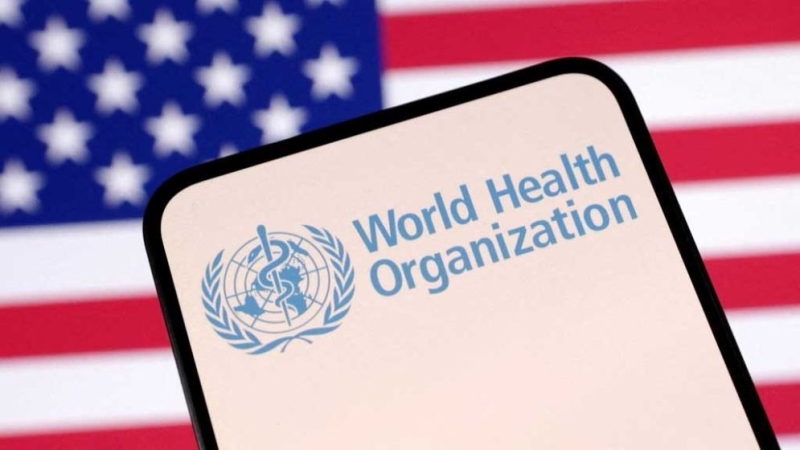
FILE PHOTO: World Health Organization (WHO) logo and US flag are seen in this illustration taken Apr 23, 2025.
The United States formally left the World Health Organization (WHO) on Thursday, ending decades of involvement and citing the UN health agency’s handling of the COVID-19 pandemic as a key reason.
President Donald Trump first announced the withdrawal on his first day in office in 2025 via executive order, warning that continued membership would harm both US and global public health. The US government said it will now work with other countries directly on disease surveillance and public health priorities rather than through WHO.
Under US law, a one-year notice and settlement of outstanding fees—estimated at $260 million—was required. Officials argued that the statute does not make payment a condition for departure, with the State Department saying, “The American people have paid more than enough.” Funding contributions to WHO have now ceased.
The exit has already caused visible impacts: the US flag was removed from WHO headquarters in Geneva, and the agency is facing a financial crisis, cutting management positions, scaling back operations, and planning to reduce staff by roughly a quarter. Washington has historically provided around 18% of WHO’s budget.
The move has sparked criticism from global health experts. WHO Director-General Tedros Adhanom Ghebreyesus and other officials have warned that US withdrawal risks weakening international disease detection, prevention, and response systems. Lawrence Gostin of Georgetown University called it “a clear violation of US law,” though he noted enforcement is unlikely.
Prominent figures, including Bill Gates, have urged the US to reconsider. Gates said, “The world needs the World Health Organization” and stressed the importance of American leadership in global health initiatives.
The departure will be discussed at WHO’s executive board in February, while questions remain over unpaid fees for 2024 and 2025 and the extent of future collaboration between the US and the agency. Experts warn that the withdrawal poses significant risks not only to global health coordination but also to public health security within the United States.