

- Bus plunges into Padma from pontoon at Daulatdia |
- Tree logging in Bangladesh has fallen in last two years: Study |
- Unsafe Food Kills 1.5 Million Yearly, WHO Warns Report |
- Masud Khan Appointed New BSEC Chairman in Shake-up |
- Verdict in Ramisa rape-murder case on June 7 |
Women Make Up Less Than 4% of Candidates in Bangladesh Polls
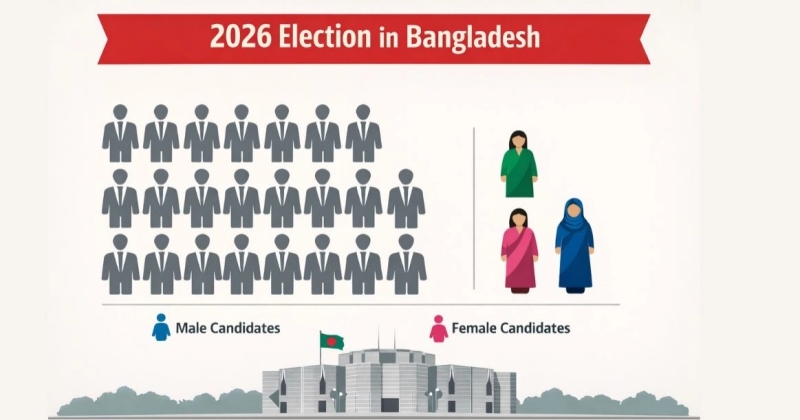
Despite decades of promises to empower women politically, female representation in Bangladesh’s upcoming national election remains critically low.
Of the 2,568 nomination papers submitted, only 109 were filed by women—just 4.24% of the total. Following scrutiny, the Election Commission (EC) validated 1,842 candidates, including 63 women, meaning women make up only 3.4% of final candidates. After appeals, the total number of contesting women rose slightly to 76 out of 1,981 candidates, or 3.84%.
Among 51 participating parties, over 30—including Bangladesh Jamaat-e-Islami—have failed to nominate any female candidates. BNP leads with 11 women candidates, while other parties fielded very few, and only five independent women’s nominations were accepted.
Transparency International Bangladesh notes women account for just 3.38% of party-affiliated candidates, though the share is slightly higher among independents at 10%.
Legally, the July 2025 National Consensus Ordinance required parties to nominate at least 5% women candidates, gradually rising to 33% in future elections. However, the rule remains non-binding, and historical participation has been consistently low: 3.51% in 2008, 5.55% in 2014, and 0.81% in 2018.
Human Rights Watch highlights that, despite Bangladesh’s history of female prime ministers and active participation of women in the 2024 student movements, political parties continue to exclude women from meaningful participation.
The Women’s Political Rights Forum has called for structural reforms to ensure women are integrated into leadership roles, stressing that nominating women should be treated as a constitutional duty rather than a token gesture. Forum leaders emphasized that nearly 51% of voters are women, making their exclusion from politics both unjust and strategically flawed.
The Social Resistance Committee, representing 71 organisations focused on women’s rights and development, echoed the call, warning that patriarchal norms and misogynistic political culture discourage women from contesting, particularly as independents. Both the committee and women’s forums urge parties and the EC to guarantee equal participation of women in elections to foster a truly democratic society.