

- ADB Approves $100m Loan for Affordable Housing in Bangladesh |
- No Respite From Poisonous Air: Radical Cure Urgent |
- Minimising The Energy Shocks In Bangladesh |
- How Bad Loans, Capital Erosion Pressure Banks In BD |
NASA-Backed Spacecraft Fails to Rescue Swift Telescope
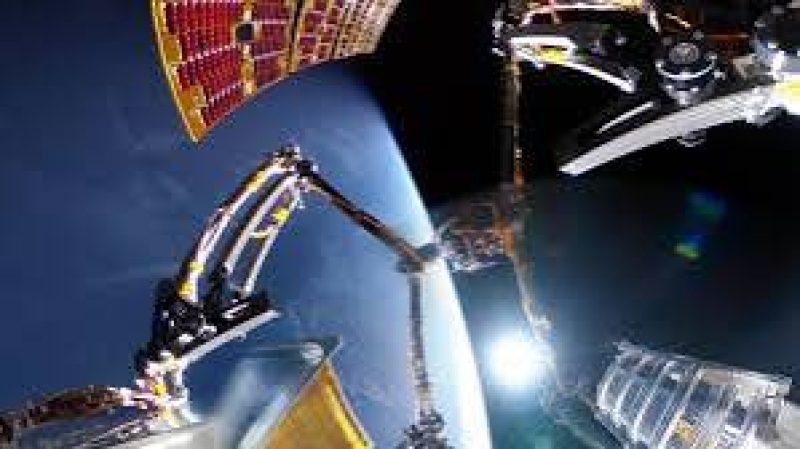
This undated image released by Katalyst Space Technologies on Friday, Sept. 25, 2026, shows Link, a three-armed robotic spacecraft, orbiting Earth.
A $30 million NASA-sponsored robotic spacecraft returned to Earth on Friday after failing to rescue the aging Swift Observatory, Katalyst Space Technologies announced.
The spacecraft, named Link, reentered Earth's atmosphere after its mission to extend the life of the $364 million space telescope was called off in August.
Launched on July 3, Link suffered electronic failures in two reaction wheels and valve problems that caused uncontrolled spins and disrupted communications. Mission controllers eventually regained control and successfully tested its three-foot robotic arms while operating within about 7 to 9 miles (12 to 15 kilometres) of Swift.
However, insufficient fuel ultimately forced NASA to abandon the rescue attempt.
Swift, a 22-year-old space observatory launched in 2004, was designed to detect gamma-ray bursts and other powerful cosmic explosions. Its orbit began deteriorating more rapidly after intense solar flares increased atmospheric drag.
NASA temporarily suspended Swift's observations to reduce drag and extend the observatory's remaining time in orbit. The agency expects Swift to reenter the atmosphere in early November.
NASA official Shawn Domagal-Goldman and Katalyst CEO Ghonhee Lee said the mission provided valuable experience in operating robotic systems near an aging satellite and could help lay the groundwork for future satellite-recovery missions.
Despite the failed rescue attempt, Swift has resumed observations during its remaining weeks in orbit as NASA works to address the potential loss of its scientific capabilities.