

- Monira Sharmin’s MP candidacy cancelled, 49 other women valid |
- No scope for money launderers to return to bank boards: BB |
- Six closed jute mills to reopen under pvt management in 6 months |
- Uncertainty over possible US-Iran talks as Trump extends ceasefire |
- Bangladesh eyes broader bilateral engagements with African nations |
Artemis Crew Nears Record Distance After Moon Flyby
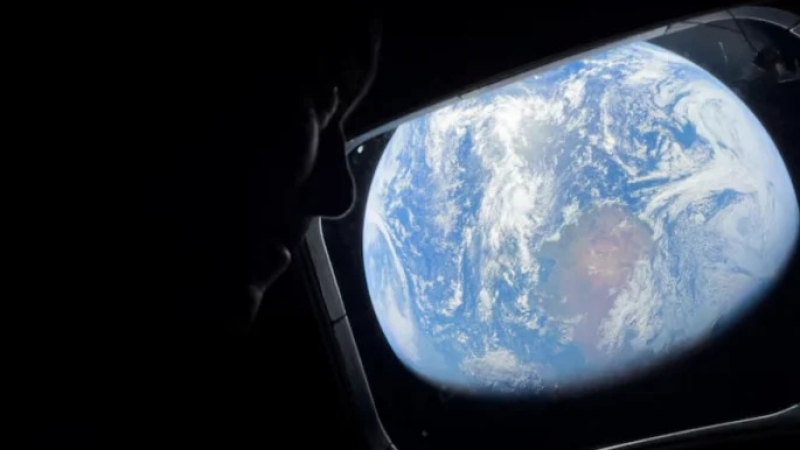
The four astronauts aboard NASA’s Artemis II mission entered the Moon’s gravitational sphere of influence early Monday as they moved closer to becoming the farthest-travelling humans in history.
Travelling in the Orion capsule since launching from Florida last week, the crew is expected to reach the mission’s maximum distance from Earth on Monday evening, at about 252,757 miles. That would place them 4,102 miles beyond the record set by the Apollo 13 crew more than five decades ago.
The crew includes NASA astronauts Reid Wiseman, Victor Glover and Christina Koch, along with Canadian astronaut Jeremy Hansen.
As they pass around the Moon’s far side, the astronauts are expected to view the lunar surface from roughly 4,000 miles above, with Earth appearing as a small distant sphere in the background.
The milestone marks a major moment in the nearly 10-day Artemis II mission, the first crewed test flight under NASA’s Artemis programme.
The mission is part of a long-term plan to return astronauts to the Moon before the end of the decade and establish a sustained human presence there, with future ambitions extending to Mars exploration.
The lunar flyby is expected to begin in the afternoon and will place the spacecraft in temporary darkness and brief communication blackouts as the Moon blocks contact with NASA’s Deep Space Network.
During the nearly six-hour flyby, the astronauts are expected to capture detailed images of the Moon through Orion’s windows, including rare views of sunlight filtering around the lunar edge.
They may also get a chance to photograph Earth rising above the lunar horizon as the spacecraft emerges from the Moon’s far side, offering one of the mission’s most dramatic visual moments.
Back on Earth, a team of lunar scientists at NASA’s Johnson Space Center in Houston will monitor the astronauts’ observations in real tim