

- PM Tarique inaugurates three pilot SDG villages |
- Indian High Commissioner Trivedi meets PM Tarique |
- SSC, Equivalent Exam Results Published, Pass Rate 62.25% |
- Global Oil Prices Rise Again Amid Hormuz Uncertainty |
- 17 Bangladeshis Killed in Saudi Arabia Factory Fire |
Nearly 700,000 Displaced in Lebanon as War Escalates
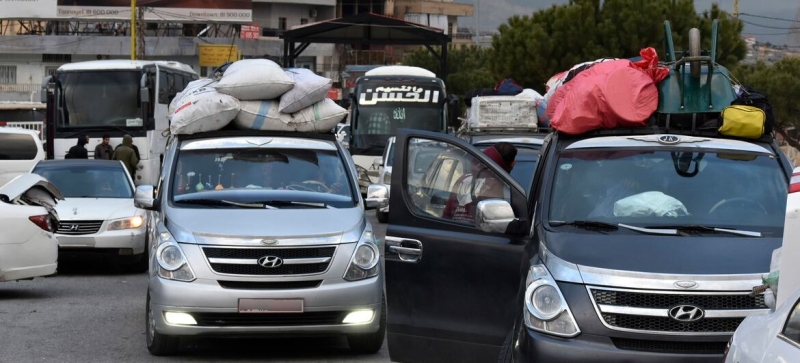
People gather at the Masnaa border point in Lebanon as they wait to cross into Syria.
On the tenth day of the war engulfing the Middle East, UN agencies on Monday reported massive displacement across the region, along with surging food and fuel prices that risk increasing hunger and suffering for the most vulnerable.
In Lebanon alone, nearly 700,000 people, including around 200,000 children, have been forced from their homes, “adding to the tens of thousands already uprooted from previous escalations,” the UNICEF said.
The development follows a weekend of escalating strikes by Israel and the United States against Iran, counter-strikes by Iranian forces across Israel, and explosions in several Gulf states, along with Israeli attacks targeting Hezbollah positions in Lebanon.
Heavy toll
In its latest update, the United Nations Office for the Coordination of Humanitarian Affairs (OCHA) said that 294 people had been killed in Lebanon and more than 1,000 injured during the first eight days of the war.
On Saturday, 7 March, 41 people were killed in a single Israeli operation in the town of Nabi Sheet in eastern Lebanon, which also left dozens wounded, OCHA said, citing Lebanese authorities.
In addition to intensified airstrikes across several governorates, the office noted that Israeli evacuation orders had been issued again for areas south of the Litani River. It was also the second evacuation warning for the southern suburbs of Beirut since the war began.
Civilian toll mounts
Over the weekend, Israeli health authorities reported that around 2,000 people have been injured in Israel since the conflict erupted on 28 February. One person was also killed when a missile landed in central Israel on Monday.
Iranian authorities said at least 1,330 civilians had been killed amid ongoing Israeli and US strikes. Meanwhile, officials in Bahrain reported that more than 30 people were injured in an Iranian drone attack early Monday. Authorities in Qatar also condemned the killing of two civilians in Saudi Arabia.
Growing humanitarian concerns
Echoing concerns across the international community, the UN’s top aid official Tom Fletcher warned of wider impacts in countries including Afghanistan and Pakistan, where humanitarian needs were already severe.
He also warned that attention to ongoing crises in Sudan, South Sudan and Ukraine risks slipping further as the Middle East war dominates global attention.
Strait of Hormuz crisis
Rising fuel prices linked to higher oil costs reflect deep economic uncertainty caused by the war. UN agencies warned of severe global supply chain disruptions affecting shipping, energy and fertiliser markets.
Attacks on vessels in the Strait of Hormuz have nearly halted trade through the narrow waterway, which carries almost one-fifth of global oil shipments.
On Friday, at least four seafarers were killed and three severely injured when their vessel was attacked in the strait. Drone strikes on ports in Oman have also raised security concerns and increased shipping costs.
According to the International Maritime Organization, about 20,000 seafarers remain stranded in the Persian Gulf.
Food security concerns
The World Food Programme (WFP) warned that the conflict is already affecting food security across the Middle East. A significant portion of the global fertiliser supply passes through the Strait of Hormuz, making any disruption a risk for lower crop yields and higher food prices worldwide.
The agency also highlighted existing food insecurity in Lebanon and Iran, where many households have limited capacity to cope with further economic shocks.
In Gaza Strip, food prices rose sharply after the closure of key aid crossing points from Israel. Although the Kerem Shalom Crossing has since reopened, prices remain high.
WFP warned that without consistent access, it may have to cut food rations to just 25 percent of daily requirements for around 1.3 million people.
To maintain aid deliveries despite disruptions, the agency and its partners are increasingly using alternative supply routes through Türkiye, Egypt, Jordan and Pakistan, as well as overland transport from the United Arab Emirates to the eastern Mediterranean region.
WFP also said its humanitarian logistics hub in Dubai remains operational despite disruptions to flights and shipping.