

- Mild cold wave sweeps parts of Bangladesh: Met Office |
- Saturday’s EC hearing brings 51 candidates back to election race |
- Food, air, water offer Dhaka residents few safe choices |
- Tarique Rahman Formally Named BNP Chairman |
- 136 new drugs in 195 essential drugs list, pricing guidelines |
Iran Cut Off as Leader Warns Protesters Amid Unrest
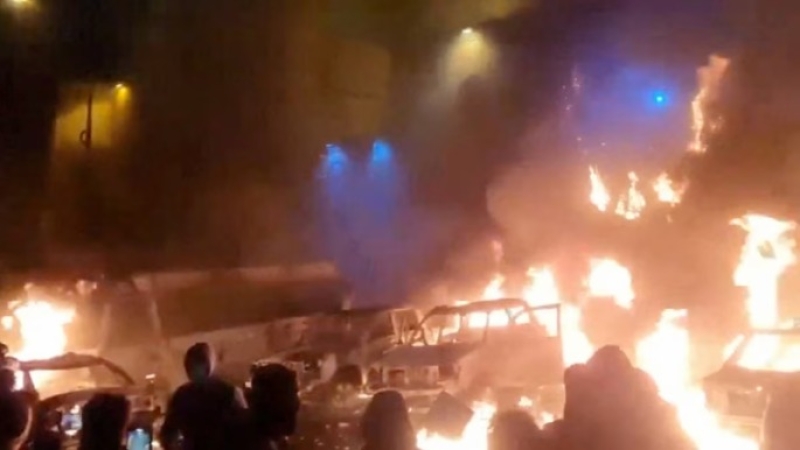
Protesters gather as vehicles burn, amid evolving anti-government unrest, in Tehran, Iran, in this screen grab obtained from a social media video released on 9 January 2026.
Iran was largely cut off from the outside world on Friday after authorities shut down internet access in an apparent bid to curb widening protests, leaving international phone calls unreachable, flights cancelled and local news sites updating only intermittently.
Supreme Leader Ayatollah Ali Khamenei accused protesters of serving foreign interests, alleging they were acting on behalf of US President Donald Trump. He warned that the state would not tolerate what he described as attacks on public property by “mercenaries for foreigners”.
The unrest, which began late last month over soaring inflation and a sharp economic downturn, has escalated into the largest wave of protests in three years. Demonstrations have been reported across all provinces, with rights groups documenting dozens of deaths during the crackdown.
Opposition figures outside the country urged further protests, calling on Iranians to continue demonstrations as images of burning buses, cars and buildings spread online. State television broadcast footage of fires at metro stations, banks and shops, blaming the violence on opposition groups, including the People’s Mujahedin Organisation.
In one northern city, a state television reporter described scenes resembling a war zone, saying widespread destruction had left shops in ruins.
Although Iran has weathered larger protests in the past, the current unrest comes amid severe economic strain and renewed international pressure following the reimposition of global sanctions over its nuclear programme. A European diplomatic source urged Tehran to show maximum restraint.
The protests have not yet matched the scale of nationwide demonstrations in late 2022 over women’s rights following the death of Mahsa Amini in custody, but they represent the most serious internal challenge since then.
Authorities have adopted a dual approach, acknowledging economic grievances as legitimate while condemning violent acts and deploying security forces to restore order.
While early demonstrations focused on inflation, currency collapse and rising living costs, slogans have increasingly targeted the leadership, with chants such as “Death to the dictator” heard in several cities. Most protesters seen in circulating videos appear to be young men.
The communications blackout continued overnight, with international calls failing to connect and multiple flights between Iran and regional hubs cancelled.