

- 13-Year-Old Apratim’s Death Leaves Cumilla in Grief |
- Iran Sets 3 Conditions to End War and Resume US Talks |
- PM Urges World Leaders to Work Together to Achieve SDGs |
- ‘Violence will only defer a problem’: UN Assembly President |
- Ninth Pay Scale Gazette Issued, Higher Salaries From July |
The Race to Build a Pandemic-Proof World
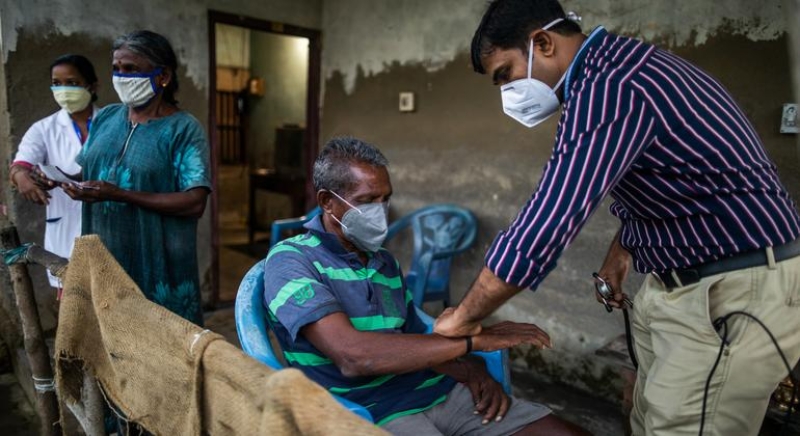
A man in Kerala in India has his vitals checked before receiving a COVID-19 vaccination in July 2021. (file)
Six years after COVID-19 killed millions, overwhelmed health systems, disrupted daily life and brought the global economy to a near standstill, the world is still working to prepare for the next pandemic.
The need has become even more urgent as emerging infectious diseases, climate-related crises and conflicts pose growing threats to global stability and security.
What Happened?
More than seven million people died from COVID-19, according to the World Health Organization (WHO).
The pandemic did far more than claim lives. It disrupted economies and health systems worldwide while exposing stark inequalities in access to vaccines, tests and treatments between richer and poorer countries.
UN Secretary-General António Guterres described the global response as a “story of human ingenuity and human failure”. Vaccines were developed at unprecedented speed, but inadequate preparedness meant that vulnerable populations often had the least access to essential healthcare.
Why It Matters
Viruses do not respect borders. An outbreak detected in one country can spread rapidly across the world, putting populations everywhere at risk.
That makes disease surveillance, data sharing, research and development, and equitable access to vaccines, diagnostics and treatments international priorities.
Human, animal and environmental health are also increasingly viewed as part of one interconnected system. More than 60 percent of emerging infectious diseases are estimated to originate in animals, making surveillance at the human-animal-environment interface critical to preventing future outbreaks.
The Equity Gap
COVID-19 exposed major inequalities in access to vaccines, tests and treatments. Countries with greater manufacturing capacity were generally better positioned to secure supplies than poorer nations.
But the equity challenge extends beyond vaccines, therapeutics and diagnostics. It also involves fair access to expertise, resources, technology and financing.
Closing these gaps is central to treating pandemic prevention, preparedness and response as a shared international responsibility rather than a purely national concern.
A Global Pandemic Agreement
The COVID-19 pandemic served as a wake-up call for the international community.
Global cooperation is essential to preventing and responding to future pandemics. As Guterres has warned, the world must avoid repeating the mistakes of the past and work together before the next pandemic strikes.
There has been progress. The WHO Pandemic Agreement, the first binding global accord focused on pandemic prevention, preparedness and response, was adopted in May 2025.
However, adoption was only the beginning.
Countries still need to agree on the Pathogen Access and Benefit-Sharing (PABS) annex, which would establish a mechanism for sharing pathogen samples while helping ensure that countries in need can access vaccines, diagnostics and treatments developed from them.
Negotiations on the annex are advancing. Once it is adopted by the World Health Assembly, the agreement can open for signature and national ratification. It requires 60 ratifications to enter into force.
The agreement also provides for a global supply chain and logistics network to help deliver medical supplies during emergencies, along with a coordinating financial mechanism to support countries in strengthening their pandemic prevention, preparedness and response capacities.
What Needs to Change?
To prepare more effectively for the next pandemic, the international community needs to focus on four key areas:
Preventing outbreaks before they begin and containing them before they spread
Strengthening preparedness by ensuring adequate capacities, resources and research and development
Building a stronger response that maintains essential health services during emergencies
Expanding surge and manufacturing capacity across regions while developing sustainable supply chains
All of these efforts depend on sustainable and predictable financing, as well as a legal framework for international coordination and cooperation.
This Week at the UN
The 193-member UN General Assembly is scheduled to hold a high-level meeting on pandemic prevention, preparedness and response on September 25, 2026.
World leaders will gather at UN Headquarters in New York to discuss global coordination, financing and equitable access to medical supplies.
A political declaration aimed at securing new commitments is expected from the meeting.
What Next?
The timing of the next pandemic cannot be predicted, making preparation essential.
The experience of COVID-19 showed that preparedness cannot begin only after hospitals are under pressure. It must continue between pandemics through stronger health systems, early-warning systems, international cooperation and equitable access to the tools needed to protect people.
In a connected world, strengthening preparedness in one country can help protect people everywhere.
Source: UN News