

- Two-day ‘Nazrul Dance Festival 2026’ underway at BSA |
- MPO-listed teachers’ eligibility for local polls rests with EC: Shahe Alam |
- How Ganges Treaty 1996 Missed Guarantee, Arbitration Clauses |
- Saudi Arabia, Houthis trade strikes over Bab al-Mande |
- Iraq seizes drone-launching pad used targeting Saudi oil pipeline |
Healthcare Must Identify Diseases Before They Become Severe: Zubaida
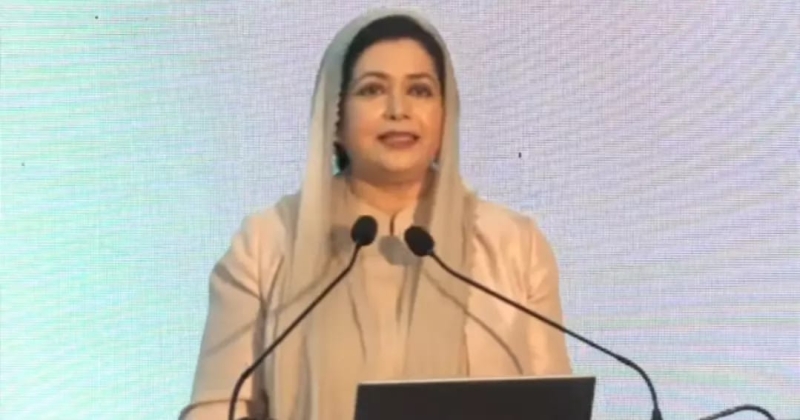
Renowned cardiologist and Ziaur Rahman Foundation (ZRF) Vice President Dr Zubaida Rahman has said the healthcare system must identify health risks and diseases before they become severe, stressing that healthcare is a basic human right, not a privilege.
“Our healthcare system cannot be built around treatment alone. We often say prevention is better than cure, and that remains true. The healthcare system must identify risks and diseases before they become severe,” she said.
Zubaida made the remarks while addressing a special international seminar titled “Health Innovation for All: Expanding Access to Affordable and Inclusive Care” as the chief guest on Sunday.
The seminar was held on the second day of the three-day Bangladesh Innovation Fair 2026 at Novo Theatre in Agargaon, Dhaka.
The session focused on technology-driven approaches to delivering modern healthcare at affordable costs to marginalised communities.
Zubaida said the sophistication of hospitals or advancement of technology alone could not determine the quality of healthcare in a country.
She said many people reach specialist hospitals only after their conditions have become complicated, while patients often travel long distances because essential services are unavailable closer to their homes.
“Modern tertiary healthcare has also become extremely expensive. But this is not only the case in Bangladesh; many advanced countries are facing this worldwide,” she said.
The ZRF vice president said healthcare should be made accessible even in the remotest villages of Bangladesh.
“We want to make healthcare accessible to the remotest villages of our country. More than 90,000 villages in our country should receive accessible healthcare for every citizen of Bangladesh,” she said.
Zubaida called for strengthening dengue awareness programmes and encouraging measles vaccination to ensure that no one is left unprotected.
Describing cardiovascular diseases as a major cause of disability and death in Bangladesh, she said simple preventive lifestyle measures, combined with quality treatment facilities, could significantly improve the situation.
She also called for extensive cancer awareness programmes.
Regarding diabetes, she said that although Bangladesh has internationally reputed healthcare institutions and expertise, many people continue to live with the disease without knowing they have it.
Zubaida stressed that every screening programme should be linked to confirmatory diagnosis, counselling, treatment, medication, monitoring and referral services.
She said Bangladesh could also begin preparing for the healthcare needs of an ageing population, including dementia, Parkinson’s disease and other geriatric conditions.
The cardiologist said the country’s health vision should be based on the principle that quality healthcare must not be determined by income, location or social status.
“It should be accessible to every citizen in every part of Bangladesh,” she said.
She called for strengthening primary healthcare, bringing services closer to people’s homes, expanding preventive programmes, developing the health workforce and gradually increasing public investment in health to 5 percent of gross domestic product.
“The planned recruitment of 100,000 health workers, particularly, gives an opportunity for women and can create the human foundation for this transformation,” Zubaida said.
She said these health workers could support screening, maternal and child healthcare, health education, chronic disease management and community-level referrals.
“In our country, women travel miles in inadequately equipped transport in the late stages of pregnancy or in cases of preeclampsia. Prematurely born babies have no proper facilities to thrive,” she said.
She stressed the need for a smooth referral system to transfer patients from community and primary healthcare facilities to district and specialist hospitals.
The ZRF vice president also called for a nationally coordinated system for voluntary blood donation, safe collection, infectious disease screening, component separation, storage, transportation and complete traceability from donor to patient.
“We need to move towards establishing a national plasma transport technology,” she said.
Zubaida said innovation would be central to these efforts, but innovation did not always mean inventing an expensive machine or launching another application.
“The most valuable innovation is the one that solves a real problem for patients around the country,” she said.
She noted that Bangladesh already has many of the institutions needed to transform the healthcare system.
“We have respected researchers, a strong pharmaceutical base, experienced clinicians, expanding digital capability, community-level organisations, and an energetic generation of entrepreneurs,” she said, adding that what was often missing was coordination among them.
The ZRF vice president said research could connect with validation, validation with regulation, regulation with responsible procurement, and innovation with service delivery.
She said Bangladesh’s innovative capacity could be connected with an inclusive national healthcare system that detects illnesses earlier, brings care closer to home, ensures safe treatment and protects families from financial hardship.
“Let us use this innovation fair not only to discuss what is possible, but to agree on what we will begin doing now,” she said.
The three-day fair, being held under the theme “Innovate to Market”, will end on Monday.
Prime Minister Tarique Rahman inaugurated the event on Saturday, with research teams from universities and research institutions across the country participating alongside innovators.