

- Bangladesh Scales Up Disaster Preparedness Amid Rising Risks |
- Tarique Calls for Deeper Cooperation in Bay of Bengal |
- Dhaka Third Most Polluted City in World on Saturday |
- G7 countries to release 100 million barrels of oil and diesel as fuel prices surge |
- PM Tarique Rahman Joins Bay of Bengal Conversation |
Tarique Calls for Deeper Cooperation in Bay of Bengal
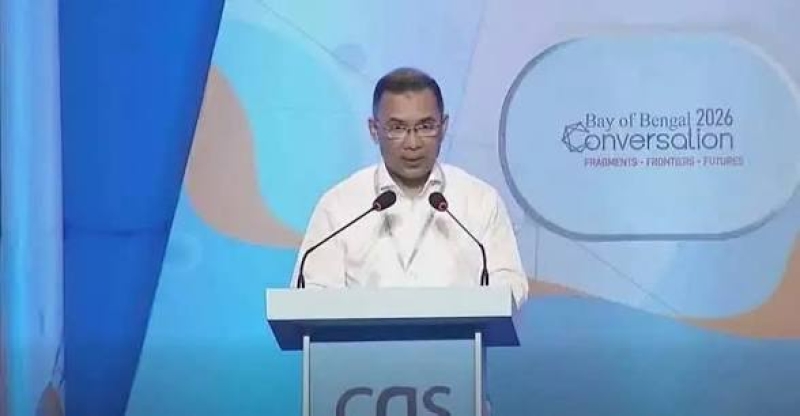
Prime Minister Tarique Rahman on Saturday called for deeper regional cooperation in trade, energy, technology, climate and maritime affairs to turn the Bay of Bengal into a region of shared prosperity.
“Let the Bay of Bengal become a region where nations grow together, embrace mutual and reciprocal benefits, and citizens expand meaningful cooperation,” he said while inaugurating the fifth Bay of Bengal Conversation 2026 at the Pan Pacific Sonargaon Hotel in Dhaka.
The three-day conference, organised by the Centre for Governance Studies (CGS), is being held from October 3 to 5 under the theme “Fragments, Frontiers and Futures: Navigating Power, Technology and Trust in a World Rewritten.” The event brings together more than 200 speakers, over 300 delegates and more than 1,000 participants from more than 100 countries.
The Prime Minister said Bangladesh’s strategic location, ports, waterways and coastal economy offer significant opportunities to connect the country with the wider world through shipping, fisheries, tourism, energy and regional supply chains.
“Regionally, our shared geography should become a shared prosperity,” he said, stressing the need for deeper bilateral and multilateral engagement.
Tarique said Bangladesh could expand cooperation with regional and global partners in trade, energy, education, technology, climate and maritime affairs while opening new markets and creating more opportunities for young people.
“We can build stronger cooperation based on equality, fairness and justice. Geography has brought us together; and we are confident that people-to-people ties can take us further,” he said.
The Prime Minister said Bangladesh believes in dialogue, partnership and mutual respect and would protect its national interests and sovereignty while working positively with regional and global partners.
“Because peace and harmony are the foundation of shared prosperity and development,” he said.
In his address, Tarique also outlined his government’s five-year priorities, saying Bangladesh was moving “from commitment to implementation” with a focus on national interests, policy continuity, economic stability and institutional reform.
He said the government was working to make Bangladesh an attractive destination for investment and a strong manufacturing and investment hub, with a focus on creating jobs in production, services and exports.
Tarique highlighted social protection initiatives, including the Family Card, Farmer’s Card, Health Card and an eventual Universal Card to provide integrated access to public services.
On healthcare, he said the government was working to employ 100,000 healthcare workers, around 80 percent of whom would be women, to provide basic care, health advice and referrals at the community level.
He said the government was also focusing on maternal and child healthcare and expanding access to education, including free uniforms, school bags, midday meals and scholarships from Class One.
The Prime Minister described Bangladesh’s young population as a major national asset, saying the demographic dividend could be converted into development through skills and employment.
“We are embracing technological changes and artificial intelligence, while promoting language skills and employment pathways,” he said, adding that the government was supporting innovation, entrepreneurship and start-ups.
“We want our youth to compete globally and turn ‘brain drain’ into ‘brain circulation’,” he added.
On agriculture and climate resilience, Tarique said the government was improving farmers’ access to technology, irrigation, finance and markets while supporting fisheries, livestock and rural enterprises.
He said Bangladesh planned to dig 20,000 kilometres of canals and waterways over the next five years, advance the Padma Barrage project and develop a Teesta Master Plan.
Tarique also announced a target of planting 250 million trees over five years and said Bangladesh was expanding solar energy, waste recycling and green factories.
On governance, the Prime Minister said development required strong institutions, with transparency and accountability, human rights, democratic principles and freedom of expression protected.
“The rule of law must apply equally to every citizen,” he said.
On the Rohingya crisis, Tarique said Bangladesh continued to host around 1.2 million refugees and remained committed to their early, voluntary, safe, dignified and sustainable repatriation to Myanmar.
“This requires sustained political support and global finance. It also requires addressing the root causes of the crisis, which started in Myanmar and must end in Myanmar,” he said.
The Prime Minister reiterated Bangladesh’s readiness to play its part in promoting cooperation in the Bay of Bengal and beyond.
The programme includes public sessions such as plenaries, leadership forums and spotlight talks, as well as smaller invitation-only roundtables for in-depth discussions.
Discussions at the conference are focusing on geopolitics and security, technology, trade and connectivity, climate change, human security, democracy, governance, trust, spirituality and humanity. Notable participants include former Serbian President Boris Tadić, former Malian Prime Minister Moussa Mara and former Maldivian President Mohamed Nasheed.