

Saturday, October 3, 2026
News update
- Tarique Calls for Deeper Cooperation in Bay of Bengal |
- Dhaka Third Most Polluted City in World on Saturday |
- G7 countries to release 100 million barrels of oil and diesel as fuel prices surge |
- PM Tarique Rahman Joins Bay of Bengal Conversation |
- Journalist Toufique Imrose Khalidi Dies at 59 |
Dhaka Third Most Polluted City in World on Saturday
Staff Correspondent:
Air
2026-10-03, 9:56am
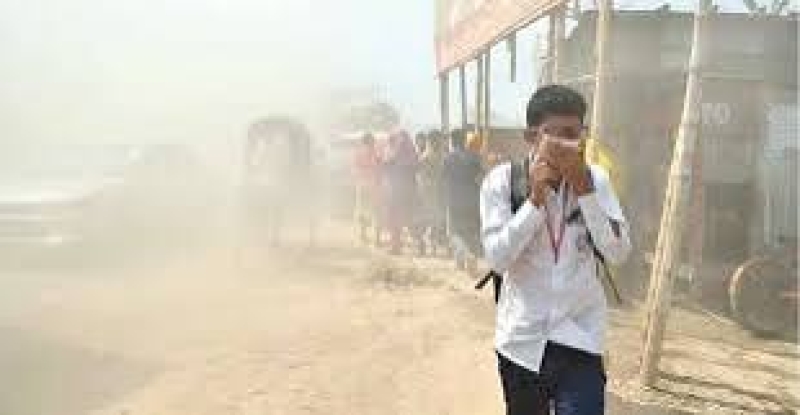
Dhaka ranked third among the world’s most polluted cities on Saturday morning, recording an Air Quality Index (AQI) of 170 at 9:14am.
The city’s air was classified as “unhealthy”, indicating a potential health risk, according to the AQI reading.
Pakistan’s Lahore topped the list with an AQI of 214, followed by India’s Kolkata at 190. Delhi ranked fourth with an AQI of 168.
According to the AQI scale, readings of 50–100 are considered “moderate,” while 101–150 is classified as “unhealthy for sensitive groups.” AQI levels of 151–200 are considered “unhealthy,” 201–300 “very unhealthy” and readings above 301 “hazardous,” posing severe health risks.
The AQI provides information on how clean or polluted the air is and indicates potential health effects. In Bangladesh, the index is calculated based on five major pollutants: particulate matter (PM10 and PM2.5), nitrogen dioxide (NO2), carbon monoxide (CO), sulfur dioxide (SO2) and ozone.
Dhaka has long faced persistent air pollution, with air quality generally deteriorating during the winter months and improving during the monsoon.
The World Health Organization estimates that air pollution causes around seven million deaths worldwide each year, primarily through diseases such as stroke, heart disease, chronic obstructive pulmonary disease, lung cancer and acute respiratory infections.