

- Dhaka Wants Conducive Environment For PM Tarique’s India Visit |
- Healthy Diet Becomes Costlier Although Hunger Eases |
- Biodiversity Still at Breaking Point; With It Our Survival |
- The Fight To Preserve Indigenous Languages |
- Glacial collapse cause mudslide-flood on China Nepal borders |
Why Shibir's landslide victory didn't translate to success for DUCSU
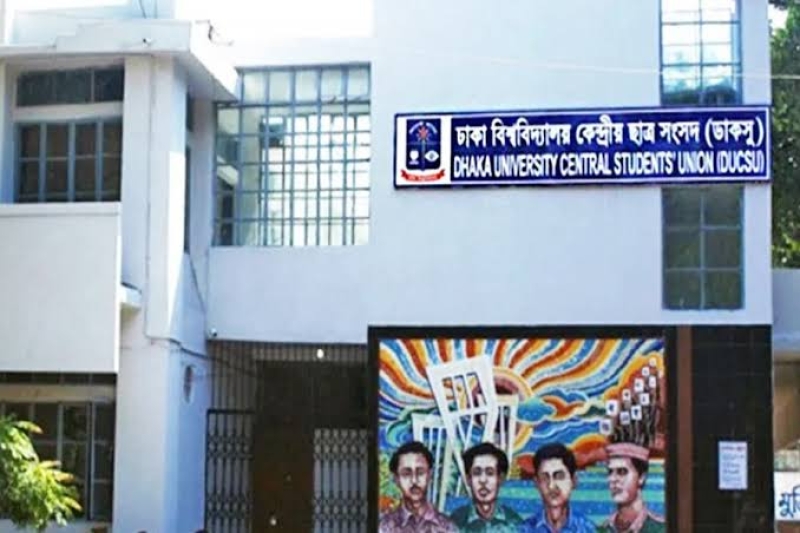
After the July mass uprising in 2024, the election for Dhaka University Central Students’ Union (DUCSU) was another significant demand for the students of Dhaka University as the official student body was ineffective for the last many years. Students thought, if DUCSU becomes effective, then their demands will meet reality and the persisting crisis will be solved.
However, even after getting an elected DUCSU committee through an exciting and hard-fought election in September 2025, the university still remains plagued with many of its old problems including accommodation crisis, unhealthy and tasteless food in canteens, and a lack of comprehensive security on campus.
In the election held last September, an Islami Chhatra Shibir-backed panel caused a storm by winning 25 out of 28 posts up for grabs - an unprecedented mandate for the student wing of the Jamaat e Islami. The panel presented a comprehensive manifesto before the election including a safe campus for female students, solutions to the accommodation crisis, and ensuring healthy food and many others.
However, many students are saying now that the panel failed to fulfill their promises. Each of the three major crises still persist at the university.
Recently, rubber band, earthworm, cockroach, blade and insects have been found in food served in various halls’ canteens in the university. The students are saying that consuming such poor quality food not only makes them sick but also puts them at risk of long-term malnutrition.
Though the head of canteens at the university blamed inflation as the cause of these occurrences, according to the students, poor service, lack of proper supervision and lack of accountability are the main reasons.
Visits to the different canteens by UNB’s campus correspondent revealed that the cooking environment is damp and unhygienic in almost all of the hall canteens. Besides, low quality ingredients are purchased and tasting salt is used in curry - a practice that is frowned upon.
The elected DUCSU panel promised to ensure safe and healthy food, introduce low-cost nutritious menus in halls and cafeterias under the supervision of nutritionists and conduct food quality checks every three months, as well as establishing quality cafeterias and canteens in every hall and introducing ‘Meal Vouchers’ provided by the administration for financially struggling students. Yet, these promises have not been fully met. Although the hall unions often monitor the canteens, the food crisis is a burning issue in the campus.
Noby Hossain Majumdar, a resident student of Surja Sen Hall said, “Despite DUCSU’s commitments to ensure safe and healthy food for students, the situation in the hall canteens remains largely unchanged. The food served in the hall canteens is often of such poor quality that students have little choice but to eat it because of limited affordable alternatives. We have repeatedly found insects and other unhygienic materials in our meals.”
Accommodation crisis
The panel led by Shadik Kayem and S.M. Forhad, who revealed themselves as the leaders of Shibir’s clandestine organisation at DU following the July Uprising of 2024, pledged to initiate the construction of new halls as part of a permanent, long-term solution to the students’ accommodation crisis. In the short term, they planned to arrange hostels or monthly housing allowances in coordination with the university and private institutions. In reality, they’ve been able to do neither.
Currently, more than 53 percent of Dhaka University students are deprived of resident status. Furthermore, the accommodation crisis is more acute in the female halls. There are just five halls for female students, even as female students outnumber their male counterparts in recent years.
A first-year student attached to Rokeya Hall, Rokhaiya Rakhi, said, “It has been four months since our academic activities started. Still, I have not been allotted a seat. That’s why I have to stay in my relative’s house in Uttara Sector 18 and it is costly and time consuming to commute from there to the campus. It’s also difficult to concentrate on academics while staying at someone else’s house for so long.”
Earlier, a group of students had protested, held human chains, and submitted memorandums to the university authority demanding the resolution of the accommodation issue, while seeking monthly housing allowances for a temporary solution. DUCSU was vocal regarding these issues also. But the demands are yet to be met.
Female students’ safety and security
The Shibir-backed panel’s manifesto for the DUCSU election mentioned that a safe campus would be ensured for the female students. And in fact, the panel’s landslide in the elections was driven to a large extent by a huge swing towards it in female votes. Women, it was said, felt voting for the Shibir-backed panel would be a vote for a secure campus.
This too has failed to materialise, as the female students still face various problems on campus.
Nishat Anjum Fima, a student from Shamsun Nahar Hall, said the DUCSU committee has been taking some initiatives, but these can't be said to be entirely fruitful. Some initiatives like establishing separate 'female zones' on campus failed to make students feel safe - they rather saw it as part of a hidden agenda, or shying away from the problem rather than confronting it.
According to Fima, a female student’s sense of security depends on whether she feels she can move safely around campus, whether she can rely on getting prompt justice if harassed, apart from availing her basic rights. .
Fima said, “Can it be considered as actual security when it shrinks the freedom of movement for the female students in the name of security? Besides, sufficient and safe toilets in campus, healthy environment for female students and effective measures against sexual harassment allegations are important.”
“It is a matter of disappointment to me that after assuring female safety, in many cases, restrictions are imposed on females rather than solving the main problems. A safe campus should be where a female student is not forced to compromise her free movement to be safe,” she added.
According to her, the DUCSU leadership was sincere in trying to achieve this goal, but they fell short. They could not convert their promises into real transformational outcomes.
Lesser promises unmet
Before the election, the Shibir-backed panel had also pledged to take measures to prevent sound pollution on campus, introduce a staff training system, control outsiders’ access to the campus and to implement a more effective teacher evaluation system. Most students UNB spoke to for this story said they are no closer to any of these pledges being met today than they were a year ago.
‘Administrative noncooperation stalled DUCSU initiatives’
Against these complaints, DUCSU leaders claim that although they had prepared and arranged funding for several projects aimed at addressing students’ various problems, those initiatives could not be implemented due to the university administration’s lack of cooperation. They have alleged that the administration failed to cooperate on initiatives to ensure the safety of female students, addressing accommodation issues, controlling outsiders on campus, introducing a teacher evaluation system and ensuring food quality.
Regarding the safety of female students, DUCSU General Secretary (GS) S. M. Farhad said they had considered campus security as a comprehensive issue. To that end, they developed an integrated security model that included regulating campus vehicles, introducing a fixed fare chart, preparing a list of rickshaws and specifying uniforms for drivers. The proposal was discussed with the administration in several phases. According to Farhad, all preparations had been completed around seven months ago, but the project was stalled for unknown reasons.
“We also discussed the issue with relevant officials of the interim government, and a decision was reached to provide at least 100 Ansar personnel and the necessary number of police members for DU. But after the change of government, there has been no further progress on that plan. The list of rickshaws was prepared, drivers were interviewed, and the fare chart and uniforms were finalized. Despite everything being ready, the initiative could not be launched due to a lack of administrative cooperation,” Farhad said.
He claimed the initiative, if implemented, would have significantly improved campus security by bringing outsiders and vehicles under greater control.
DUCSU also undertook a separate project to improve security inside the female residential halls. Its proposal was to install digital entry-exit gates in each hall. Under the system, residential students, relevant staff members and designated individuals would be allowed to enter easily, while others would require permission from the provost. When the university informed DUCSU about a shortage of funds, the student body arranged sponsors for the project as well. A meeting attended by the provosts of the five female residential halls and the then pro-vice-chancellor decided to implement the project, and a written resolution was also adopted. However, the initiative was later abandoned due to a lack of interest from the provosts.
Farhad said, “If this digital entry-exit system had been introduced, many of the existing restrictions on the timing of female students’ entry into and exit from the halls could also have been reduced significantly. Students would have been able to enter their halls safely 24 hours.”
DUCSU has also accused the administration of delaying the implementation of a teacher evaluation system. According to DUCSU, the final questionnaire was then approved by the Academic Council and sent to the Pro-Vice-Chancellor (Academic) for implementation. However, after the appointment of a new pro-vice-chancellor, letters were sent to the departments again seeking their opinions, further prolonging the entire process. The DUCSU GS said, “It was supposed to be implemented another month ago. Even after being finalized by the Academic Council, it has now been sent back to the departments again.”
DUCSU has raised a similar complaint over food quality. Concerned about the poor quality of food served at halls and campus canteens, it proposed regular food testing in cooperation with the food safety authorities and quality assessments by nutritionists. DUCSU claimed that it had sought permission to conduct regular testing at every canteen even through its own funding, but the administration did not approve that proposal either. Later, at a meeting with the university administration, a commitment was made to form a food safety team within one month, but the initiative was not implemented even after the deadline.
Even after securing an allocation of Tk 2 crore for the Central Field, work has not begun. To address the accommodation crisis, a major Tk 2,841 crore project was approved after prolonged efforts and was eventually inaugurated, but it was later delayed following a decision by the new administration. If implemented, the project could have reduced a major portion of the university’s accommodation crisis within the next few years, is the view of the DUCSU committee.
Farhad said, “It is the administration’s responsibility to cooperate with us, and it is our responsibility to cooperate with the administration. The target should be to work for the welfare of the students. But we did not get that cooperation - we have been facing challenges at every step.”
He alleged that, in many cases, instead of extending spontaneous cooperation to the projects undertaken for students, the administration was creating obstacles to their implementation, reports UNB.
“Their project seems to be to let DUCSU fail. Whether the students’ welfare is served or not does not seem to be the concern for them,” he added.