

- Rising Prices of Essentials Put Low, Middle-Income Families Under Strain |
- Mirza Fakhrul to Take Oath as Bangladesh President Today |
- Clean energy transition needs land; can it help restore it too? |
- Ruhul Kabir Rizvi Named BNP Acting Secretary General |
- Over 770 US Service Members Killed or Injured in Iran War |
Higher education must be linked to employment, entrepreneurship: Khosru
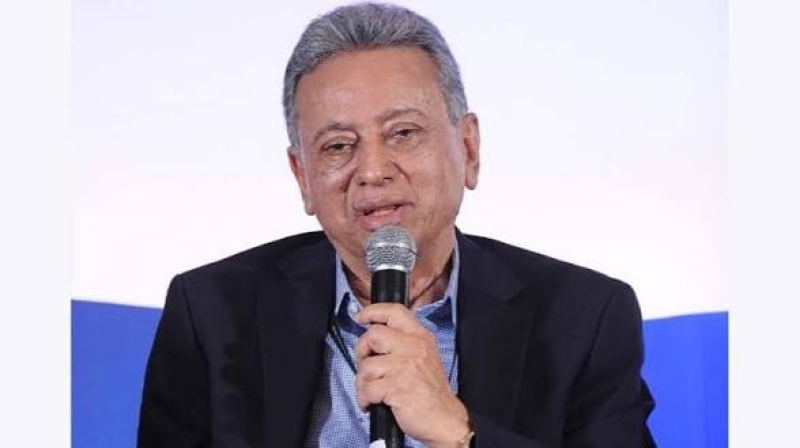
Finance and Planning Minister Amir Khosru Mahmud Chowdhury today called for linking higher education with employment and entrepreneurship, urging authorities to consider priority sectors, employment prospects and entrepreneurial opportunities while establishing new universities and introducing new faculties and subjects.
“Higher education subjects and curricula must be determined in line with the country’s economic needs and labour market realities. The goal of higher education should not be limited to obtaining certificates; it should also prepare students for employment and entrepreneurship,” he said.
The minister was addressing the ‘Vice-Chancellors' Dialogue: Shaping the Future of Higher Education’, a two-day national policy dialogue organised under the Higher Education Acceleration and Transformation (HEAT) Project of the University Grants Commission (UGC) at BRAC CDM in Savar.
He also stressed the need for stronger university-industry collaboration, saying universities and industries in many countries maintain close links and Bangladesh should utilise the potential of such cooperation.
“Why can’t we develop industry-university interaction in Bangladesh? Around the world, universities and industries are seriously connected. We need to utilise this potential,” he said.
Amir Khosru said international and national rankings of higher education institutions have an impact not only on employment opportunities and global recognition but also on the overall image of a country.
He urged universities to identify the reasons behind the weak university-industry linkage and the mismatch between education and labour market requirements.
“Why can’t we change our education system in relation to the job market?” he asked, stressing the need to establish a stronger relationship between education and employment.
The minister also underscored the importance of research as a fundamental component of higher education and called for linking research with industry.
“Research is fundamental for education. We need to determine our priorities in research and explore how we can connect research with industry,” he said.
He urged universities to conduct research to address real-life problems faced by industries and businesses and called upon the private sector to finance university research and commercially utilise research findings.
“Research should not remain confined to publications; it must contribute to national development and people’s welfare,” he said.
Questioning the academic structure of newly established universities, Amir Khosru said their faculties and academic programmes should be selected based on specific educational, regional and employment needs.
“I do not know under what consideration these faculties have been selected. I don’t see the reason,” he said.
He said establishing new universities was a positive development, but their academic programmes should be designed to address the needs of the regions where they are located.
“What target are we trying to fulfil through these universities? Do people in those areas have proper opportunities to enter the job market?” he asked.
He said newly established universities have an advantage as they could be designed from the beginning to address existing challenges in higher education.
The minister said he would request the UGC to formulate appropriate guidelines on the faculties and subjects to be introduced at newly established universities, taking into account regional needs, priority sectors and employment opportunities.
Referring to government budget allocation, Amir Khosru said education had received the highest allocation despite fiscal constraints.
“Despite our fiscal deficit, we have given the highest allocation to education,” he said, adding that the allocation covers university education, skills development and other major education-related programmes.
He said the government remained committed to increasing investment in education and mentioned a target of raising education expenditure to five percent of GDP as the economy grows.
Regarding private universities, the minister said the government had addressed the tax-related issue concerning the institutions and urged them to make their compliance with government requirements visible through annual reports.
“Doing is not enough; it should be seen. Present your compliance through your annual reports with facts and figures,” he said.
He said transparent reporting of university activities, including research expenditure and outcomes, would contribute to improving institutions’ reputation and rankings.
Education and Primary and Mass Education Adviser to the Prime Minister Dr Mahdi Amin, Secondary and Higher Education Division Secretary Abdul Khalek, UGC Chairman Professor DrMamun Ahmed, former UGC Chairman Professor Dr S M A Faiz, and vice-chancellors of public and private universities, among others, attended the programme.
The two-day dialogue brings together vice-chancellors of around 65 public and private universities, policymakers, academics and experts to discuss strategic leadership and governance, quality teaching and assessment, research and innovation, university-industry collaboration, artificial intelligence and digital transformation.
Four sessions were held on the first day, with the remaining sessions scheduled for Saturday. Education Minister Dr A N M Ehsanul HaqueMilon is scheduled to attend the concluding session, reports BSS.