

- Potential For Stronger Saudi Investment Considerable: Ambassador |
- Padma Barrage To Restore River Ecosystem In SW Bangladesh |
- The Urge To Contain Super AI, Today’s Frankenstein |
- Dhaka’s Invisible Inferno: 31 Risky Heat Days In Monsoon |
- Glacier Collapse, Himalayan Tsunami In Nepal: Climate Lesson |
Dhaka Ranks 7th Among Cities With Worst Air on Saturday
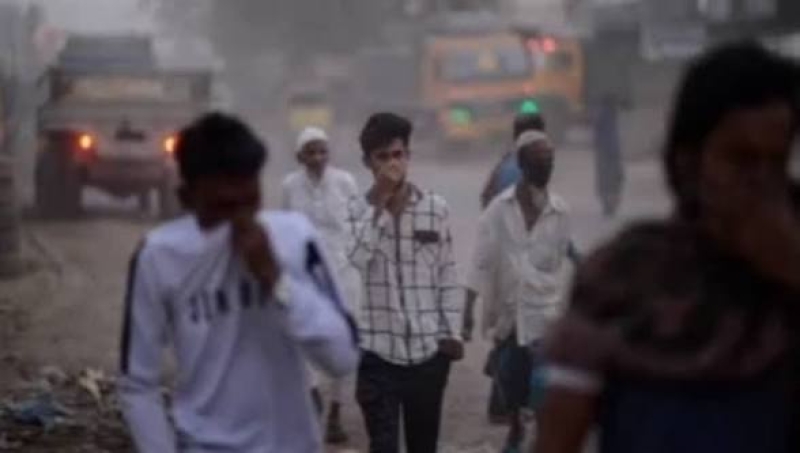
Dhaka ranked seventh among cities with the worst air quality on Saturday morning, recording an Air Quality Index (AQI) score of 137 at 8:57am.
According to the AQI scale, the air quality was classified as “unhealthy for sensitive groups”, meaning it may pose health risks to children, older adults and people with heart or lung conditions, while the general population is less likely to be affected.
Pakistan’s Lahore topped the list with an AQI score of 199, followed by Dubai in the United Arab Emirates with 170 and Kinshasa in the Democratic Republic of Congo with 164.
An AQI reading of 101 to 150 is considered “unhealthy for sensitive groups”, while 151 to 200 is classified as “unhealthy”. Readings between 201 and 300 are considered “very unhealthy”, while anything above 301 is categorized as “hazardous” and may pose serious health risks.
The AQI provides a daily measure of air quality by indicating the level of pollution and its potential impact on human health.
In Bangladesh, the AQI is calculated based on five major pollutants: particulate matter (PM10 and PM2.5), nitrogen dioxide (NO2), carbon monoxide (CO), sulfur dioxide (SO2) and ozone.
Dhaka has long struggled with severe air pollution, with air quality generally deteriorating during the winter months and improving during the monsoon season.
The World Health Organization estimates that air pollution contributes to around 7 million deaths worldwide each year, mainly from stroke, heart disease, chronic obstructive pulmonary disease, lung cancer and acute respiratory infections.