

- Mild cold wave sweeps parts of Bangladesh: Met Office |
- Saturday’s EC hearing brings 51 candidates back to election race |
- Food, air, water offer Dhaka residents few safe choices |
- Tarique Rahman Formally Named BNP Chairman |
- 136 new drugs in 195 essential drugs list, pricing guidelines |
Iran’s supreme leader warns of harsh response as protests continue
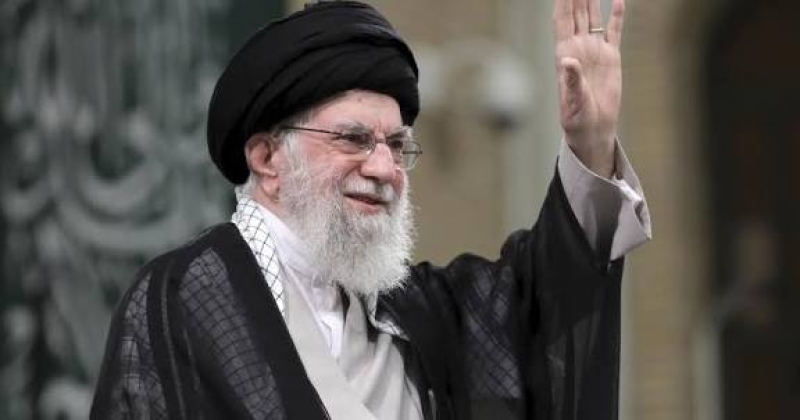
Demonstrations continued across Iran on Friday night, according to videos circulating online, despite warnings from the country’s ruling authorities that they would take firm action against protesters. The government had already shut down internet access and cut international phone connections in an apparent effort to isolate the unrest.
The protests, which began in late December over worsening economic conditions, have grown into the most serious challenge to Iran’s leadership in years. At least 65 people have reportedly been killed since the demonstrations began.
Supreme Leader Ayatollah Ali Khamenei accused the United States of fueling the unrest, denouncing President Donald Trump as having his hands “soaked in the blood of Iranians.” State television showed crowds chanting “Death to America!” while officials increasingly described demonstrators as “terrorists,” language that many observers say signals an impending violent crackdown similar to past uprisings. This came despite Trump’s pledge to support peaceful protesters and warning of possible force if they were harmed.
Khamenei told supporters at his Tehran compound that protesters were “destroying their own streets” simply to satisfy the U.S. president, claiming they were acting in hopes of foreign backing. He added that Trump should focus on problems inside his own country instead.
Separately, judiciary chief Gholamhossein Mohseni-Ejei promised that punishment for those involved in the protests would be swift and severe, with no legal mercy shown.
Late Friday, the leaders of Germany, Britain, and France released a joint statement condemning reports of deadly violence against demonstrators and urging Iranian authorities to respect citizens’ rights to express dissent without fear of retaliation.
Nobel Peace Prize winner Shirin Ebadi also called on Western governments to speak out more forcefully against Iran’s leadership, accusing it of ruling through cruelty. She criticized those who still portray the regime as a defender of the oppressed, arguing that a government willing to shoot peaceful protesters at home cannot claim moral legitimacy.
Trump, meanwhile, repeated threats to strike Iran if protesters were killed, comments that carried extra weight following a recent U.S. military operation targeting Venezuela’s former president Nicolás Maduro. He said any action would not involve ground troops but would instead deliver devastating blows.
“Iran is facing serious trouble,” Trump said, claiming that protesters were taking control of cities previously thought secure. He warned Iranian leaders that violence against demonstrators would be met with force in return.
Despite the communications blackout, activists managed to share short video clips that appeared to show crowds chanting anti-government slogans around fires in Tehran and other cities as debris filled the streets. Protests resumed Friday night, even after security forces warned families to keep their children indoors, though the scale of the demonstrations was difficult to verify.
One video showed what appeared to be a large crowd gathered near a street fire in Tehran’s Saadat Abad neighborhood, with chants of “Death to Khamenei!” audible in the background.
The unrest also marked the first major test of calls to action by exiled Crown Prince Reza Pahlavi, whose father fled Iran shortly before the 1979 Islamic Revolution. Pahlavi urged Iranians to protest at 8 p.m. on both Thursday and Friday nights.
Some demonstrations included chants supporting the former shah, rhetoric that once could have led to execution. Such slogans underscore the depth of anger driving the movement, which began as protests over economic hardship.
According to the U.S.-based Human Rights Activists News Agency, at least 65 people have been killed and more than 2,300 detained since the protests began.
Analyst Holly Dagres of the Washington Institute for Near East Policy said Pahlavi’s call for coordinated demonstrations helped energize the movement, with social media showing widespread participation aimed at overthrowing the Islamic Republic. She said the internet shutdown was intended to hide the scale of the protests and may have enabled security forces to act with greater violence.
Witnesses said that when 8 p.m. arrived on Thursday, chanting erupted across Tehran neighborhoods, with slogans such as “Death to the dictator” and “Death to the Islamic Republic.” Others praised the monarchy, shouting that Pahlavi would return. Thousands were reportedly in the streets before communications were completely cut.
On Friday, Pahlavi appealed directly to Trump, warning that Iran’s leadership intended to use the blackout to kill protesters. He asked the U.S. president to intervene to help the Iranian people, calling him a man of peace who keeps his promises.
Pahlavi said further plans would depend on the public response. His ties to Israel have previously drawn criticism, especially following Israel’s brief war with Iran in June. While some protesters voiced support for the shah, it remains unclear whether this reflects loyalty to Pahlavi himself or nostalgia for life before the 1979 revolution.
The internet shutdown also disrupted operations of many state-run and semi-official Iranian news outlets. State television claimed Thursday night’s protests were violent and involved attacks on vehicles, public transportation, and emergency services, though it did not provide nationwide casualty figures.
Later, state TV reported that six people were killed overnight in Hamedan and that two members of the security forces died in Qom. Protests were also reported Friday in Zahedan, in the volatile Sistan and Baluchestan province. Footage aired by state media showed pro-government motorcycle units patrolling Tehran streets late Friday night, reports UNB.