

- HSC Results 2026 Published, Pass Rate Stands at 52.12% |
- Nations Agree to Revive Efforts to Meet 2030 Nature Goals |
- Dhaka Among World’s 15 Most Polluted Cities on Saturday |
- Over 12.70 lakh candidates await HSC, equivalent exam results |
- AI changing the way we think. Will we notice in time |
Netanyahu’s Bloc Loses Majority, Triggering Coalition Talks
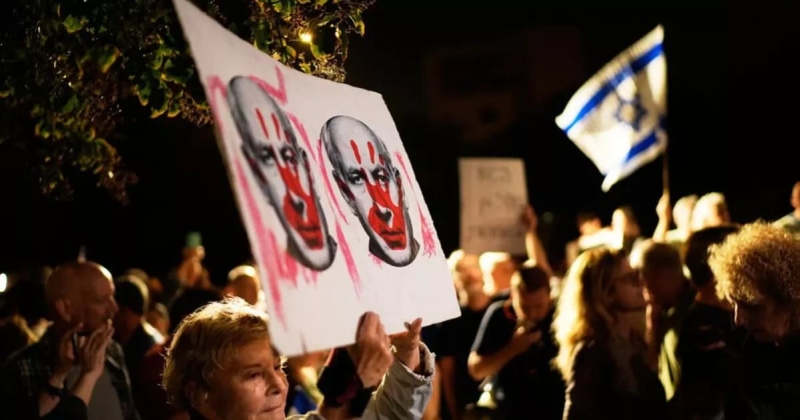
Israeli Prime Minister Benjamin Netanyahu and his political allies have lost their parliamentary majority following the country’s latest election, setting the stage for difficult coalition negotiations among parties with sharply differing political and ideological positions.
Final election results released early Friday showed that Netanyahu’s bloc secured 53 seats in the 120-member Knesset, while the main opposition bloc won 48 seats. Arab-led parties collectively secured 19 seats, marking a historic electoral performance.
A government needs the support of at least 61 lawmakers to command a parliamentary majority. The results have therefore left Israel facing uncertainty over which political alliance will be able to govern.
Opposition Faces Challenges in Forming a Coalition
Although Netanyahu remains prime minister for now, his opponents may need the support of Arab-led parties to form a government and replace him.
However, such an alliance faces significant political obstacles. Avigdor Lieberman, leader of the right-wing Yisrael Beitenu party, appeared to reject cooperation with Arab-led parties, making it more difficult for the opposition to secure a parliamentary majority.
Opposition leaders must now decide whether to cooperate with Arab political groups or consider joining Netanyahu in a potentially unstable unity government.
The final election results are expected to be formally submitted to President Isaac Herzog next Wednesday. He will then appoint a candidate to attempt to form the next government, taking into account recommendations from political party leaders.
If coalition negotiations fail, Israel could face another election early next year. Herzog has said he will make every effort to prevent that outcome.
Netanyahu’s Party Raises Unverified Allegations
Before the final results were announced, Netanyahu and his Likud party circulated allegations that Arab-led parties had manipulated the election, possibly with assistance from foreign actors. The claims have not been substantiated.
Opposition politicians accused Netanyahu of targeting Arab citizens and portraying them negatively. Arab citizens account for approximately 20 per cent of Israel’s population and participated in the election in unusually large numbers.
Netanyahu again warned against forming a government with Arab-led parties on Friday.
Israel’s election committee chief, Supreme Court Justice Noam Sohlberg, acknowledged receiving information about possible foreign interference and requested an investigation by the Shin Bet security agency. However, he said the allegations had not been verified.
Reports in Israeli media linked Qatar to the accusations, but the Gulf country strongly rejected the claims, describing them as dangerous and unfounded.
The election committee clarified that the investigation would not change the official election results or target any particular community. It also described allegations of widespread electoral violations as baseless and asked the Shin Bet to provide its findings within a week.
The Shin Bet emphasised that its investigation was not intended to question the legitimacy of Arab citizens who had participated lawfully in the democratic process.
Opposition May Gain Influence in the New Knesset
Israel’s newly elected parliament is expected to convene on November 10, even as political parties continue negotiations over forming a government.
During this period, opposition leader Gadi Eisenkot’s bloc could cooperate with Arab-led parties to elect a new parliamentary speaker. Such an arrangement could give them greater influence over the legislative agenda and allow them to advance legislation before a new government is established.
However, Lieberman has strongly opposed cooperation with Arab parties, describing them as supporters of terrorism in a Facebook statement. His party secured seven parliamentary seats.
Arab political leaders have condemned Hamas’ October 7, 2023, attack on Israel but have avoided officially describing the group as a terrorist organisation. They have expressed concern that such a designation could be used to justify Israel’s military campaign in Gaza.
Public Pressure Grows for Cooperation With Arab Parties
Hundreds of Israelis have reportedly taken part in demonstrations urging Eisenkot and other opposition politicians to work with Arab-led parties to prevent Netanyahu from remaining in power.
A similar political arrangement occurred briefly in 2021, when an Arab-led party joined a governing coalition.
Some demonstrators argue that Arab citizens should have equal political representation and that cooperation between Jewish-led and Arab-led parties is necessary for a more inclusive political system.
Former Arab village mayor Issa Jaber Abu-Ghosh questioned Israel’s claim to be the Middle East’s only democracy, arguing that genuine democracy requires overcoming political divisions between Jewish and Arab communities.
Netanyahu Faces Political and Legal Uncertainty
A potential departure from office could have significant consequences for Netanyahu, weakening his political position as he continues to face an ongoing corruption trial.
An official investigation into the security and intelligence failures surrounding Hamas’ October 7, 2023, attack on Israel could also move forward if a new government takes power.
The election results have left Israel in a complicated political situation, with Netanyahu’s allies falling short of a parliamentary majority and opposition parties facing difficulties in building an alternative coalition.
The coming weeks of negotiations will determine whether Netanyahu retains power, a new government emerges or Israelis are called to vote again.