

- RMG exports to UK almost $1bn in first two fiscal months |
- Trump Rejects Iran Proposal to Reopen Strait of Hormuz |
- Govt to Buy Rooftop Solar Power at Tk 10.50 Per Unit |
- Over 30 tourism clusters being developed in country: PM |
- Bangladesh, US sign strategic civil nuclear cooperation agreement |
Iran Guards Demand US Concessions to Reopen Hormuz
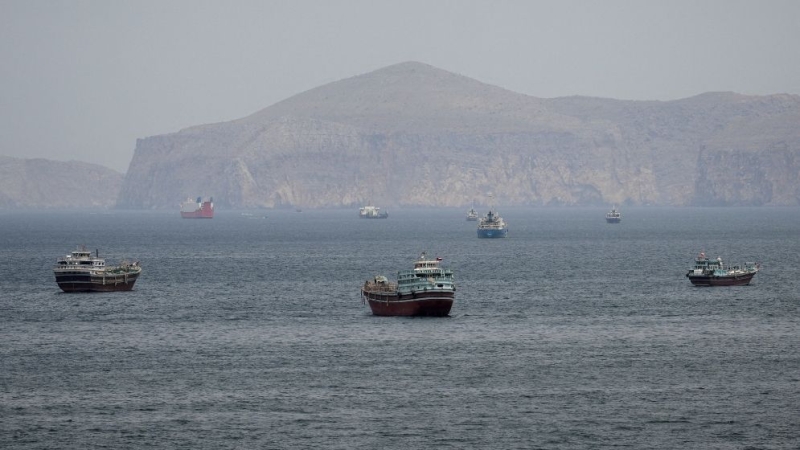
Iran’s Revolutionary Guards said on Sunday that the Strait of Hormuz would remain closed until the United States meets Tehran’s demands, including compensation for damage caused by the war.
The effective blockade of the strategic waterway has disrupted global energy shipments, rattled financial markets and pushed up prices. US President Donald Trump, however, said he was taking a measured approach to Tehran, suggesting Washington could wait for economic pressure to weaken Iran.
Iran has insisted on maintaining control over the strait and has sought to impose tolls on vessels using the waterway. Iranian forces have repeatedly attacked ships they accuse of violating their preferred transit route.
The attacks have sharply reduced shipping through Hormuz and contributed to the collapse of an earlier ceasefire. Mediators have urged Iran and the United States to return to the terms of a June memorandum outlining a path towards peace talks.
Iran’s Supreme National Security Council listed several conditions for reopening the strait on Saturday, including an end to the war on all fronts, the lifting of the US counterblockade on Iranian ports, the removal of sanctions, the release of frozen Iranian assets and compensation for wartime damage.
The conditions echo provisions in the June agreement, which included a proposal to establish a $300 billion reconstruction fund for Iran.
The Revolutionary Guards said on Sunday that Iran would maintain the blockade until the United States accepted all of its conditions.
“The strait is now actually a theatre of war for us and not just a waterway,” the Guards said.
Trump said on Sunday that Washington was taking a low-key approach to Iran.
“We are low-keying it,” Trump said in an interview, adding that the two sides were only “semi-negotiating”. He also pointed to Iran’s high inflation and financial difficulties, saying the situation would eventually work out.
Iranian Foreign Minister Abbas Araghchi said earlier that Tehran was only exchanging messages with Washington through intermediaries.
Hormuz tensions continue
Traffic through the Strait of Hormuz has fallen sharply amid the attacks. At least one tanker was struck on Saturday, according to the United Arab Emirates.
Oman’s Foreign Ministry condemned the repeated attacks and warned against actions that could undermine ongoing efforts to resolve the dispute.
The June memorandum said Iran and Oman would discuss future arrangements for managing the strait with other Gulf countries and in accordance with international law.
Oman said negotiations on navigation arrangements were continuing, while Araghchi said talks with Muscat were approaching their final stages.
Houthi attacks add to regional tensions
As traffic through Hormuz remains restricted, Iran-aligned Houthi forces in Yemen have declared a parallel maritime blockade targeting Saudi ports in the Red Sea.
The Houthis said on Sunday they had attacked a Saudi oil facility on the Red Sea coast after Saudi authorities reported extinguishing a fire at the site.
The Houthis have long been in conflict with Yemen’s internationally recognised government, which is backed by Saudi Arabia.
In Yemen’s government-held Mokha, three civilians and eight military personnel were reportedly killed and 32 others wounded in Houthi attacks on the port, according to a medical source.
Houthi military spokesperson Yahya Saree said the group had targeted Saudi forces and military equipment in the area with missiles and drones.
New regional defence pact
The wider conflict has also raised security concerns in Saudi Arabia, which is pursuing an economic diversification strategy aimed at reducing its dependence on oil.
Saudi Arabia on Friday signed a joint defence agreement with Turkey and Pakistan that includes a NATO-style provision treating an attack on one member as an attack on all.
Turkish Foreign Minister Hakan Fidan said Egypt could also join the arrangement, describing it as a natural partner.
Fidan said the pact was not directed against any particular country, while Pakistan said the agreement was intended to strengthen collective deterrence.