

- PM Hands Appointment Letters to 74 July Victims’ Families |
- Special Unit Formed to Recover Illegal Arms, Tk 2 Lakh Reward |
- Eliminate Wastes: Make Life Sustainable |
- Pay Scale Push Sans Funding Plan Alarms Economists |
- Early 2026 Spike In Migrant Deaths At Sea Is Alarming |
Ctg-Cox’s Bazar highway 6-lane upgrade feasibility study underway
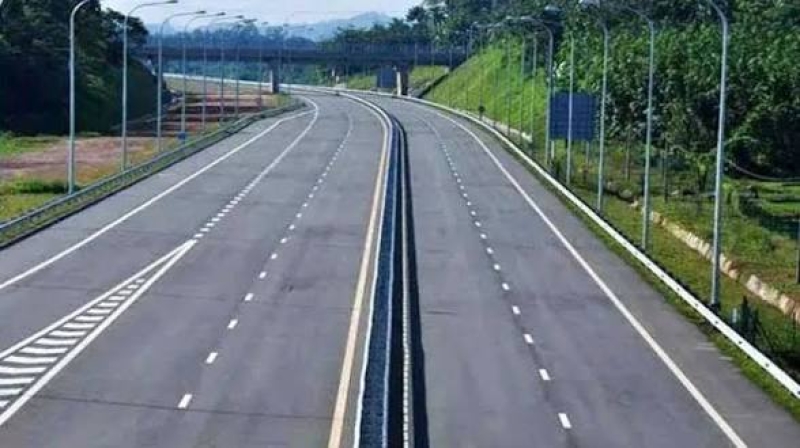
The feasibility study for expanding the Chattogram-Cox’s Bazar highway to six lanes has gained fresh momentum following the announcement of Prime Minister Tarique Rahman.
An initiative has been taken to enhance a crucial 23-kilometer segment of the 159-kilometer highway to six lanes, with a focus on preserving the natural environment, protecting wildlife sanctuaries, and addressing road accidents and traffic congestion.
The Japan International Cooperation Agency (JICA) will provide funding for this project, sources said.
As per information from the Roads and Highways Department, a feasibility study is currently being conducted to upgrade the highway to six lanes in the initial phase across five areas prone to heavy traffic.
These areas include the Patiya Bypass, Dohazari, Keranihat, Lohagara, and Chakaria sections.
In addition to widening the roads to ease traffic congestion in these regions, there are plans to construct overpasses where necessary. The distance from Chattogram to Cox's Bazar spans approximately 159 kilometers.
This road, classified as National Highway N-1, is narrow and features hazardous bends in several locations, which frequently lead to accidents.
Over the past three years, at least 200 people have lost their lives due to these dangerous bends, particularly in certain areas of Satkania, Lohagara, and Chunti. Local residents have long been advocating for the upgrade of this highway to six lanes.
Prime Minister Tarique Rahman announced to enhance the Chattogram-Cox's Bazar highway to six lanes during a public meeting in Chakaria, Cox's Bazar on June 13, 2026. Following this announcement, the project survey activities have been accelerated.
Mohammad Sohaib, the Coordinator of the Chattogram-Cox's Bazar Six-Lane Implementation Council and an Assistant Professor in the Department of Development Studies at Chattogram University, stated that the decision to upgrade the Chattogram-Cox's Bazar highway to six lanes reflects the long-held aspirations of the locals.
This declaration from the head of government is undoubtedly a very positive and encouraging development to this end, he added.
However, it is crucial not only to make the announcement but also to ensure its swift execution. For an extended period, the highway has been plagued by excessive vehicle congestion, traffic jams, and accidents, which have become everyday issues.
Noting that economic activities in Cox's Bazar, Matarbari and Chattogram are growing increasingly day by day, so, it is imperative to commence the six-lane upgrade promptly, taking future demands into account, he said.
If this project is realized, the road communication system will become safer and more efficient, travel times will be shortened, and tourism, industry, and trade in the Chattogram-Cox's Bazar area will flourish.
But, analysts suggest that merely expanding the highway to six lanes is insufficient given its anticipated economic significance; it is also essential to construct alternative connecting roads.
When the Matarbari deep seaport in Maheshkhali will be fully operational, the traffic load on the Chattogram-Cox's Bazar highway will further escalate, he said.
Town planner Engineer Abu Isa Ansary noted that the significance of the Chattogram-Cox's Bazar highway is continually growing. In light of future port, industrial, and commercial developments, it is imperative to establish a second connecting road alongside the six-lane expansion.
Superintendent Engineer of the Roads and Highways Department, Zahed Hossain, indicated that following the Prime Minister's announcement, efforts to survey and upgrade critical sections of the highway to six lanes are progressing.
Priority is being given to areas prone to traffic congestion. Notably, on April 16, Road Transport and Bridges Minister Sheikh Rabiul Alam stated in the Jatiya Sangsad that the government has devised a plan to enhance the highway to four lanes.
As part of the Highway Improvement Project, a proposal to upgrade approximately 26.21 kilometers of the road to four lanes has been approved, with a target completion date set for 2029.
This initiative also encompasses the construction of around 2.66 kilometers of six-lane flyover.
A feasibility study for the remaining 48 kilometers is currently in progress, and discussions with development partners are ongoing to secure financing, reports BSS.