

- Capital markets surge at DSE with year’s highest turnover |
- Weapons and drugs seized in Chattogram army operation, 2 arrested |
- Tarique says people won’t allow ‘vote robbery’ on Feb 12 |
- Dhaka records world’s worst air quality Wednesday morning |
- US Ambassador visits Ctg Port to reinforce commercial coop |
July Charter a pact with people and parties, not an imposition: Ali Riaz
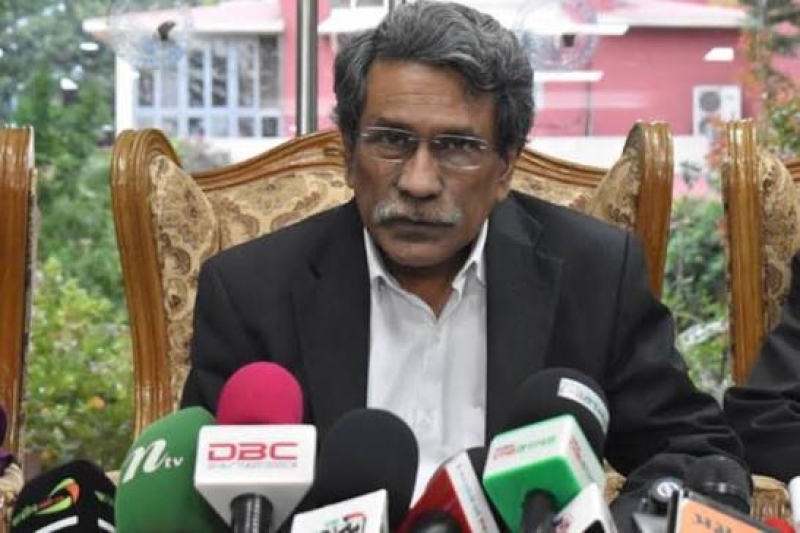
The July National Charter is a pact between people and political parties, with the parties themselves primarily responsible for its implementation, said Prof Ali Riaz, Special Assistant to the Chief Adviser.
“Thirty political parties formulated these agendas through uninterrupted discussions over nine months. Therefore, the responsibility to translate this pact into reality rests with the political parties. This is not something imposed from above; it is meant to realise the dreams of countless martyrs,” he said.
Ali Riaz was speaking at a seminar titled ‘Peaceful Election and Prevention of Violence: Grassroots Experiences’, organised by the Bangladesh Enterprise Institute (BEI) in Gulshan in the morning.
He said the July mass uprising was centred on one fundamental demand— establishing justice in Bangladesh.
“Those who committed injustice must be brought to justice. The core objective of the uprising is to ensure that fascism or feudal domination can never again be established in Bangladesh,” Ali Riaz said.
Stressing the need for accountability, he said a balance of power must be created and the people’s voting rights ensured through elections. “If we want justice, reforms and a new democratic political system, there is no alternative to elections. The authority over referendums, elections and constitutional reforms belongs to the people alone.”
He pointed out that students and citizens sacrificed their lives to free the country from fascist oppression and that Bangladesh is now on a path of democratic transition.
“That democracy must be strengthened so that every citizen feels they are an owner of the state. Therefore, on February 12, everyone must exercise their voting rights freely and independently, and vote ‘Yes’ in the referendum.”
Calling for collective action, Ali Riaz expressed the hope that a prosperous, egalitarian, humane and justice-based Bangladesh could be built with the people united.
He urged all to campaign in favour of the ‘Yes’ vote on February 12.
Meanwhile, a BEI survey conducted among 400 men and women at the grassroots, 200 local influential figures and political leaders, as well as district and upazila-level administrators, found that only 30 percent of respondents believe the July Charter will be implemented, while only 40 percent are aware of the referendum.
The survey also revealed that 50 percent of respondents believe the country’s situation will improve after the election, while 60 percent expect a violence-free election, reports UNB.