

- 86 proposals from 14 groups to revive closed govt factories |
- Trump Threatens to Declare Strait of Hormuz US Territory |
- 7.7-Magnitude Earthquake Strikes Off Indonesia, Tsunami Alert |
- Khaleda Zia: The Story of an Unyielding Political Leader |
- Shipbreaking before releasing toxic gas kills 9 in Sitakunda |
Khaleda Zia: The Story of an Unyielding Political Leader
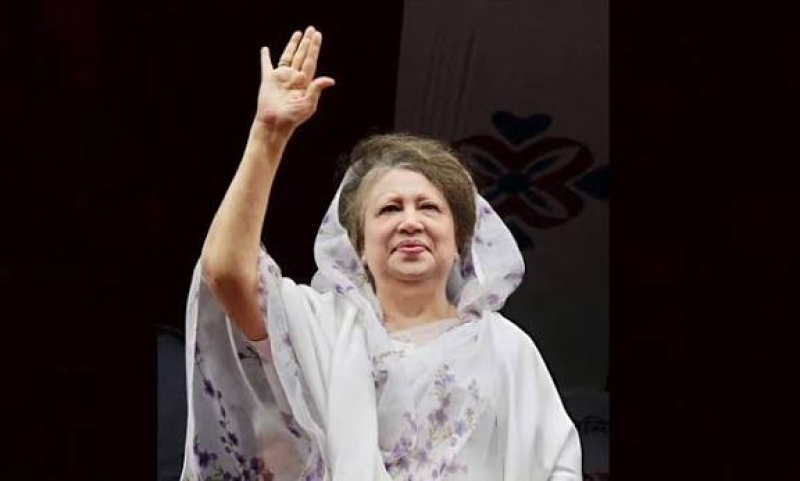
Khaleda Zia
Born on August 15, 1945, in Dinajpur, Khaleda Khanam Putul—later known as Begum Khaleda Zia—grew up in a modest family in northern Bangladesh. Few could have imagined that the quiet girl who spent her childhood amid the green fields and ponds of Dinajpur would one day emerge as one of the most influential figures in Bangladesh’s political history.
August 15 marks the birth anniversary of Khaleda Zia, who rose from the life of a homemaker to become the country’s first female prime minister and a central figure in Bangladesh’s long political struggle. Her life was marked by political upheaval, personal loss, imprisonment, illness and an enduring determination to remain active in public life.
From Childhood to Family Life
Khaleda Zia was the third of five siblings. Her life took a major turn in 1960, when she married Ziaur Rahman, then a young officer in the Pakistan Army. As the wife of a military officer, she spent years living in different parts of the country and adapting to a disciplined family life.
During the Liberation War in 1971, she experienced the turmoil and uncertainty of the conflict at close quarters. The events of that period would later become part of the broader political narrative surrounding her life.
An Unexpected Entry into Politics
Khaleda Zia entered politics following the assassination of President Ziaur Rahman on May 30, 1981. At the time, the Bangladesh Nationalist Party (BNP) faced a major leadership crisis, while she had little formal political experience.
Responding to appeals from party leaders and activists, she gradually took charge of the party and eventually became its chairperson. Her entry into politics marked the beginning of a career that would span several decades and fundamentally shape Bangladesh's political landscape.
The Rise of an Uncompromising Leader
During the 1980s, Khaleda Zia emerged as one of the principal opponents of military rule and played a prominent role in the movement for the restoration of democracy. Her uncompromising political stance earned her the title of the “Uncompromising Leader.”
In 1991, she became Bangladesh’s first female prime minister. Her government introduced several initiatives in education and social development, including the expansion of compulsory primary education and the Food for Education programme. Measures aimed at expanding girls’ education also became an important part of her administration’s policy agenda.
She returned to power after the 1996 and 2001 elections, serving multiple terms as prime minister and remaining one of the country’s most prominent political figures.
Political Struggles, Imprisonment and Illness
Her years outside government were often marked by political confrontation and legal battles. During the military-backed caretaker government in 2007, she was detained along with several other senior political leaders.
Her legal troubles intensified in later years. In 2018, she was convicted in the Zia Orphanage Trust corruption case and subsequently spent an extended period in detention. Her health deteriorated significantly during this period.
She was released in March 2020 following an executive order, but remained largely inactive in frontline politics because of her health and legal restrictions.
Recognition Beyond Bangladesh
Khaleda Zia also received recognition from organisations and institutions abroad for her political leadership. In 2011, the New Jersey State Senate honoured her with a “Fighter for Democracy” award. In 2018, she was also recognised by the Canadian Human Rights International Organization as the “Mother of Democracy.”
The Final Chapter
The political upheaval of August 5, 2024, brought another major turning point in Bangladesh’s political landscape. Despite years of illness and political restrictions, Khaleda Zia continued to issue messages calling for peace and stability.
She later travelled abroad for medical treatment and spent time in London with her son Tarique Rahman, his family and her grandchildren. Her family photographs from that period offered a glimpse of a quieter and more personal side of a leader whose public life had been dominated by political struggle.
After returning to Bangladesh, Khaleda Zia died on December 30, 2025, bringing an end to a political career that had lasted more than four decades.
A Lasting Political Legacy
Although Khaleda Zia is no longer alive, her political influence remains significant, particularly within the BNP. Her journey—from a homemaker in northern Bangladesh to the country’s first female prime minister and one of its most consequential political leaders—remains closely intertwined with Bangladesh’s modern political history.
Her life was shaped by personal tragedy, political confrontation and prolonged adversity. To her supporters, she remains a symbol of resilience and democratic struggle; to her critics, she remains a deeply polarising figure in Bangladesh’s political history.
Whatever the assessment, Khaleda Zia’s decades-long presence in national politics has left an enduring mark on the country’s political landscape.