

- Bus plunges into Padma from pontoon at Daulatdia |
- Tree logging in Bangladesh has fallen in last two years: Study |
- Unsafe Food Kills 1.5 Million Yearly, WHO Warns Report |
- Masud Khan Appointed New BSEC Chairman in Shake-up |
- Verdict in Ramisa rape-murder case on June 7 |
Steering Nepal’s Economy Through Global Uncertainty
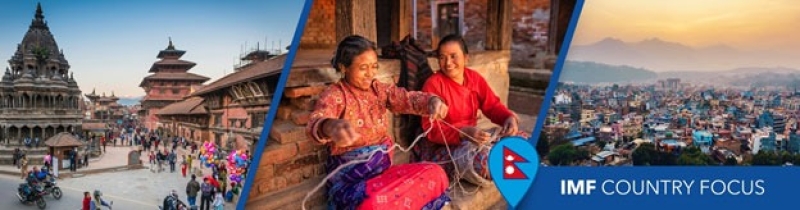
The country faces a challenging transition, but it can progress if the people work together.
Nepal has a unique opportunity for transformation. Recent youth-led protests have underscored aspirations for greater transparency, improved governance, and a more equitable distribution of economic opportunities and resources. This yearning has resonated both in Nepal and beyond.
Nepal must now strike a balance by setting prudent political, economic and financial policies to steer a difficult transition in an orderly manner. Adding to the complex domestic situation is lingering uncertainty in the global economy. The transition process in this challenging environment should ensure an inclusive future for Nepal’s people.
Economic challenges
History shows that more equal societies tend to be associated with greater economic stability and more sustained growth. This offers a helpful guiding principle as Nepal charts its path to change. Indeed, a solid strategy must rest on two key pillars: economic stability and inclusive growth.
In 2022, stability was among the top priorities when the country’s leaders approached the International Monetary Fund (IMF) for support. The collapse of tourism in the wake of the Covid-19 pandemic took a heavy toll on Nepal’s economy, including its job market.
The IMF’s financing package supported the authorities’ Covid-19 response by mitigating the pandemic’s impact on economic activity, protecting vulnerable groups, and laying the groundwork for sustained growth. The programme also backed reforms aimed at fostering durable growth and reducing poverty over the medium term, including cross-cutting institutional reforms to improve governance and reduce corruption risks.
In October, Nepal completed the sixth of seven programme reviews, showing tangible improvement in the economy. The country has begun to see green shoots of recovery, with real GDP growth rising from 2 percent in FY 2023 to 3.7 percent in FY 2024, and to an estimated 4.3 percent in FY 2025—more than doubling in just a few years.
In FY 2026, the economic recovery is expected to continue, though at a more moderate pace amid a complex domestic environment and ongoing global uncertainty.
Nepal has also been successful in rebuilding policy buffers. Foreign exchange reserves have risen to nearly USD 20 billion, enough to cover almost a full year of imports. Fiscal discipline has helped stabilise public debt, while inflation remains well below the Nepal Rastra Bank’s target.
This hard-won economic stability must be safeguarded. At the same time, the economy has not yet fully recovered. Domestic demand remains subdued, investor confidence is weakening, and further efforts are needed to protect vulnerable people.
Nepal has achieved significant milestones in structural reforms, partly with support from IMF capacity development. On the fiscal front, frameworks for increasing government revenue and enhancing fiscal transparency have improved with the publication of the domestic revenue mobilisation strategy, fiscal risk statement and tax expenditure report. The National Planning Commission has issued revised guidelines for the National Project Bank, strengthening capital project selection and execution.
Similarly, financial sector oversight has improved through the Supervisory Information System. The Nepal Rastra Bank has also launched a loan portfolio review of 10 large commercial banks, which is expected to provide deeper insights into the health of the banking sector.
Measures have been taken to improve governance and transparency, including strengthening the anti-money laundering framework, although further efforts are needed to ensure effective implementation. As part of the programme, four priority non-financial public enterprises have had their financial statements audited. Work is also underway to amend the Nepal Rastra Bank Act to strengthen its autonomy and governance.
However, unresolved structural issues and emerging headwinds continue to test these gains. Policymakers must ensure that the benefits of macroeconomic stability and growth are broadly shared. Continued reforms will be essential. In the near term, this includes accelerating budget execution, improving project readiness—particularly in hydropower and trade-related infrastructure—and reducing logistics frictions to crowd in private investment.
These efforts will help lay the foundation for a more diversified, higher value-added growth model that generates more domestic jobs.
Unlocking private sector growth to create jobs and improve livelihoods is critical. This can only be achieved when the basic foundations of private enterprise are in place: strong institutions, free and fair markets, and a stable macroeconomic environment.
Over the medium term, strengthening governance and anti-corruption institutions, improving the investment climate, enhancing financial oversight and trade integration, and expanding targeted social protection will be key to unlocking inclusive and sustainable growth.
Reason for hope
We conclude by expressing deep sympathy for the profound losses suffered during the recent social unrest. While saddened by these events, we are heartened by the resilience of the Nepali people striving for a better future.
Although global economic prospects remain uncertain, Nepal offers reason for hope—a nation reimagined with greater equality and stronger governance. The country faces a challenging transition, but meaningful progress is possible if people work together. For policymakers, this means steering the economy along a path of continued reforms that safeguard macroeconomic and financial stability while laying firm foundations for durable and inclusive growth, supported by good governance.
This is a unique moment in Nepal’s long history and an opportunity to set a new standard for the future. The IMF stands ready to support Nepal on its journey.
Krishna Srinivasan is Director of the Asia and Pacific Department at the IMF. Sarwat Jahan is the IMF’s mission chief for Nepal and a deputy division chief in the Asia and Pacific Department.