

- Rising seas, rising stakes: What higher sea-levels mean to humanity |
- Nepal Disaster and Hydropower |
- Govt to Compensate Victims of Enforced Disappearance |
- Maersk Line Keen to Invest in Bangladesh’s Shipbuilding Sector |
- PM Sets 4-Month Deadline for ETC Rollout in Dhaka |
International Day of the Disappeared Today: 250 Cases Probed
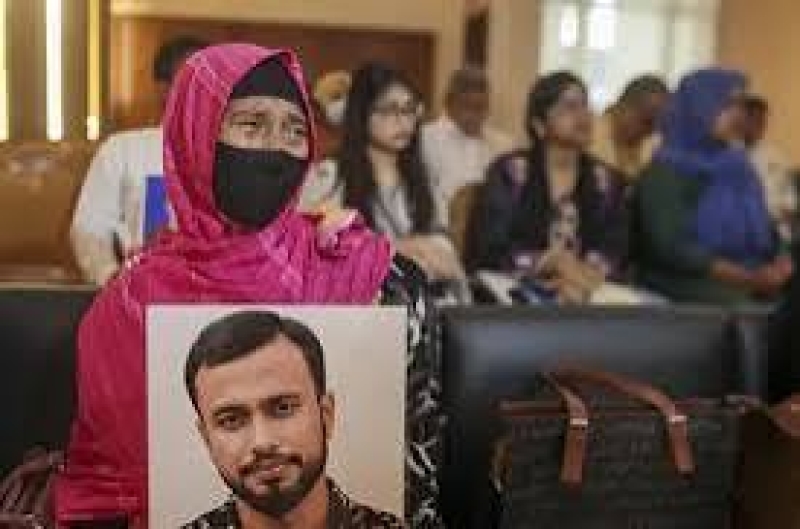
Bangladesh’s International Crimes Tribunal is preparing a case involving around 250 alleged enforced disappearances during the Awami League’s 15-year rule, with investigations expected to be completed by September.
The allegations include the enforced disappearances of BNP leaders Ilias Ali and Chowdhury Alam.
The Chief Prosecutor’s Office of the International Crimes Tribunal has formed a five-member investigation team specialising in enforced disappearance cases. Chief Prosecutor Md Aminul Islam is directly supervising the investigation.
At present, three cases involving enforced disappearance as a crime against humanity are being tried before Tribunal-1. Another 10 cases involving allegations of widespread and systematic disappearances are under investigation.
According to the Chief Prosecutor’s Office, around 300 complaints of enforced disappearance have been filed so far. Of these, 250 cases involving people who allegedly disappeared between 2011 and 2024 have been prioritised for investigation.
The investigation has found similar patterns in the cases. Many victims were allegedly taken from their homes in microbuses by people identifying themselves as law enforcement personnel or by individuals in plain clothes, after which their whereabouts remained unknown.
Of the 250 complaints under investigation, 150 were submitted by Mayer Dak, a human rights organisation formed by families of victims of enforced disappearance. Another 60 complaints came from the organisation Amra Gum Poribar, while the remaining 40 were submitted by various organisations and individuals.
Investigators have identified where, when and how the victims were allegedly taken. They have also collected photographs, recorded statements from family members and gathered CCTV footage and other evidence.
A public hearing involving the families of the 250 victims is also planned. A meeting with families of 60 victims was held on August 25, with another meeting scheduled for September 6.
Chief Prosecutor Aminul Islam said the investigation is relying on call detail records, video footage and other digital evidence. He said the investigation team is working to complete the process and submit formal charges to the tribunal within September.
The prosecution is considering separate charges for each family while seeking a joint trial, which it believes could save time and make the case historically significant.
Why enforced disappearance is treated as a crime against humanity
Following the fall of the Sheikh Hasina government in 2024, the interim government amended the International Crimes (Tribunals) Act, 1973, three times.
The amendments included enforced disappearance, abduction, detention, torture, forced deportation, sexual violence, human trafficking and other acts within the scope of crimes against humanity.
Under the amended law, widespread or systematic enforced disappearance can be prosecuted as a crime against humanity before the International Crimes Tribunal.
Three cases already on trial
Three enforced disappearance cases are currently being tried before Tribunal-1.
Two cases concern alleged disappearances and torture at secret detention facilities associated with the Directorate General of Forces Intelligence and the Rapid Action Battalion during the Awami League government.
The case involving the RAB Task Force for Interrogation cell, commonly known as the TFI Cell case, names former prime minister Sheikh Hasina and 16 others as accused. Ten serving military officers are among the accused. Seven witnesses have testified so far, with the next hearing scheduled for August 31.
The Joint Interrogation Centre, or JIC, case also names Sheikh Hasina and 12 others as accused. Seven witnesses have testified in the case, which is also scheduled for further testimony on August 31.
Another case involves former army officer Ziaul Ahsan, who is accused of enforced disappearance and murder of more than 100 people during the Awami League’s rule. Nine witnesses have testified in the case so far.
Meanwhile, investigations are underway into 10 additional cases involving allegations of widespread and systematic enforced disappearance. Seven are being investigated under Tribunal-1 and three under Tribunal-2. A total of 22 people have been named as accused in these cases.