

Wednesday, October 7, 2026
News update
- Messi Bids Farewell to Argentina After 21-Year Career |
- Toyota Tsusho briefs PM on plan to manufacture vehicles in Bangladesh |
- Security, sacrifice or opportunity: Climate action visions differ |
- Four New Subjects to Join Curriculum From 2027 |
Messi Bids Farewell to Argentina After 21-Year Career
GreenWatch Desk:
Football
2026-10-07, 9:25am
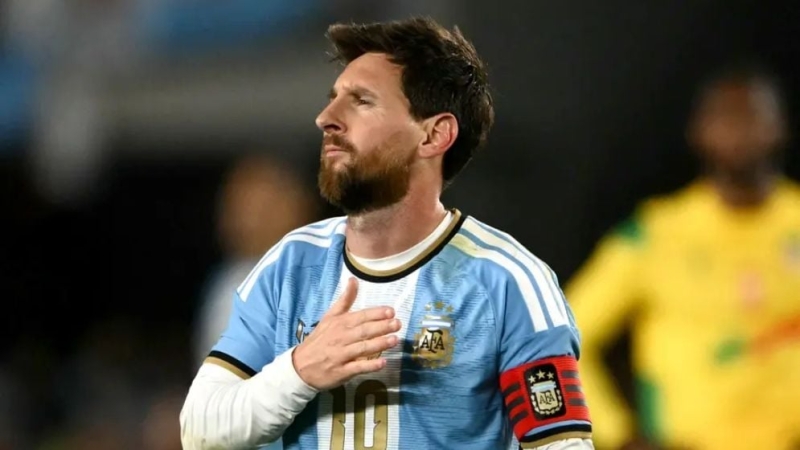
Lionel Messi.
Argentina faced a once-unthinkable reality Tuesday as Lionel Messi played his final match for the national team, bringing an extraordinary 21-year international career to an end.
The 39-year-old Messi scored a penalty and assisted Argentina’s other two goals in a 3-0 victory over Benin, finishing his international career with 126 goals, two Copa América titles and a World Cup championship.
What would otherwise have been an ordinary friendly against the West African side became an emotional farewell for a soccer-obsessed nation that had long anticipated but dreaded the moment.
“It feels like an era is ending, knowing he won't play for the national team anymore,” said Valentino Ruso, 17, in Buenos Aires. “I'm sad. I think everyone is upset today. He will be missed.”
Argentines had a passionate and often complicated relationship with the shy boy who left his hometown of Rosario at 13 to join Barcelona’s youth academy.
As Messi developed into a global icon, his compatriots both adored and criticised him. At times, some questioned his commitment to Argentina and accused him of being detached from his homeland.
By the end of his international career, however, there was little doubt about Messi’s devotion to Argentina or the country’s affection for its most famous footballer.
His success became a source of pride for a country that has endured years of political and economic difficulties.
“Argentines often say, ‘Thank God I was born at a time when I could experience the miracle of watching Messi play,’” said Andrés Rabinovich, a University of Chicago scholar who has researched football’s role in Argentine culture.
For years, Argentines debated when and how Messi should leave the international stage. His decision to retire from the national team triggered an outpouring of gratitude and sadness, although he will continue playing for Inter Miami in Major League Soccer.
Teammate Rodrigo De Paul paid tribute to Messi, writing that he had built an extraordinary bond with the nation.
The Argentine football federation transformed Tuesday’s match—Messi’s 208th international appearance—into a national farewell dubbed “the last tango.”
More than 85,000 tickets for Buenos Aires’ largest stadium sold out within 90 minutes. Tickets initially priced at around $60 to $300 later fetched more than $2,500 on resale sites.
Players from Argentina’s 1978, 1986 and 2022 World Cup-winning teams also returned to the stadium to bid farewell to Messi.
After the final whistle, Messi’s eyes glistened as his teammates surrounded him and applauded. Tens of thousands of fans sang his name, while a banner at midfield declared him the “Eternal Captain.”
“Even through the worst moments we went through, I never stopped fighting, battling, giving everything I had, wanting to always be here,” Messi told the crowd.
“I love all of you, and I will miss all of you. I am proud to be Argentine.”
Winning Over His Own
Throughout the 2000s and 2010s, Messi collected trophies with his club and won devoted fans around the world. But a major international title with Argentina remained beyond his reach.
While much of the world regarded him as an extraordinary talent, some Argentines viewed him as an outsider who had never played professionally in Argentina and appeared unable to handle the enormous expectations placed on him.
Fans sometimes chanted “Diego, Diego,” referring to Diego Maradona, Argentina’s larger-than-life hero of the 1986 World Cup, and reminding Messi of the standard he had yet to reach.
Messi’s quiet personality, sharply contrasting with Maradona’s defiant swagger, also fuelled questions about his patriotism.
After Argentina suffered a third consecutive final defeat in 2016, Messi briefly retired from international football.
The turning point came in 2021, when Argentina defeated Brazil to win the Copa América, South America’s championship, for the first time in 28 years.
Messi fell to the ground as his jubilant teammates ran to embrace him. The player who had long been criticised for lacking emotion for his country could not stop crying.
“Winning clearly disarmed his critics. That's how soccer works in Argentina,” said Diego Murzi, a sports sociologist at Conicet, Argentina’s national scientific research council.
The following year’s World Cup victory in Qatar cemented Messi’s status as a national hero. He had secured the major international prize that had eluded him, prompting millions of Argentines to pour into the streets in celebration, chanting his name and wearing his No. 10 jersey.
“I’ll never forget it. I’d never experienced anything like that, being out there with everyone, celebrating together,” said Antonia Correa, 70, a kiosk owner in Buenos Aires.
“We saw that he wasn't just an extraordinary player, but an excellent human being,” she said.
In recent weeks, tributes to Messi have appeared across Argentina, including murals celebrating his career.
A 26-metre statue of Messi kneeling with the World Cup trophy has stood over passing motorists in Patagonia since June. On Tuesday, Buenos Aires’ iconic Obelisk was illuminated in sky blue and white, the colours of the national flag.
A Jersey Without an Heir
Across Argentina, fans who grew up watching Messi as their parents watched Maradona have covered their bodies with tattoos honouring the football star, including portraits of him kissing the World Cup trophy.
It was easy to imagine that one of the world’s greatest players would always be one of their own. But ahead of his farewell, Messi’s No. 10 jersey had no designated successor, with coach Lionel Scaloni saying the decision would have to wait.
“I don't think we'll have somebody like him again, somebody with that sort of enduring power,” said Pablo Brescia, a University of South Florida professor who writes about Argentine culture and football.
“Like Maradona, he'll be unique—a figure that can't be repeated.”
Messi’s contract with Inter Miami runs through the 2028 season. But the ritual of watching him carry Argentina’s hopes and anxieties into every match has come to an end.
“Watching Messi play, you felt anything could happen,” Murzi said. “I've seen him do things that I don't think I'll ever see another player do.”