

- A Day of People-Centered Food System Storytelling! |
- No evidence of postal ballot irregularities found: EC Sanaullah |
- Bangladesh Bank injects Tk 9,178 crore to ease liquidity strain |
- No LPG Shortage Expected During Ramadan: BERC Chairman |
No LPG Shortage Expected During Ramadan: BERC Chairman
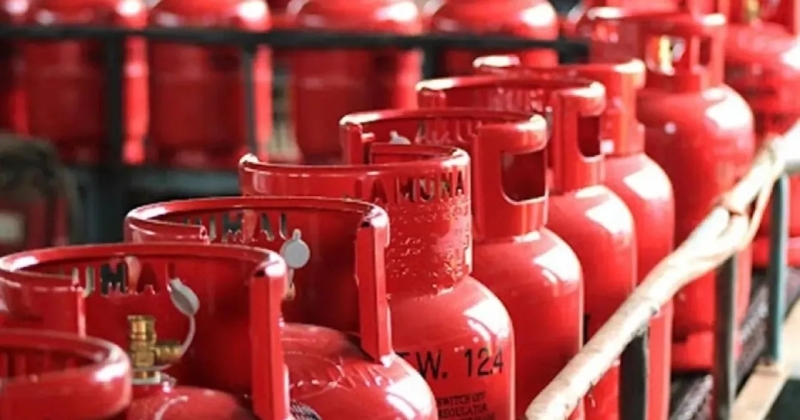
Bangladesh Energy Regulatory Commission (BERC) Chairman Jalal Ahmed on Thursday expressed confidence that the country would not face a shortage of liquefied petroleum gas (LPG) during the upcoming Ramadan, citing an expected increase in imports.
“Those who brought in additional imports were not obstructed. Around 150,000 tonnes of LPG are expected to arrive in January. We hope there will be no problem during Ramadan,” Jalal said at a roundtable discussion titled ‘Challenges of Regulating the LPG Market’, organised by the LPG Operators Association of Bangladesh (LOAB) at the CIRDAP auditorium.
He urged LPG operators to take proactive steps now to ensure smooth supply during the fasting month.
“If 150,000 tonnes arrive in January, the problem will ease significantly. BERC has asked businesses to submit three-month projections for January, February, and March. If January’s imports are secured and February deliveries confirmed, we may avoid an LPG shortage during Ramadan,” he added.
LOAB President Mohammed Amirul Haque, however, blamed the ongoing LPG shortage—lasting more than 15 days—on the government’s delay in approving higher import quotas. He said LOAB had applied for increased limits for five companies—IGas, Meghna Group, Delta, Omera, and Jamuna—but received no response. He also asserted that LOAB members were not selling LPG at inflated prices.
Rejecting these claims, BERC Chairman Jalal said import limits were not a constraint, noting that several companies had already exceeded their approved ceilings.
IGas imported 183,000 tonnes against a 100,000-tonne limit.
Omera imported 220,000 tonnes against a 300,000-tonne limit.
Meghna brought in 299,000 tonnes against a 250,000-tonne ceiling.
Jamuna Spacetech imported 208,000 tonnes against a 180,000-tonne limit.
Delta LPG imported 80,000 tonnes despite a 60,000-tonne cap.
“Those who crossed their limits were not stopped. So blaming import ceilings for the shortage does not make sense,” he said.
Jalal identified shipment disruptions as the main cause of the supply crunch, citing geopolitical tensions in the Middle East, particularly involving Iran, which affected international LPG shipments.
He explained that increased purchases by large buyers like China pushed up global prices, while many vessels were blacklisted in November and December, further disrupting supply chains.
“In November, 184 vessels and 10 companies were sanctioned, and in December another 29 vessels were added. With Iranian energy exports disrupted, smaller buyers like Bangladesh have fewer options,” he said.
Currently, a 12-kg LPG cylinder—officially priced at Tk 1,306—is being sold for Tk 2,500 to Tk 2,800, leaving many consumers unable to obtain gas even after advance payments.
Expressing concern, Consumers Association of Bangladesh (CAB) President AHM Shafiquzzaman demanded an investigation into the high market prices.
Meanwhile, Energy and Mineral Resources Division Joint Secretary AKM Fazlul Hoque said around six million households in Bangladesh use LPG, making it an essential commodity.
“The government is updating the LPG policy, which will include guidelines to address the sector’s existing challenges,” he added.