

- 136 new drugs in 195 essential drugs list, pricing guidelines |
- BSF halts overnight road building near border as BGB intervenes |
- U.S. Pullout From Global Bodies Sparks Widespread Alarm |
- DU Syndicate for renaming Sheikh Mujib Hall after Osman Hadi |
Govt seeks LPG tax relief to curb rising costs
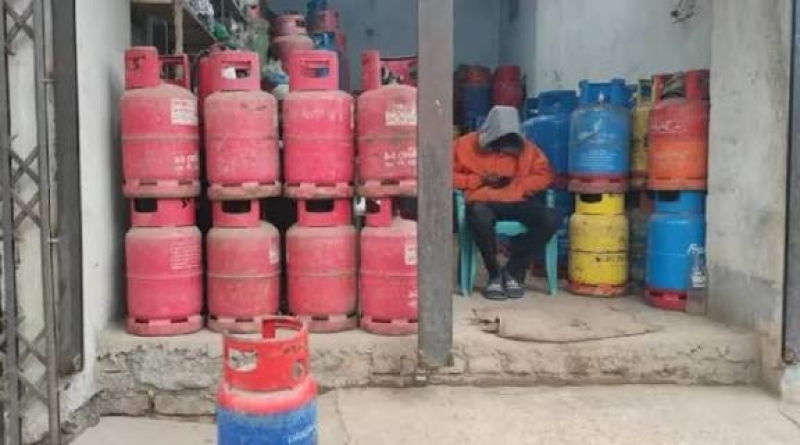
The Energy and Mineral Resources Division has urged the National Board of Revenue (NBR) to revise the existing VAT and tax structure on liquefied petroleum gas (LPG) imports and local production, aiming to stabilise supply and ease consumer pressure amid an ongoing market crunch.
In its letter, sent in reference to recent decisions of the Advisory Council and a petition submitted by the LPG Operators Association of Bangladesh (LOAB), the Energy Division noted that around 98 per cent of the country’s LPG demand is met through imports by private sector operators, while the fuel is widely used for household cooking as well as in industrial activities.
The letter pointed out that LPG prices typically rise during the winter season due to constrained global supply and increased domestic demand.
The situation has worsened as lower pipeline natural gas supply has pushed households and industries towards LPG, triggering a supply crunch that is disrupting daily life and drawing wide media attention.
Referring to a memorandum issued by the Internal Resources Division on December 23, 2025, the Energy Division cited discussions held at the Advisory Council meeting on December 18, 2025.
At that meeting, the council considered a proposal to withdraw the existing 15 per cent VAT exemption at the import stage and impose a 10 per cent VAT, while extending relief at other stages of the supply chain.
The proposal also includes retaining the 7.5 per cent VAT at the local production stage, alongside exemptions from VAT at the business or trading stage and exemption from advance income tax.
According to the Advisory Council, such a restructuring could help rationalise the overall tax burden on LPG and contribute to price stability.
The council, however, stressed that any revision must be supported by a detailed analysis of its impact on consumers.
The meeting minutes recorded that it is essential to assess the extent to which LPG purchase costs at the consumer level would fall if the proposed measures are implemented.
To ensure this, the Advisory Council directed the Energy and Mineral Resources Division, the Ministry of Commerce and the Internal Resources Division to carry out a coordinated review and resubmit the proposal to the council with a clear assessment of consumer price implications.
The Energy Division also informed the NBR that the issue had been discussed in a meeting with leaders of the LPG Operators Association of Bangladesh (LOAB).
While the division expressed agreement with the Advisory Council’s broader approach, LOAB representatives reiterated their demand for zero per cent VAT at the import stage, opposing the proposed 10 per cent rate.
Despite this difference, official records indicate that LOAB had broadly aligned with the Advisory Council’s deliberations, though disagreements remain over the specific VAT rate at the import level.
The Energy Division said that policy support through a rationalised VAT and tax structure is crucial to maintaining normal LPG supply, particularly at a time when pipeline gas availability remains limited.
It urged the NBR to take necessary steps in line with the Advisory Council’s guidance, taking into account the prevailing market situation and the need to protect consumers from further price shocks.
LP Gas Traders Cooperative Society announced an indefinite countrywide strike from Thursday in the marketing and supply of the fuel, demanding higher distribution and retail charges, reports UNB.