

- Mecca Pact Puts Bangladesh’s Foreign Policy to New Test |
- Remittance reaches $2.34 billion in first 24 days of August |
- BSF men flee leaving behind 2 shotguns, walkie-talkie |
- Bhutan King makes brief stopover in Dhaka, meets President |
- Eid-e-Miladunnabi being observed today |
200 MW of solar power added to national grid in 6 months of govt
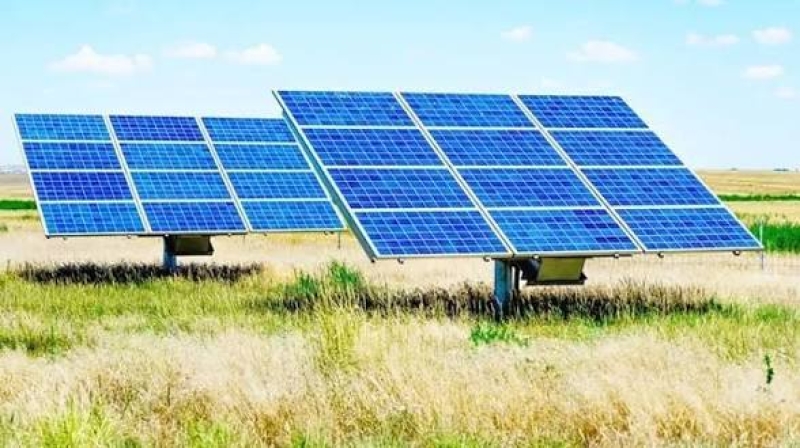
As per the election manifesto of the BNP government led by Prime Minister Tarique Rahman, about 200 MW of solar power has been added to the national grid through net metering connection in its first six months.
This solar power was added to the national grid as part of various action plans taken by the government for the expansion of renewable energy and sustainable development of the power sector, according to an official report here recently.
The report was published on the progress of the implementation of the 180-day action plan of the Ministry of Power, Energy and Mineral Resources.
The report said the action plan has given top priority to renewable energy, net metering, energy storage, frequency control and stability of the national grid, and energy efficiency.
On the other hand, the work plan of the Energy and Mineral Resources Division has given importance to increasing domestic gas exploration and production, exploring new oil and gas, developing LNG infrastructure, increasing energy efficiency, and establishing an affordable and transparent tariff system.
According to the report, most of the initiatives taken by the Power and Energy Division under the government's 180-day work plan have been implemented.
The work plan of the Power Division has achieved 100 percent implementation progress, while the progress of the initiatives taken by Energy and Mineral Resources Division has been 90.55 percent.
The overall implementation progress of initiatives of the two divisions stood at 95.28 percent.
The report said in the first 180 days of the government's assumption of office, the 'National Renewable Energy Development Strategy (2026-2030)' has been formulated as part of the short and medium-term work plan for the renewable energy sector.
As part of the long-term development plan, the 'National Renewable Energy Roadmap 2026' has been formulated at the initiative of Sustainable and Renewable Energy Development Authority (SREDA).
According to the report, one 10-megawatt solar power plant out of four has been approved under the merchant policy. Another project is awaiting for approval.
The report identifies areas for investment in the National Renewable Energy Development Strategy Paper, including solar power, wind power, hydropower, biomass and biogas, clean cooking, energy conservation technology, merchant power plants and public-private partnerships.
A business model has been formulated in association with the Power Division, Local Government Division and the Ministry of Environment, Forest and Climate Change to generate electricity from waste.
At the same time, offshore wind power project development guidelines have been prepared to explore the potential of the blue economy.
The progress report said initiatives have been taken to install Battery Energy Storage Systems (BESS) of 120 MW and 60 MW capacity at Ishwardi and Bhulta grid substations respectively to ensure frequency control and stability of the national grid.
In addition, a report has been submitted after examining the feasibility of setting up a barge-mounted power plant in Bhola.
Apart from this, the report said a five-year action plan for energy efficiency and storage for the period 2026-2030 has been finalised. In addition, energy audits have been conducted at 30 designated consumer establishments.
The report said 95 percent of the work of drilling seven gas wells and workover activities of four wells has been completed as per the plan. Of those, drilling of six wells (Sylhet-10 and 11, Srikail-5, Rashidpur-11, Titas-28 and Sundalpur-4) has been completed.
A total of 21.42 million cubic feet of gas is being supplied to the national grid from these wells daily.
On the other hand, after the completion of the workover, another 10.6 million cubic feet of gas is being added to the national grid from four wells daily. As a result, a total of 32.02 million cubic feet of gas is being supplied to the national grid.
The progress report said under the large-scale programme of drilling 50 wells across the country to increase local gas exploration, DPP has been formulated to implement 28 well drilling and workover projects.
The work of evaluating the tender for purchasing a 2,000 horsepower rig for oil and gas exploration is underway.
At the same time, the process of sending the DPP for purchasing a 1,500 horsepower rig to the Planning Commission is on progress.
According to the report, a bidding round has been called under Bangladesh Offshore Model PSC-2026 for oil and gas exploration in offshore area.
On the other hand, the draft of Bangladesh Onshore Model PSC-2026 for onshore exploration has been sent for approval in-principle of the Cabinet Committee on Economic Affairs.
The work of 500 line kilometers of 2D seismic survey for oil and gas exploration has been completed. However, the report mentioned that the 100 square kilometer work of 3D seismic survey is being hampered somewhat due to the rainy season.
According to the progress report, the implementation model has been determined after reviewing the proposals of various organisations to establish a floating LNG terminal in the Kutubjom area of Maheshkhali, Cox's Bazar to develop domestic energy infrastructure.
On July 28, the Cabinet Committee on Economic Affairs gave approval in principle to implement the project under the G-2-G method. In addition, EOI has been invited to appoint a transaction adviser under the PPP method to establish a land-based LNG terminal.
An EOI has also been invited for the appointment of a consultant for the Modernisation and Expansion of ERL project to build a crude oil refinery.
The report said in the energy sector, system loss has been reduced by 1.35 percent to 7.18 percent in the five months of February-June this year.
The system loss was 8.03 percent in January. The progress report also said according to the Bangladesh Energy Regulatory Commission Act, 2003, the commission has also taken steps to determine the tariffs of natural gas, LPG, furnace oil and jet fuel through public hearings.
A draft policy has been formulated regarding gas allocation in the gas distribution system in the industrial sector.
In addition, about 80 percent of the work taken to supply Bhola gas to the national grid has been completed, reports BSS.