

- 3,156-pound pumpkin grown in Rhode Island is possible world record |
- Explosions rock Riyadh as Iranian strikes on vessels in Hormuz intensify |
- Nobel Peace laureate defends international justice amid US criticism |
- Litton sets Bangladesh wicketkeeping record in Afghanistan Test |
- Oil Prices Fall Despite Fears of Saudi Supply Disruptions |
Youth Gangs: An Urgent Call for Coordinated Action
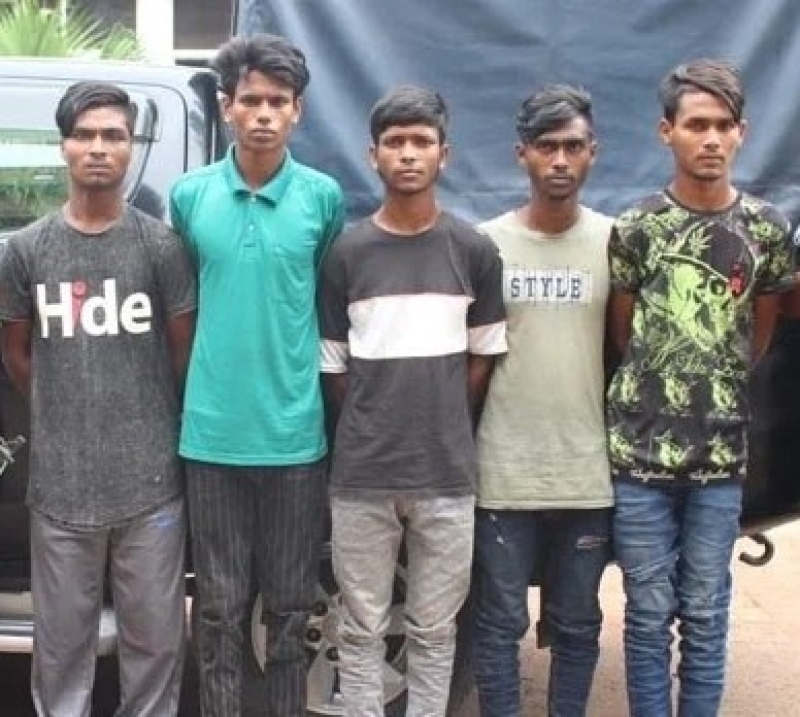
Youth gang members held by law enforcers in Dhaka City recently2.
Sustainable Solutions Can Only Be Achieved Through the Collective Responsibility of Families, Education, Society, and the State
Dr. Mohammad Mizanur Rahman
Bangladesh is a nation with a predominantly young population. A significant proportion of its people are children, adolescents, and young adults. This generation represents the driving force behind the country's future economy, science, education, culture, and governance. However, one issue that has become increasingly alarming in recent years is the growing involvement of adolescents in organised criminal groups.
Only a few years ago, the term "youth gang" was largely associated with certain neighbourhoods of the capital city. Today, the situation has changed dramatically. Reports of youth gang activities are now regularly emerging from Dhaka, Chattogram, Gazipur, Narayanganj, Sylhet, Cumilla, Rajshahi, Khulna, and nearly every major urban centre across the country. This is no longer an isolated criminal phenomenon; rather, it serves as a warning sign of deeper transformations occurring within our social structure, family relationships, educational system, and digital culture.
Recent analyses of national newspaper reports reveal that members of youth gangs are involved not only in violent clashes among themselves but also in drug trafficking, robbery, extortion, online intimidation, public display of weapons, and territorial control. In many instances, seemingly minor disputes have escalated into deadly conflicts. Particularly vulnerable are school and college students, adolescents from low- and middle-income families, and young people who have dropped out of school, many of whom have become primary targets for gang recruitment.
Although law enforcement agencies have conducted repeated operations against youth gangs, the root causes of the problem remain largely unaddressed. According to police officials, many gang-involved adolescents had never previously appeared on the radar of law enforcement. This suggests that the existing social mechanisms for identifying and supporting at-risk youth before they become involved in crime remain inadequate—a matter of significant concern.
According to the Chattogram Metropolitan Police, the city currently has at least 200 active youth gangs with approximately 1,400 identified members. At the national level, a police report previously documented 173 youth gangs, 780 criminal cases, and nearly 900 accused individuals. Experts believe that the actual numbers may be considerably higher because many incidents are never officially reported. Fear, social stigma, local influence, and lengthy judicial procedures often discourage families from filing complaints. Consequently, the visible statistics represent only part of a much larger hidden reality.
Viewing the rise of youth gangs solely as a law-and-order issue would overlook the broader nature of the problem. It is simultaneously a public health issue, a child protection issue, a mental health issue, an educational challenge, and a social development concern. When an adolescent becomes involved in criminal activity, the consequences extend far beyond a single offense: a family experiences crisis, an educational journey is interrupted, and the nation risks losing a potentially valuable citizen.
Social Media: A New Challenge in a New Reality
Over the past decade, digital technology has transformed the lives of Bangladeshi adolescents more profoundly than any other social development. Smartphones and social media platforms have become the primary channels through which young people communicate, seek entertainment, and shape their identities. While these technologies have created unprecedented opportunities, they have also introduced new risks.
Many youth gangs now use platforms such as Facebook, TikTok, Instagram, and other social networking sites to establish their identity and influence. Videos of violent confrontations, public displays of weapons, reckless motorcycle processions, and online threats against rival groups are frequently circulated. Such content spreads rapidly and can create the false impression among adolescents that criminal behavior is a pathway to popularity, power, or social recognition. In reality, it sends a dangerous message that normalizes violence and criminality.
Experts argue that adolescence is a stage during which the desire for identity, peer acceptance, and social recognition is particularly intense. When these psychological needs are not fulfilled through family, educational institutions, or positive community environments, criminal groups often fill the gap. Under such circumstances, a gang becomes more than an organized criminal group; it provides many adolescents with an alternative source of identity, friendship, belonging, and perceived power.
Is the Family Losing Its Role?
Bangladesh's social structure is changing rapidly. The transition from extended families to nuclear families, increasingly demanding work schedules, urban pressures, and technology-driven communication have all altered family relationships.
Many parents invest substantial financial resources in their children's education but often have limited opportunities—or habits—of monitoring their children's emotional well-being, friendships, online activities, or use of leisure time. In many households, communication between parents and children has gradually become dominated by instructions and prohibitions rather than meaningful dialogue.
Psychologists emphasize that what adolescents need most during this stage of life is someone who genuinely listens. They seek understanding, empathy, and emotional support in both their successes and failures. When families fail to provide this emotional space, many adolescents begin searching for acceptance elsewhere, often finding it among peers or, in some cases, within youth gangs.
Why Is Silence Dangerous?
A common tendency within society is to ignore problems until they directly affect one's own family. Unfortunately, such silence further complicates the issue of youth gangs. When reckless motorcycle riding, drug-related gatherings, organized groups of adolescents, intimidation near schools, or violent threats on social media are dismissed as mere "youthful behaviour," they can gradually evolve into serious criminal activities.
To build effective social resistance against youth crime, this culture of silence must first be broken. Without the active participation of families, teachers, neighbours, community leaders, and local representatives, law enforcement agencies alone cannot effectively address this growing challenge.
Rehabilitating a young person and helping them return to society is far more beneficial—for both the individual and the nation—than allowing them to remain trapped in a lifelong cycle of crime.
This Is Also a Development Issue
Bangladesh has set an ambitious vision of becoming a developed and smart nation by 2041. Achieving that vision requires a healthy, educated, skilled, and responsible young population. If a significant number of adolescents become involved in crime, drug abuse, or violence, the consequences will extend beyond law enforcement, affecting human capital development, education, investment, and social stability.
Therefore, preventing youth gangs should not be viewed as the responsibility of a single ministry. It should be recognized as a national development priority that is essential for ensuring social security and protecting future generations.
International experience clearly demonstrates that sustainable success is achieved not through punishment alone but through coordinated action involving families, schools, communities, healthcare professionals, social workers, law enforcement agencies, and policymakers. Bangladesh can significantly reduce youth gang violence by investing in quality education, school counseling services, mental health support, digital literacy, sports, cultural activities, vocational training, and community-based prevention programmes.
Protecting adolescents is ultimately an investment in Bangladesh's future. Today's young people are tomorrow's doctors, teachers, engineers, scientists, entrepreneurs, artists, and national leaders. If they are provided with guidance, opportunities, and a supportive environment, they can become the country's greatest strength. Conversely, neglect, social exclusion, substance abuse, and violence may divert them toward crime, undermining both national development and social stability.
The responsibility for addressing youth gangs does not rest solely with the government or law enforcement agencies. It is a shared responsibility of parents, educators, community leaders, religious institutions, the media, civil society, and every citizen. By strengthening families, creating safer schools, expanding opportunities for positive youth engagement, and promoting rehabilitation alongside justice, Bangladesh can build a safer, more inclusive, and more resilient society.
The need of the hour is clear: prevention alongside enforcement, rehabilitation alongside accountability, and collective responsibility instead of social indifference. Only through a coordinated national commitment can Bangladesh protect its young generation and ensure a peaceful, secure, and prosperous future for all.
(Dr Mohammad Mizanur Rahman is an Assistant Professor, Faculty of Health and Life Sciences Management and Science University, Malaysia.)
-- From the August print edition