

- Uncertainty over possible US-Iran talks as Trump extends ceasefire |
- Bangladesh eyes broader bilateral engagements with African nations |
- Trump Extends Iran Ceasefire, Seeks Time for Talks |
- SSC and Equivalent Exams Begin Nationwide |
- US, Iran Signal War Readiness as Talks Hang in Balance |
Relief Grows as US-Iran Truce Begins, Tensions Stay
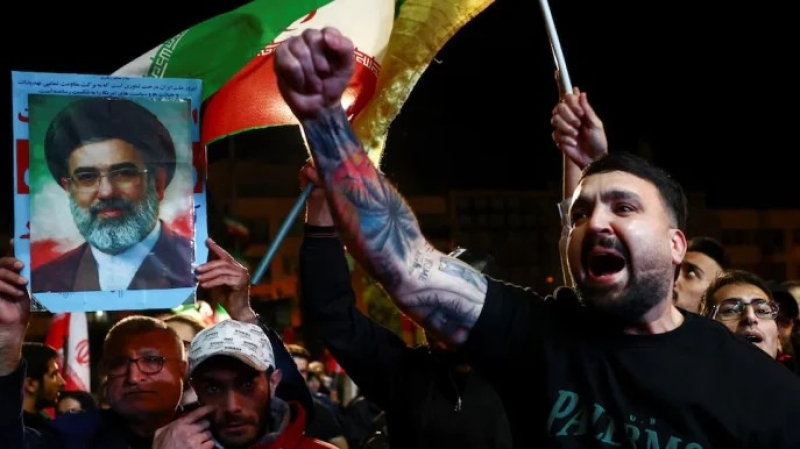
A man shouts slogans as people gather after a two-week ceasefire in the Iran war was announced, in Tehran, Iran, April 8, 2026.
The United States and Iran have agreed to a two-week ceasefire, bringing a temporary halt to a six-week war that killed thousands, destabilised the Middle East and severely disrupted global energy supplies.
The truce, brokered by Pakistan, triggered relief across international markets and among civilians after US President Donald Trump announced the agreement just hours before a deadline he had set for Iran to reopen the Strait of Hormuz.
The ceasefire has paused hostilities for now, but the core disputes between Washington and Tehran remain unresolved, raising doubts over whether the breakthrough can lead to a lasting peace.
Pakistan Prime Minister Shehbaz Sharif said Iranian and US delegations had been invited to Islamabad on Friday for what could become the first official peace talks since the conflict began. Iran has reportedly confirmed its participation, though US officials have yet to formally confirm the venue or timing.
Trump said the ceasefire depends on Iran allowing safe passage through the Strait of Hormuz, a vital waterway that handles about one-fifth of the world’s oil and liquefied natural gas shipments.
By Wednesday, shipping had not fully resumed, though Iranian Foreign Minister Abbas Araqchi said Tehran would stop counter-attacks and ensure safe passage if attacks against Iran also stopped.
The announcement helped calm fears of a prolonged global energy shock. Oil prices fell sharply, while stock markets rose worldwide on hopes that one of the worst disruptions to global energy trade may begin to ease.
In Iran, many people welcomed the pause in fighting, though uncertainty remained over whether the truce would hold. Public celebrations were reported in several areas, but many also expressed concern that renewed hostilities could resume at any moment.
The war began on 28 February and quickly escalated into a wider regional crisis. Trump and Israeli Prime Minister Benjamin Netanyahu had said their objective was to curb Iran’s military reach, dismantle its nuclear programme and weaken its ruling establishment.
Despite the intensity of the campaign, Iran’s leadership has remained in place and retains much of its missile and drone capability. Analysts say Tehran’s demonstrated ability to disrupt Gulf energy flows may have lasting implications for regional power dynamics.
Iran’s Supreme National Security Council described the ceasefire as proof of a major victory against what it called an illegal and unjust war.
Israel has backed the decision to suspend strikes on Iran for two weeks, but the outcome has sparked criticism from within Israeli politics. Opposition figures argued that the war failed to eliminate Iran’s nuclear programme, missile capabilities or political leadership.
The ceasefire also does not extend to all fronts in the region. Israeli military operations in Lebanon continued, with reports of fresh strikes in the south and new warnings issued to residents in several areas.
Lebanese officials said they had received no indication that their country was included in the ceasefire arrangement and had not taken part in the negotiations.
If talks begin in Islamabad as planned, negotiators will face major unresolved differences. Washington has reportedly tabled a 15-point framework, while Iran has proposed a separate 10-point plan.
Trump said Iran’s proposal offered a “workable basis” for negotiations. Iranian officials, meanwhile, suggested the US move indicated a broad acceptance of Tehran’s core terms, which reportedly include sanctions relief, compensation for war damage and continued Iranian control over the Strait of Hormuz.
US officials have privately reassured Israel that key American demands remain unchanged, including curbs on Iran’s nuclear activities and missile programme.
Although the ceasefire has brought temporary relief, the path to a permanent settlement remains highly uncertain.