

- Bangladesh Targets 8.5-Fold Rise in Cotton Output by 2050 |
- India Jails Two 'Cockroach' Movement Leaders for Five Days |
- Iran Says Cargo Ship Sank After Hitting Mine in Hormuz |
- No Plan for Operation Clean Heart-Style Drive Now: Home Minister |
- Bangladesh Eyes $10b in UK Exports Through Diversification |
Bangladesh aims to increase cotton yield 8.5-fold by 2050
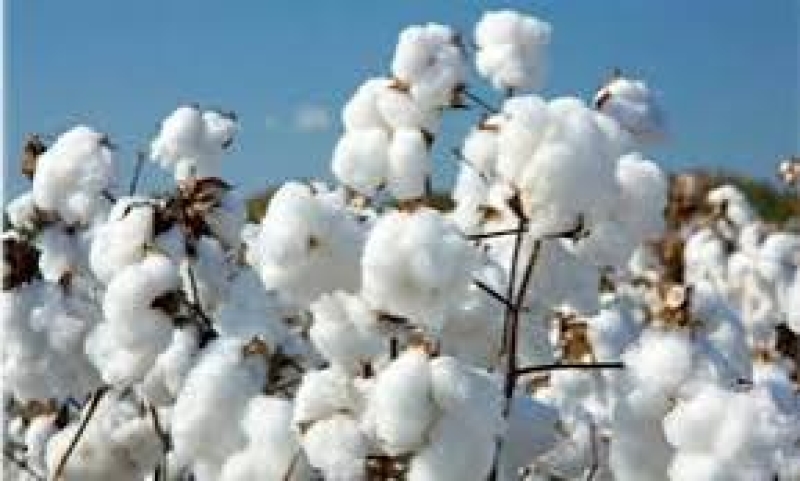
The government has taken a plan to gradually increase cotton production to 19 lakh bales from existing 2.24 lakh by 2050 expanding its cultivation in 53 of the 64 districts, officials said here today.
“We have taken short-, medium- and long-term plans to boost cotton production to enhance the production 8-5-fold expanding cotton production to 53 districts from 39,” Cotton Development Board’s (CDB) executive director Md Rezaul Amin told BSS.
He said under the plans, the CDB aimed to produce 5 lakh bales of lint cotton, which is the raw, clean fiber separated from harvested cotton seeds, by next four years.
CDB aimed to produce 10 lakh bales by 2040 and 19 lakh bales by 2050 by expanding the cultivation area to 2 lakh hectares of land.
Amin said the new districts to come under the cotton production are: Moulvibazar, Hobiganj, Cumilla, Chandpur, Noakhali, Lakhipur, Barisal, Bhola, Barguna, Chattogram, Feni, Cox’s Bazar and Nilphamari.
Bangladesh currently is almost entirely import-dependent for cotton and ranked as one of the world’s largest cotton importers because of its status as one of top RMG exporting nation.
CDB officials said the current domestic production only meets about 3 to 4 percent of the local requirement or local market against a demand for nearly 8 million bales annually.
The CDB officials, however, said the current domestic production meets 18 to 20 percent of the country’s own consumption of the key material used to produce fabrics for the local market.
The country produces two verities -- upland and hill cotton – based on soil types.
The officials said they planned to expand cotton production in high charland or shoals, northwestern Barind region, suitable hilly land, comparatively less fertile and low productive land, saline and drought prone areas.
They said cotton could be produced in orchards along with vegetables, pulses and spices.
In a meeting between Prime Minister Tarique Rahman and the agriculture ministry officials on September 13, CDB was asked to submit a detailed plan after reviewing all potentials of cotton production in the country.
Parliamentary stranding committee on agriculture ministry in a meeting three days later also recommended for quick and effective measures to enhance cotton production to reduce the huge import cost.
Bangladesh first produced cotton in 1976 in Rangpur region while CDB was established immediately after the independence to meet the domestic raw cotton demands for the local textile industries.
The country first took initiatives to expand cotton research during Shaheed President Ziaur Rahman government in 1978 after importing cotton seeds for the first time from the USA.
Bangladesh founded Cotton Research Center and Seed Production Farm at Jagadishpur of Chowgacha upazila in Jashore in 1980 under CDP.
Former Prime Minister Begum Khaleda Zia renamed CDB’s three key farms as Cotton Research, Training and Seed Multiplication Farm’ and separately established Cotton Farm at Sripur of Gazipur in 1994.
CDB’s soil nutrition and water management specialist Dr Md Gazi Golam Mortuza said cotton now appeared as one of a most profitable cash crop in the country as the jute cultivation was faded away.
“No other crops in the country is now as much as profitable as cotton, so farmers will be financial benefitted by its enhanced yields which will also reduce import volume of raw cotton”, he added.
Mortuza said the per unit cotton cultivation cost stands approximately at Tk 15,000 while a farmer can earn Taka 60,000 through producing 15 maunds (37.32 kgs) raw cotton on a bigha of land.
CDB officials, however, said they needed appointment of expert manpower to implement the plan adding the organization was currently manned by 483 people out of 864 approved posts.
CDB’s senior ginning officer Mohammad Mofazzal Hossain said the cotton cultivation is also beneficial for the soil health while repeated cultivation of particular crops like maize in the same land cause serious soil quality degradation.
Bangladesh spent Tk 80,000 crore (US$6.51 billion) for import of raw cotton and yarn of 7.3 million bales from abroad in 2025-26 fiscal, according to official statistics, reports BSS.