

- Bangladesh Gets Three More Years to Prepare for LDC Graduation |
- Dhaka ranks 5th among cities with worst air quality this morning |
- Netanyahu’s Bloc Loses Majority as Party Claims Vote Stolen |
- 3-Day Tourism Fair Begins; Theme 'AI Powered Tourism, Sustainable Destination' |
- Roopor NPP Unit One Gets Approval to Transmit Limited Power to Nat'l Grid |
Govt Makes Registration Mandatory for E-Rickshaws in Cities
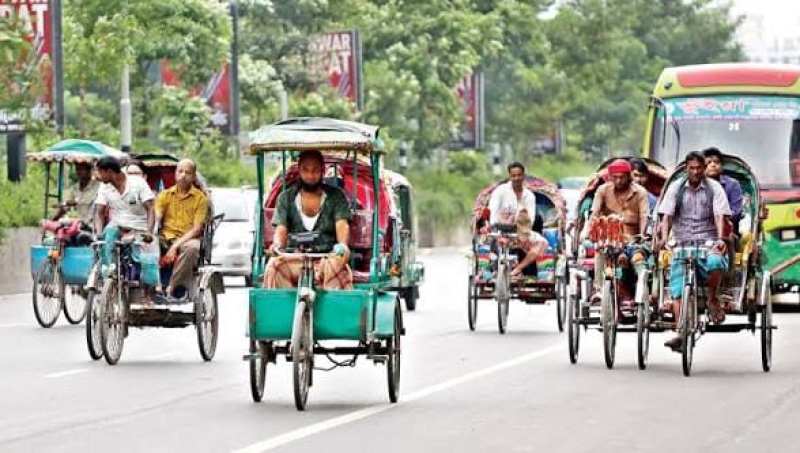
The government has issued new rules to regulate battery-run three-wheeled rickshaws, or e-rickshaws, in city corporation areas, making registration mandatory and introducing restrictions on routes, safety, charging and vehicle lifespan.
Under the rules, a maximum of five e-rickshaws can be registered against one National Identity (NID) card. A vehicle registered with one city corporation cannot be operated commercially in another.
The regulations, titled Rules of Battery-Run Low-Speed Three-Wheeled Rickshaws (E-Rickshaws) in City Corporation Areas, 2026, were published in a gazette on Thursday. They apply to all e-rickshaws operating within city corporation areas across the country.
An e-rickshaw is defined as a low-speed, battery-operated three-wheeler with a government-approved maximum speed of 25 kilometres per hour and a passenger capacity of two to four, excluding the driver.
Registration and Eligibility
Each city corporation, with prior government approval and in consultation with the relevant traffic department, will determine how many e-rickshaws may operate within its jurisdiction, either across the entire area or by zone.
Applicants must be Bangladeshi citizens aged at least 18 and must not have been declared of unsound mind by a competent court.
Each registered vehicle will receive a unique registration number, a QR code and a number plate, which must be displayed visibly. Registration will remain valid for five years.
A maximum of five e-rickshaws may be registered against one NID card across one or more city corporations. Operating a vehicle without registration or a valid renewal is prohibited.
Fitness, Lifespan and Safety
Every e-rickshaw must meet the technical and safety standards prescribed by the Bangladesh University of Engineering and Technology (BUET). Registration and renewal require a fitness certificate countersigned by the relevant traffic department.
Existing vehicles may be modified to meet the required standards with official approval and must obtain the necessary fitness certificate. Insurance coverage will be introduced gradually.
The economic lifespan of an e-rickshaw is set at 12 years from registration. After that period, its registration and number plate must be cancelled. Every vehicle must also have a speedometer or odometer.
Unregistered, illegal or mechanically unsafe vehicles will not be allowed on roads.
Metropolitan traffic departments, law enforcement agencies and authorised executive magistrates may take joint or separate action against illegal e-rickshaws.
Roads, Routes and Operating Restrictions
E-rickshaws are prohibited on national highways, expressways, elevated expressways, major bus routes, bus rapid transit (BRT) corridors, footpaths and other roads restricted by the authorities.
Drivers must keep to the left lane and are prohibited from using mobile phones while driving, overtaking or changing lanes without authorisation.
Routes will be determined jointly by city corporations and traffic departments. Operations will be zone-based, meaning a vehicle registered in one zone cannot operate in another.
City corporations and traffic departments will also determine the number of vehicles permitted in each zone, designated routes and vehicle colour codes.
Passenger Capacity and Speed Limits
Depending on their size, e-rickshaws may carry two to four passengers, excluding the driver. Carrying commercial goods beyond items passengers can carry by hand is prohibited.
Horns must not exceed 40 decibels. The maximum speed is 15 kilometres per hour near schools, hospitals, religious sites and densely populated areas, and 25 kilometres per hour elsewhere.
Authorities may arrange driver training through recognised institutions, covering traffic laws, road safety, and vehicle and battery maintenance.
Parking and Charging Facilities
Adequate parking areas must be arranged in every ward or other suitable locations in consultation with the relevant traffic department.
Batteries may be charged only at authorised charging points or garages licensed by the respective city corporation. These facilities should incorporate renewable or solar energy.
Authorities may establish charging stations, garages and battery-swapping centres through public-private partnerships, private investment or other suitable arrangements, in consultation with electricity distribution authorities and traffic departments.
Charging stations should have net-metering systems to supply excess daytime solar power to the national grid and use grid electricity for charging at night.
Government approval is mandatory for setting up charging stations, while unauthorised electricity use will be punishable under existing laws.
Over time, batteries must be charged exclusively at legally registered stations, and unregulated charging practices must be stopped.
Loans and Battery Recycling
Government, autonomous and private organisations, scheduled banks and finance companies may provide loans to e-rickshaw owners and drivers to purchase approved vehicles and develop supporting infrastructure.
The production, import and use of e-rickshaws, along with battery recycling and management, must comply with the Bangladesh Environment Conservation Act, 1995, and related rules and directives.
Old or damaged batteries must not be dumped in open spaces, on land, in water bodies or with general waste. Burning them is also prohibited.
Sellers must collect an old battery when selling a new one and send it to an authorised recycling facility.
Committee to Regulate Manufacturing
A committee headed by an additional secretary of the Urban Development Wing of the Local Government Division will recommend approval of e-rickshaw manufacturers and regulate production.
Its members will include the chief executive officer of the relevant city corporation; a representative of the Metropolitan Police Traffic Division at least at the rank of deputy commissioner, or District Police at least at the rank of additional superintendent of police; a mechanical or electrical engineering representative from BUET or another relevant institution; a representative of the deputy commissioner at least at the rank of additional deputy commissioner; and the deputy secretary of the City Corporation-1 branch of the Local Government Division, who will serve as member-secretary.
The committee will examine vehicle designs and technical information against BUET’s prescribed standards and safety requirements before recommending manufacturing approval. Production licences will be issued by the relevant authority with government approval. Additional members may be included when necessary.
Drivers Must Assist Accident Victims
In the event of an accident, an e-rickshaw driver must immediately stop the vehicle, assist any injured people and report the incident to the relevant police authorities.
The police will then notify the appropriate authorities.