

- Kuakata's 'Mini Switzerland', 'Lal Kakrar Char' captivating tourists |
- Democratization of economy Govt’s core objective: Amir Khasru |
- OIC Condemns Terrorist Attack in Bannu District of Pakistan |
- Pakistan, India, both celebrate victory a year after war |
- Iran sends response to US peace proposal via Pakistan |
Greek, Turkish leaders meet in Ankara amid rising tensions
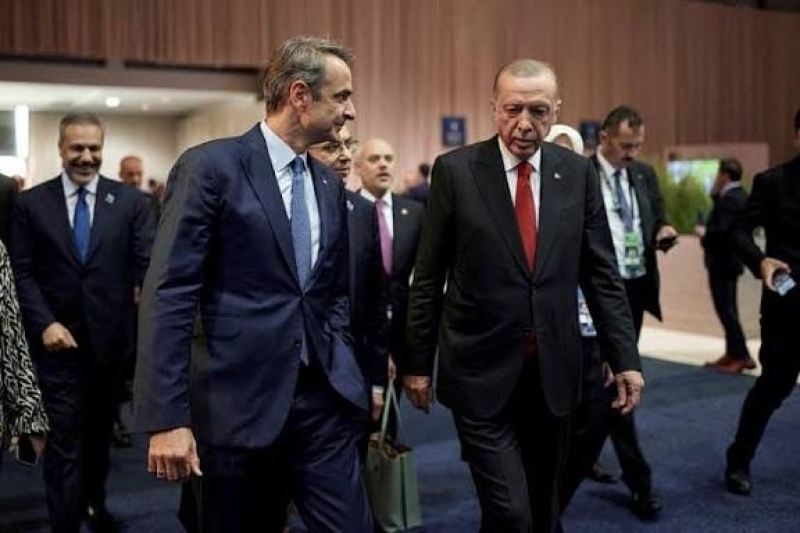
Greek Prime Minister Kyriakos Mitsotakis is visiting Turkey on Wednesday to maintain dialogue amid escalating tensions between the two longtime rivals.
Mitsotakis, accompanied by senior ministers, will meet President Recep Tayyip Erdogan under the High-Level Cooperation Council, an initiative aimed at strengthening ties between the NATO allies.
The two countries remain at odds over maritime boundaries, Cyprus, and drilling rights in the Aegean and eastern Mediterranean seas. Turkey has also raised concerns over growing defense and energy cooperation between Greece, Israel, and Cyprus, which Ankara sees as a move to curb its influence in the region.
Greece and Turkey have narrowly avoided conflict multiple times over the past 50 years. In 2020, a dispute over energy exploration rights brought their warships face-to-face in the Mediterranean. Recently, Greek officials reaffirmed plans to extend their territorial waters in the Aegean from six to 12 nautical miles, a move Turkey’s parliament in 1995 called a “cause of war.” Ankara says the extension would violate its rights and limit its maritime access.
The talks in Ankara are expected to focus on a “positive agenda,” including trade, energy, education, and cultural cooperation, with no breakthrough anticipated on disputed issues.
Both countries also remain divided over Cyprus, split since 1974 between ethnic Greek and Turkish communities. Turkey has opposed a federal solution for reunification and, along with the Turkish Cypriot administration, backs a two-state approach, reports UNB.