

- Gaza Ceasefire Not Enough as Children Continue to Die |
- Bangladesh Sets Guinness Record With 54 Flags Aloft |
- Gambia Tells UN Court Myanmar Turned Rohingya Lives Hell |
- U.S. Embassy Dhaka Welcomes Ambassador-Designate Brent T. Christensen |
- Survey Shows Tight Race Between BNP and Jamaat-e-Islami |
Trump Warns Iran of 'Strong Action' Over Protest Hangings
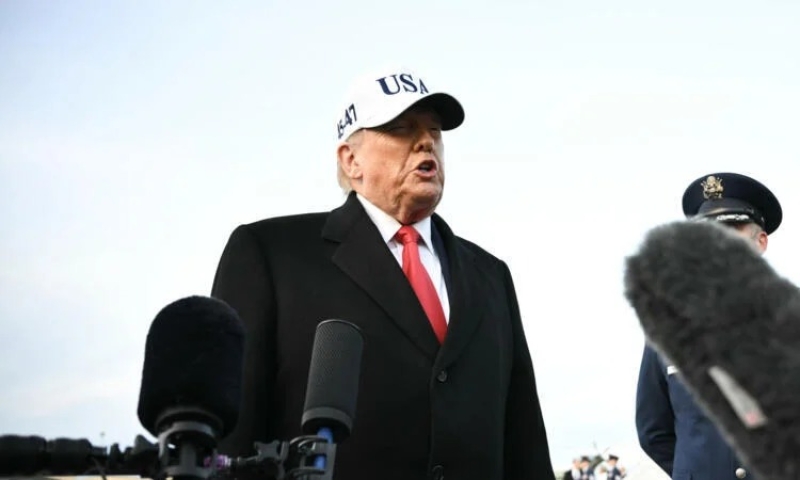
US President Donald Trump
US President Donald Trump on Tuesday warned of unspecified “very strong action” if Iranian authorities proceed with executing protesters arrested during recent nationwide demonstrations, as Tehran dismissed the warning as a pretext for foreign intervention.
International concern has mounted over Iran’s crackdown on protests that have posed one of the most serious challenges to the country’s clerical leadership in years. Rights groups say the violence has likely claimed thousands of lives, though the true toll remains unclear amid severe restrictions on information.
Iran’s mission to the United Nations rejected Washington’s stance, accusing the United States of pursuing regime change through sanctions, threats and unrest to justify possible military action. In a post on X, the mission said such efforts would “fail again”.
Iranian officials insist they have restored order following successive nights of mass protests across the country. However, rights organisations accuse security forces of using lethal force against demonstrators and concealing the scale of the crackdown through an internet blackout that has lasted more than five days.
Speaking to US media, Trump said Washington would respond if Iran carried out executions of protesters. “We will take very strong action if they do such a thing,” he said, adding that the situation would worsen for Tehran if authorities began hanging detainees.
Iranian prosecutors have announced capital charges of “moharebeh”, or “waging war against God”, against some people arrested during the demonstrations. The charge can carry the death penalty under Iranian law.
Videos circulating on social media showed rows of bodies in a morgue south of Tehran, with grieving relatives searching for missing family members. While international phone calls were partially restored on Tuesday, connections remained unstable and internet access inside the country continued to be heavily restricted.
Earlier, Trump urged Iranians to continue protesting and said he had cancelled meetings with Iranian officials until the killing of protesters stopped, though he did not specify which talks he meant or what assistance he was referring to.
European governments also expressed anger over the crackdown. France, Germany and the United Kingdom, along with the European Union, summoned Iranian diplomats in protest. EU Commission President Ursula von der Leyen described the rising number of casualties as “horrifying” and signalled further sanctions against those responsible.
The Norway-based group Iran Human Rights said it had confirmed at least 734 deaths, including nine minors, but warned the real figure was likely far higher due to limited access to information from many provinces and hospitals. The group highlighted the case of a 26-year-old detainee reportedly sentenced to death and facing imminent execution.
Iranian state media, meanwhile, reported that dozens of members of the security forces had been killed, with funerals turning into large pro-government rallies. Authorities have announced a mass funeral in Tehran for what they described as “martyrs” of the unrest.
On Monday, the government organised nationwide rallies that Supreme Leader Ayatollah Ali Khamenei said showed the protest movement had been defeated, calling them a warning to the United States. Analysts caution, however, that while the protests represent one of the most serious challenges to the Islamic republic in years, Iran’s leadership retains powerful security forces and repressive tools that make the outcome uncertain.