

- Tarique Warns of Fresh Conspiracies, Vows to Defend Sovereignty |
- National Revolution and Solidarity Day Today |
- Tarique Rahman Pays Tribute at Zia, Khaleda’s Graves |
- Dhaka’s air quality 4th worst in the world this morning |
- US Launches Fresh Strikes on Iran Amid Peace Efforts |
US election exposes growing erosion of bipartisan support for Israel
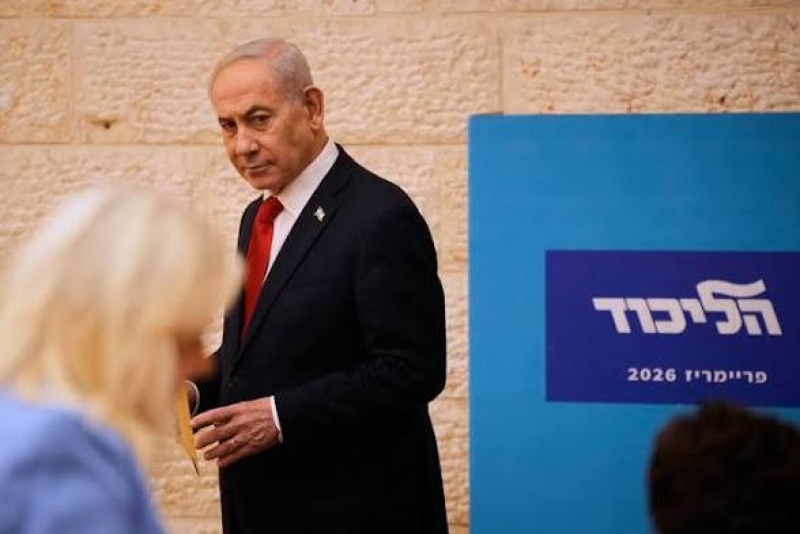
Recent US election results have highlighted a growing decline in bipartisan support for Israel, with President Donald Trump raising the possibility of ending military assistance, a vocal critic of Israel winning a key Senate race and Vice President JD Vance linking his party's electoral defeat partly to US-Israel relations.
The shift comes amid mounting criticism of Israel's military campaign in Gaza and its joint war with the United States against Iran, which have deepened divisions among both Democrats and Republicans over Washington's longstanding support for its Middle Eastern ally.
In Israel, critics of Prime Minister Benjamin Netanyahu have blamed his handling of relations with Washington for the growing rift. However, analysts say the divide reflects deeper changes in American public opinion and is likely to continue regardless of who leads Israel's next government.
On the political left, more Americans increasingly view Israel negatively over the war in Gaza and expanding settlements in the occupied West Bank. Meanwhile, some conservatives argue that Israel has undermined Trump's "America First" agenda by drawing Washington into an expensive and unnecessary conflict with Iran.
"Something fundamental has shifted," said Michael Oren, a historian and former Israeli ambassador to the United States, warning that calls to end military assistance could be only the beginning.
Trump's remarks about potentially ending nearly $4 billion in annual military assistance to Israel, made during an interview with Fox News, have raised questions about the future of bilateral relations. It remains unclear whether the comments reflect an actual policy shift or were intended to influence voters ahead of Election Day. The White House did not respond to requests for clarification.
Netanyahu has repeatedly described Trump as Israel's closest friend in the White House. During his first term, Trump recognised Jerusalem as Israel's capital and legitimised Jewish settlements, which most of the international community considers illegal. During his second term, he joined Israel in two wars against Iran.
Within hours of Trump's comments, election results showed sweeping Democratic victories across the country, including in the key swing state of Michigan. Abdul El-Sayed, who has accused Israel of committing genocide in Gaza, an allegation Israel strongly rejects, comfortably defeated his Republican opponent in a crucial Senate race.
Vance, who is widely viewed as a potential successor to Trump, has sought to distance himself from the Iran war and adopted an increasingly critical position on Israel.
In a social media post the morning after the election, Vance shared advice from an unnamed political pollster on how Republicans could regain voters' confidence. The recommendations included ending the war, addressing living costs and inflation, prioritising America First policies and changing the country's relationship with Israel.
Former Israeli deputy national security adviser Chuck Freilich said Vance's position reflected growing sentiment among the Republican Party's right-wing, isolationist and MAGA factions.
For decades, Washington has provided Israel with billions of dollars in financial assistance and advanced weapons while defending it against criticism at the United Nations and other international forums.
Supporters consider the assistance an investment in a strong and dependable regional ally. Critics, including El-Sayed, argue that US funding has helped sustain Israeli settlement expansion and weakened prospects for a two-state solution with the Palestinians.
Following Hamas' October 7, 2023, attack, the Biden administration authorised emergency weapons sales without congressional approval. Although it temporarily suspended a shipment of 2,000-pound bombs during the Gaza war, military assistance continued. Trump has also approved billions of dollars in weapons sales to Israel.
An academic study published last year estimated that US assistance to Israel had reached $21.7 billion since the Gaza war began.
Michael Singh, managing director of the Washington Institute for Near East Policy, said ending the assistance would leave Israel struggling to meet its defence requirements and represent a major unilateral change in bilateral relations.
Israel would need to finance its purchases of American-made weapons independently, either through borrowing or increased taxation, said Singh, who previously served as senior Middle East director at the US National Security Council under former President George W. Bush.
Netanyahu has previously expressed his intention to gradually reduce Israel's dependence on American military assistance over the next decade, aiming to establish a more balanced partnership based on technological cooperation, intelligence sharing and mutual investment.
Doron Spielman, a spokesperson for Netanyahu, recently told Fox News that the prime minister had been working with Trump to move from an aid-based relationship towards a partnership. Netanyahu has not publicly responded to Trump's latest remarks.
Netanyahu lost his parliamentary majority in last week's election, although it remains uncertain whether his opponents can form a government to replace him.
A new administration led by his main rival, former military chief Gadi Eisenkot, could take steps to address American concerns, including stronger action against settler violence. However, it would likely retain many existing policies towards the Palestinians and the wider region that have fuelled criticism in the United States.
The growing disconnect was evident when Yair Lapid, a leading figure in the anti-Netanyahu coalition, suggested on X that a new government should send representatives to Washington to engage with the White House, Congress and local leaders to restore bilateral relations.
Brad Lander, a newly elected Democratic representative from New York who was briefly detained by Israeli forces in the occupied West Bank last month, criticised the suggestion, saying American voters wanted respect for international law and human rights rather than diplomatic visits.
Freilich warned that Israel's relations with Washington could deteriorate further if Netanyahu remains in power, reports UNB.
If Eisenkot takes office, he could begin a long-term effort to repair the damage, although restoring the relationship could take 10 to 20 years, Freilich said.