

- Bangladesh Gets Three More Years to Prepare for LDC Graduation |
- Dhaka ranks 5th among cities with worst air quality this morning |
- Netanyahu’s Bloc Loses Majority as Party Claims Vote Stolen |
- 3-Day Tourism Fair Begins; Theme 'AI Powered Tourism, Sustainable Destination' |
- Roopor NPP Unit One Gets Approval to Transmit Limited Power to Nat'l Grid |
Netanyahu’s Bloc Loses Majority as Party Claims Vote Stolen
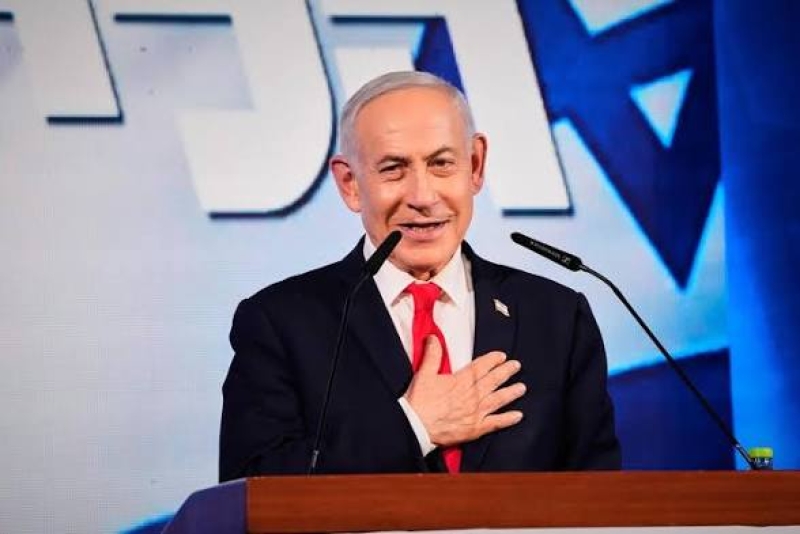
Israeli Prime Minister Benjamin Netanyahu’s Likud party on Thursday amplified unsubstantiated allegations that Arab-led parties had “stolen” the election, potentially with foreign assistance, as final results showed his bloc had lost its parliamentary majority.
The opposition accused Netanyahu of demonising Arab citizens in an attempt to undermine the election results after Arab-led parties secured a historic showing. If other opposition parties join forces with the Arab-led parties, they could potentially form a majority government in the Knesset, although such an alliance would be politically risky.
Results released by election officials showed Netanyahu’s bloc winning 53 seats in the 120-member parliament, well below the 68 seats it had controlled at its peak in the previous parliament. The main opposition secured 48 seats, while Arab-led parties won the remaining 19.
The vote count is complete, but the results still need to be certified and submitted to the country’s president next Wednesday.
Commission to Investigate Possible Foreign Interference
Likud has been spreading allegations of misconduct by Arab-led parties since exit polls indicated that Netanyahu had suffered a setback in Tuesday’s election. The party intensified its rhetoric after the head of Israel’s election committee, Supreme Court Justice Noam Sohlberg, said that “serious suspicions” of foreign interference had been brought to his attention.
In a letter to the Shin Bet security agency, Sohlberg said he could not verify the allegations but requested an investigation because of their serious nature.
Likud responded with an inflammatory statement declaring, “The elections in Israel have been stolen!” It claimed, without providing evidence, that the alleged interference was “aimed at facilitating a foreign takeover of the Knesset, the Islamisation of Israel and toppling of the right-wing government.”
Israeli media reported that members of Netanyahu’s party had accused Qatar, which many Israelis view as a patron of Hamas, the militant group based in Gaza.
Qatar swiftly denied the allegations, describing them as “ridiculous and dangerous”.
When announcing its results early Friday, the election commission said the investigation was based on classified intelligence. In a video statement, acting director general Dean Livne did not provide further details but warned that reports about the probe had been “entirely unfounded”.
“It does not affect the final results that will be submitted to the president, nor does it concern any particular sector of the population,” he said.
Netanyahu’s Opponents Accuse Him of Undermining Vote
Netanyahu’s main rival, former military chief Gadi Eisenkot, accused Likud of trying to delegitimise the election results.
“They are doing this because they lost,” Eisenkot said.
He also mocked the foreign-interference allegations, saying, “I welcome the fact that Netanyahu is finally condemning Qatari involvement in the State of Israel.”
Netanyahu has long faced allegations that some of his former senior aides accepted money from Qatar.
By casting doubt on the vote, Netanyahu appeared to be seeking to prevent a potential alliance between his opponents and Arab-led parties. He has suggested that it would be treasonous for Eisenkot to cooperate with Arab parties that could provide the support needed to remove him from office.
Seeking to ease tensions, the Shin Bet said its investigation was not intended to “cast aspersions” on an entire section of the population that “exercised its right to vote in a democratic and lawful manner”.
The election committee also urged caution in a letter to a concerned member of parliament. It said that, despite the ongoing investigation, “allegations of systematic violations of electoral integrity are baseless”.
The committee has requested the Shin Bet’s findings within a week.
Netanyahu Campaigned on Anti-Arab Sentiment
Even before the vote, Netanyahu and Likud portrayed Arab-led parties as a threat to Israel, a strategy critics said sought to further marginalise Arab citizens.
Arab citizens of Palestinian descent account for about 20% of Israel’s population but are often viewed with suspicion because of their sympathies with other Palestinians.
The campaign attacks, combined with anger over Netanyahu and his far-right government, helped drive Arab voters to the polls in unprecedented numbers.
Yair Golan, head of the Democrats party, accused Netanyahu on Thursday of “attempting to undermine the election results through an ugly delegitimisation campaign directed against the will of the public — and against the Arab public in particular”.
“Netanyahu is working to steal the election,” the Arab-led Joint List party said.
Mansour Abbas, head of the Arab-led Ra’am party, welcomed the investigation into possible election interference and said his party had no involvement in the case. He also accused Netanyahu of incitement.
President Isaac Herzog described the situation as a “sensitive moment” and called for a full investigation. He warned that “we must not tarnish an entire community that sought to exercise its right to vote and take an active part in democracy”.
Parties Face Difficult Coalition Decisions
The developments have intensified the difficult choices facing political parties in the coming weeks. They must decide whether Jewish and Arab parties will form a historic alliance or whether some parties that campaigned on removing Netanyahu will abandon that goal and join forces with him.
As negotiations continue over the 61 seats required for a majority in the 120-member Knesset, Netanyahu remains in office.
If he loses power, he could face renewed scrutiny over longstanding corruption allegations and an inquiry into the security failures that preceded the devastating Hamas-led attack of October 7, 2023.
Eisenkot Leaves Door Open to Cooperation With Arab Parties
Even if they do not join a governing coalition, Arab-led parties could exercise greater influence by supporting Netanyahu’s opponents in the next parliament. They could help elect a new parliamentary speaker, gain influence over the legislative agenda and potentially advance legislation before a new government is formed.
Eisenkot has indicated that he is open to cooperating with Arab-led parties under certain conditions. Ahmad Tibi, second on the Joint List, told Army Radio that the opposition bloc had contacted him to discuss replacing the Knesset speaker. He said his party would support the bloc’s candidate.
Small rallies were held overnight in Tel Aviv and the more conservative city of Jerusalem in support of a coalition that includes Arab-led parties. Before a brief period in 2021, no Arab party had joined an Israeli coalition government.
If political leaders fail to form a government after multiple attempts, Israel could face another election early next year. On Wednesday, Herzog signalled that he wanted to avoid that outcome, a position also expressed by Eisenkot.
Another election would raise questions about whether Arab citizens would again turn out in large numbers and whether the tens of thousands of Israelis who flew home to vote would do so again. Many had said they made the journey to prevent Netanyahu from remaining in power.