

- India’s young return to streets as anger against EC and Modi grows |
- Dhaka’s air quality 4th worst in the world this morning |
- Delhi on High Alert Ahead of CJP Protest With 20,000 Personnel |
- 7.7-Magnitude Earthquake Strikes Panama, Damages Buildings |
- Global food prices rise amid weather strain, trade disruptions |
Delhi on High Alert Ahead of CJP Protest With 20,000 Personnel
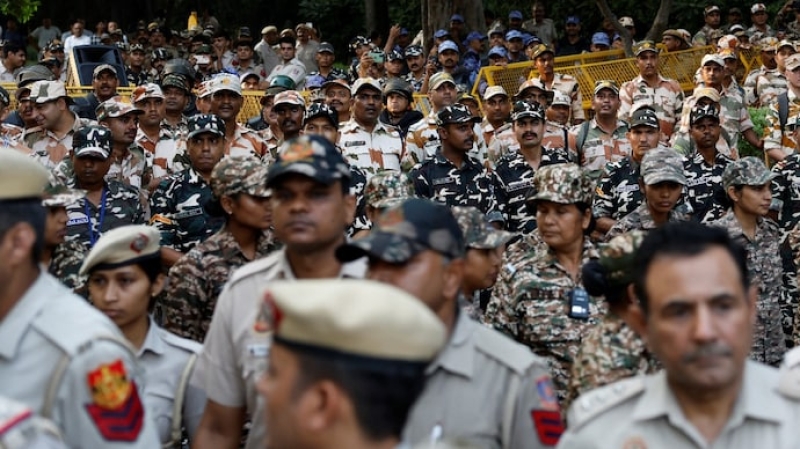
Senior Delhi Police officers have also briefed personnel deployed for the October 10 protest and instructed them to maintain restraint and deal with the situation professionally.
New Delhi has tightened security ahead of a planned protest by the Cockroach Janata Party (CJP) at Jantar Mantar on Saturday, with more than 20,000 security personnel expected to be deployed, over 300 surveillance cameras installed and 12 detention centres prepared.
Delhi Police has denied permission for the October 10 demonstration, citing procedural requirements, previous law-and-order concerns and the risk of security and traffic disruptions. Authorities have nevertheless intensified preparations amid concerns that protesters may attempt to assemble despite the restrictions.
The protest movement is demanding the resignation of Chief Election Commissioner Gyanesh Kumar over alleged irregularities in the revision of electoral rolls. Opposition groups and activists have accused authorities of removing eligible voters from the lists, allegations rejected by the Election Commission and the ruling Bharatiya Janata Party (BJP).
Heavy deployment in sensitive areas
Police have designated a 1.5-kilometre radius covering Jantar Mantar, Janpath, the Election Commission's office and Delhi Police headquarters as a highly sensitive zone. More than 6,500 personnel are expected to be deployed in the area.
At least seven layers of barricades have been installed on roads leading to the protest venue, while the New Delhi district has been divided into more than 20 zones to coordinate security operations.
Loudspeakers have been installed at sensitive locations to inform the public that the demonstration has not been authorised and discourage unauthorised gatherings and violence.
12 detention centres and extensive surveillance
Delhi Police has prepared 12 detention centres for people who may be detained during the operation. Senior officers have instructed personnel to exercise restraint, avoid reacting to provocation and handle the situation professionally.
More than 300 CCTV cameras with audio and video recording capabilities have been installed at sensitive locations. Body-worn cameras are also being provided to senior officers to document developments and interactions with protesters.
Around 100 photographers and videographers have reportedly been engaged to record events in real time.
Police have intensified checks at hotels, guesthouses and other accommodation facilities in central Delhi. They are also monitoring the movement of potential protesters and coordinating with authorities in neighbouring states.
Internet, metro and train services disrupted
The security measures have affected public transport and communications across parts of the capital.
Mobile internet services have been suspended within a four-kilometre radius of the Janpath–Kartavya Path crossing from 10pm on October 9 until 10pm on October 10.
Entry and exit at 45 Delhi Metro stations have been scheduled to remain closed during specified hours. Interchange facilities remain available at affected stations, except New Delhi station.
Rail services have also been disrupted. A total of 254 trains—including 75 Mail and Express trains and 179 local trains—were reported cancelled between 4am and 2pm on October 10. Passengers have been advised to check their train status before travelling.
Traffic restrictions and diversions have been planned for around 30 road stretches, including areas around Jantar Mantar, Connaught Place, Mandi House and Janpath. Authorities have urged residents to avoid unnecessary travel and allow extra time for essential journeys.
The restrictions are intended to prevent protesters from converging on sensitive locations and maintain public order. However, the scale of the security operation has raised concerns about disruptions to daily life, commuting and commercial activity across parts of the capital.
The planned demonstration comes amid mounting political tensions over the revision of electoral rolls. Opposition parties and activists are demanding accountability, while the Election Commission maintains that the process is intended to improve the accuracy of voter lists.