

Friday, October 9, 2026
News update
- Dhaka Seeks Ganges Treaty With Guarantee on Water Share |
- Navi Pillay Wins 2026 Nobel Peace Prize |
- Bangladesh Steps Up Anti-Trafficking Efforts, US Says |
- Cheap reading glasses remain key conduit to better quality of life |
- ডিপি ওয়ার্ল্ডকে বাংলাদেশে বিনিয়োগের আহ্বান প্রধানমন্ত্রীর |
Dhaka Seeks Ganges Treaty With Guarantee on Water Share
GreenWatch Desk:
Diplomacy
2026-10-09, 7:30pm
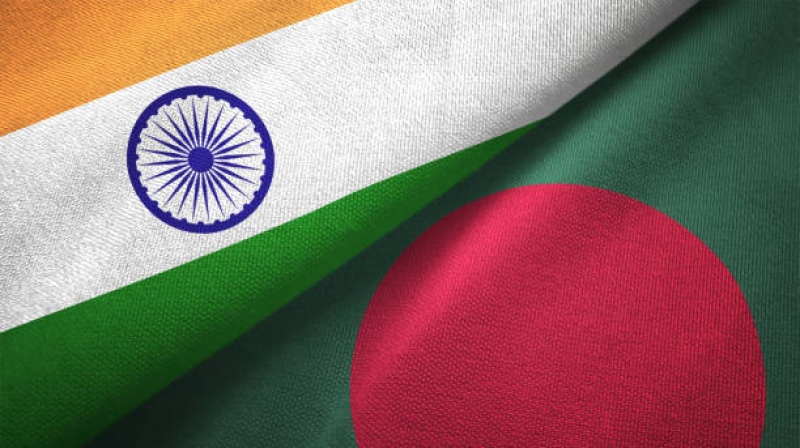
Bangladesh is preparing to push for a new or revised Ganges water-sharing treaty with India, prioritising a guarantee clause to protect its share of dry-season flows as the existing agreement approaches expiry in December.
Officials and experts say securing an equitable share of transboundary river waters will become an increasingly important challenge for Bangladesh, requiring effective water diplomacy, international cooperation and constructive engagement with India.
Signed on December 12, 1996, the Ganges Water Sharing Treaty is due to expire on December 12, 2026. The government in Dhaka has indicated that it wants an agreement that better safeguards Bangladesh’s interests, particularly during the dry season.
“Water could emerge as one of the major challenges for the entire world, including Bangladesh, in the future,” Local Government, Rural Development and Co-operatives Minister Dr Abdul Moyeen Khan said on Thursday, emphasising the need to integrate water management into national development planning.
Bangladesh and India share 54 transboundary rivers, but the Ganges is the only one covered by a bilateral water-sharing treaty between the two countries.
Guarantee clause a key priority
Water Resources Minister Shahiduddin Chowdhury Anee said Bangladesh wanted a new or revised agreement rather than simply renewing the existing treaty, with provisions guaranteeing its required share of water during the dry season.
“Our main priority will be to bring back the guarantee clause that was included in the 1977 agreement,” he said on Thursday.
The 1977 agreement included a safeguard under which, if the Ganges flow at Farakka fell below the level projected to provide Bangladesh with its scheduled share during a 10-day period, the release to Bangladesh would not fall below 80% of that share.
An official also referred to Article III of the 1977 agreement, which stipulated that water released to Bangladesh at Farakka should not be reduced below the agreed level, subject to provisions concerning India’s reasonable water use of up to 200 cusecs between Farakka and the point where both banks of the Ganges lie within Bangladesh.
State Minister for Foreign Affairs Humaiun Kobir said Bangladesh would seek an outcome that protected its national interests and security, including through a possible guarantee clause.
Asked whether the existing treaty would be renewed or replaced, he said, “Whatever is best for Bangladesh’s interest will be done.”
Kobir said Bangladesh’s negotiating committee was ready and Dhaka was awaiting a final response from its Indian counterparts.
“Our committee is ready. We are just waiting for the final response from our Indian counterparts. So yes, we are hopeful,” he said.
He added that international law was being considered in addressing water-sharing issues.
India’s Ministry of External Affairs spokesperson Randhir Jaiswal has said matters concerning the Ganges treaty and other shared rivers would be discussed through the Joint Rivers Commission (JRC).
“On the Ganga Water Treaty, as also other rivers that we share between Bangladesh and India, we have a Joint Rivers Commission. All matters relating to rivers, river-related matters, will be discussed as part of this Joint Rivers Commission,” Jaiswal said recently, adding that technical-level meetings on the Ganges treaty had continued.
Kobir said sincerity at both the political and official levels was essential to resolving long-standing water-sharing issues. He expressed optimism that a positive outcome was possible if leaders in both countries demonstrated a willingness to cooperate.
Cooperation at the heart of water diplomacy
Anee said water diplomacy should focus on cooperation and mutual benefits rather than competition, emphasising sustained dialogue, scientific collaboration, data sharing and inclusive water governance.
“Cooperation should create mutual benefits rather than being framed explicitly as a competition over water,” he said.
He described water as closely linked to Bangladesh’s geography, economy, agriculture, culture, foreign policy and national security.
“We are a delta country shaped by rivers. Yet, we are also a riparian country dependent on water flows originating beyond our borders,” he said.
Anee called for stronger engagement through the JRC and multilateral water-governance mechanisms, alongside greater international cooperation and scientific collaboration.
Bangladesh’s participation in the UN Water Convention, the Bangladesh Delta Plan 2100 and national river-management initiatives provide a broader framework for addressing long-term water challenges.
“We need cooperation instead of confrontation, evidence instead of assumptions, participation instead of execution, and long-term planning instead of short-term responses,” he said.
“Our goal should not simply be to manage water crises when they occur; our goal should be to build a just, decent, and cooperative water future,” Anee added, calling for greater youth participation in water governance.
Teesta remains a major concern
Anee said the Teesta was particularly important for people in northern Bangladesh, where seasonal variations cause water shortages during the dry season and erosion and flooding during the monsoon.
He said the government had placed considerable emphasis on the Teesta project, with feasibility studies and technical assistance under way.
Kobir also highlighted the importance of water diplomacy on multilateral platforms, stronger international partnerships, technology transfer and scientific cooperation to advance Bangladesh’s interests in transboundary water management.
With the Ganges treaty approaching expiry, Bangladesh faces the challenge of securing an equitable and sustainable water-sharing arrangement while strengthening cooperation on other shared rivers.
International affairs expert Prof Shahab Enam Khan said the existing treaty needed revision because it had been signed nearly three decades ago.
“I think it is very important for Bangladesh and India to renew the Ganges Treaty. But it has to be revised. The very simple reason is that the treaty was done almost three decades ago,” he said.
Shahab, executive director of the Bangladesh Center for Indo-Pacific Affairs, also called for revitalising the JRC and introducing a more transparent and accountable data-sharing system to build confidence in water diplomacy and management.
He said negotiations should draw not only on diplomatic considerations but also on engineering, scientific and economic perspectives.
Foreign Minister Dr Khalilur Rahman, speaking on the sidelines of the ninth Indian Ocean Conference in Mauritius, said Bangladesh wanted a new or revised treaty that ensured the essential water needs of its people.
He described the rivers as a shared legacy and said both countries needed a durable solution that could win public trust and provide a foundation for bilateral relations over the next 25 to 50 years.
Rahman also stressed the importance of making mutual climate resilience a priority in the two countries’ foreign and people-centred policies.