

- Trump says top tech firms have signed accord to 'self-police' AI dev |
- France Student Protests Spread Nationwide, Over 400 Detained |
- State Minister Amit urges global firms to join BD offshore bidding |
- Heart Disease Linked to 777 Daily Deaths in Bangladesh |
- US Tech Firms Eye Over $1b Investment in Bangladesh |
Why Afghanistan-Pakistan Tensions Are Becoming More Complex
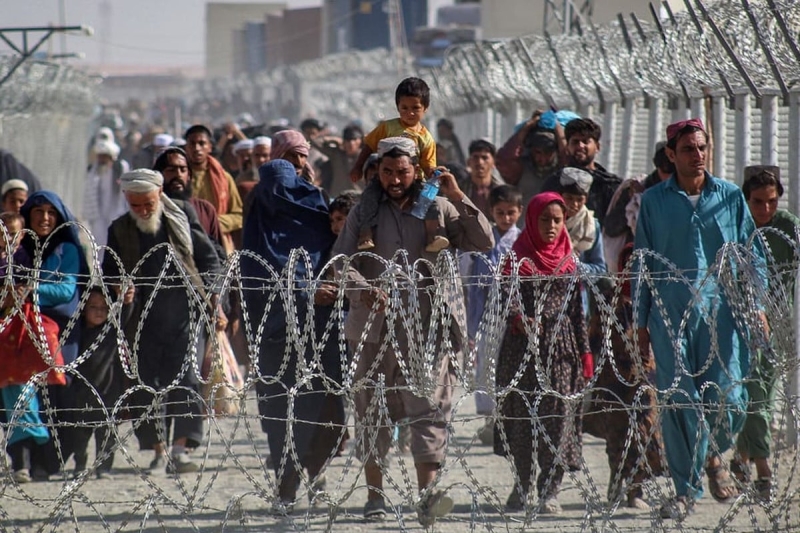
Relations between Afghanistan and Pakistan have deteriorated sharply since the Taliban returned to power in 2021. Pakistan, which once maintained close ties with the Taliban as part of its strategic approach to Afghanistan, is now locked in disputes with the Taliban-led government over cross-border militancy, the Tehreek-e-Taliban Pakistan (TTP), the disputed Durand Line and the treatment of Afghan refugees.
The relationship has recently entered a more dangerous phase. Pakistan has carried out airstrikes on targets inside Afghanistan, while Kabul has rejected Islamabad’s allegations that Afghan territory is being used by militants to launch attacks against Pakistan. The latest escalation has followed a series of militant attacks in northwestern Pakistan and retaliatory military operations.
A recent analysis by Shreyas Deshmukh, a research associate with the National Security Program at the Delhi Policy Group, argues that the two countries are caught in a cycle of violence, distrust and reciprocal pressure. The analysis contends that Pakistan’s increasingly anti-Taliban approach could, in some circumstances, strengthen the Taliban’s regional outreach and domestic consolidation rather than weaken it.
The long-running TTP dispute
One of the biggest sources of tension is the TTP, a militant umbrella organisation formed in Pakistan’s Pashtun tribal areas in 2007. Pakistan has repeatedly accused the Afghan Taliban of providing sanctuary and support to TTP fighters operating from Afghan territory. The Taliban denies the accusation and has maintained that the TTP is an internal Pakistani issue.
The TTP has been one of Pakistan’s most serious security challenges for nearly two decades. Following the 2014 Peshawar school attack, Pakistan launched Operation Zarb-e-Azb against militant groups in the tribal areas. Many TTP fighters subsequently moved into Afghanistan’s border provinces. Some TTP factions developed ties with the Afghan Taliban, while others later pledged allegiance to Islamic State and became associated with Islamic State Khorasan Province, or ISKP.
Deshmukh argues that the presence of TTP fighters in Afghanistan has also become a source of pressure between Islamabad and Kabul. Pakistani military operations targeting alleged TTP positions inside Afghanistan raise questions over Afghan sovereignty, while Pakistan continues to view the militant group as a direct threat to its security.
At the same time, the broader militant landscape is more complicated than the TTP alone. United Nations reporting has identified the presence of several international militant organisations in Afghanistan. Deshmukh's analysis, however, argues that evidence linking Afghanistan-based groups to major cross-border attacks over the past five years is limited, with ISKP being a notable exception.
ISKP has claimed responsibility for major attacks, including the 2024 Crocus City Hall attack near Moscow. Its activities have also raised concerns in Central Asia. These threats have encouraged Russia, China and several Central Asian countries to maintain security contacts with the Taliban-led authorities in Kabul.
Pakistan's old strategy becomes a source of tension
Pakistan's relationship with the Afghan Taliban has never been straightforward. During the US-led war in Afghanistan, Islamabad simultaneously cooperated with the international coalition and maintained ties with the Taliban. Deshmukh's analysis argues that this approach was aimed partly at preserving Pakistani influence over Afghanistan regardless of who controlled Kabul.
The Taliban's return to power changed that equation. The group is no longer an insurgency operating against a government in Kabul; it is now the de facto authority in Afghanistan and has its own regional interests.
The Durand Line is another longstanding source of tension. The Taliban, like previous Afghan governments, does not recognise the line as an international border. Pakistan, by contrast, regards it as its international boundary and has continued to reinforce and fence large sections of it.
The issue is particularly sensitive because the border divides predominantly Pashtun communities. This historical dispute adds another layer to the security tensions between Kabul and Islamabad.
The Taliban also made a commitment under the Doha Agreement not to allow Afghan territory to be used by terrorist organisations against other countries. Pakistan argues that the continued presence and activity of the TTP contradict that commitment, while the Taliban rejects Islamabad's characterisation of the issue.
Afghan refugees become a new pressure point
Pakistan has hosted millions of Afghans over decades, but refugee policy has increasingly become intertwined with domestic politics and security concerns.
Deshmukh's analysis notes that Pakistan deported nearly 600,000 Afghans in 2016 amid a resurgence of TTP activity and deteriorating relations with Kabul. The analysis links the more recent deportation drive to Pakistan's domestic political environment as well as its security concerns.
During Imran Khan's government, Islamabad adopted a comparatively accommodating approach toward Afghan refugees. Khan proposed issuing identity cards to Afghan refugees born in Pakistan and allowing them access to banking services. After the Taliban returned to Kabul in August 2021, Khan publicly welcomed the development, while Pakistan's intelligence chief visited Kabul and the government hosted a meeting of Islamic countries aimed at supporting Afghanistan.
The political environment changed after the May 2023 unrest following Khan's arrest. Deshmukh argues that the subsequent government found greater political and security justification for accelerating the expulsion of Afghan migrants.
Pakistan has publicly presented the deportation policy primarily in economic and security terms, including concerns about the burden created by a large refugee population and allegations that some militants use refugee networks for support.
Deshmukh's analysis adds a geopolitical dimension, arguing that refugee returns can also put pressure on the Taliban because Kabul must manage the reintegration of large numbers of people returning from Pakistan. The analysis further argues that Pakistan has historically used the presence of Afghan refugees as leverage in dealing with Afghanistan and in seeking international assistance.
A particularly difficult issue is that many of those being returned are second- or third-generation Afghans who were born and raised in Pakistan and may have never lived in Afghanistan. This makes mass returns not only a humanitarian challenge but also a complicated political and social issue.
Regional powers are changing their approach
The Afghanistan-Pakistan dispute is also unfolding against a changing regional landscape.
Russia, China and several Central Asian countries have expanded engagement with the Taliban, driven by a combination of security, economic and humanitarian interests. The threat posed by ISKP is one important factor behind these contacts, while regional states also have an interest in maintaining economic links with Afghanistan and ensuring the flow of humanitarian assistance.
This creates a difficult situation for Pakistan. While Islamabad seeks to pressure the Taliban over militant groups, other regional powers are simultaneously developing their own channels with Kabul.
Recent fighting has further complicated the picture. Pakistani strikes inside Afghanistan have been followed by Afghan accusations of civilian casualties, while Pakistan says its operations have targeted militant infrastructure. Both sides have continued to reject key accusations made by the other.
Why the cycle keeps repeating
The current dispute can be viewed as a cycle involving several interconnected issues: TTP attacks inside Pakistan, Afghan accusations of Pakistani military intervention, the Durand Line dispute, refugee expulsions and competing political interests in Pakistan's Pashtun-majority regions.
Deshmukh argues that Pakistani military operations and refugee expulsions could unintentionally strengthen the Taliban's domestic position by encouraging opposition to what is portrayed as external pressure. The analysis also links civilian casualties from military operations and the displacement of Afghans to conditions that could benefit militant groups. These are the author's assessments rather than established conclusions accepted by both governments.
Pakistan, meanwhile, faces continuing pressure from militant attacks. Recent violence in the country's northwest has prompted renewed military action and contributed to the latest deterioration in relations with Kabul. Pakistan says Afghan territory is being used by militants; the Taliban government denies the charge.
The situation is further complicated by politics inside Pakistan. Pashtun nationalist groups and some religious leaders have called for a more conciliatory approach toward Afghanistan and Afghan refugees, while the Pakistan Tehreek-e-Insaf remains influential in Khyber Pakhtunkhwa, a region central to the country's security relationship with Afghanistan.
What options does Pakistan have?
Deshmukh's analysis presents two broad strategic possibilities. Pakistan could seek political change in Afghanistan in the hope that a different government would produce better relations. But the author argues that such an approach could also lead to the Taliban returning to insurgency, potentially creating another prolonged conflict.
The other option, according to the analysis, would be for Pakistan to move away from using militant or proxy groups for political objectives. The author acknowledges that neither course would be easy under the current political and security conditions.
For now, the central problem remains unresolved. Pakistan wants stronger guarantees that Afghan territory will not be used for attacks against it, while the Taliban resists what it sees as interference in Afghanistan's internal affairs. The dispute over the Durand Line, refugee returns and competing regional interests adds further complications.
Recent airstrikes and renewed cross-border violence show how quickly the disagreement can escalate. Unless the two sides find a way to address the TTP issue, border dispute and refugee question through sustained political and security dialogue, the cycle of mistrust is likely to remain a major source of instability along the Afghanistan-Pakistan border.