

- PM Assures Support for Waste-to-Fuel Technology |
- CJP founder Abhijeet Dipke detained after flight lands in Delhi |
- India’s young return to streets as anger against EC and Modi grows |
- Dhaka’s air quality 4th worst in the world this morning |
- Delhi on High Alert Ahead of CJP Protest With 20,000 Personnel |
Govt Plans Wider Safety Net for Women, Children
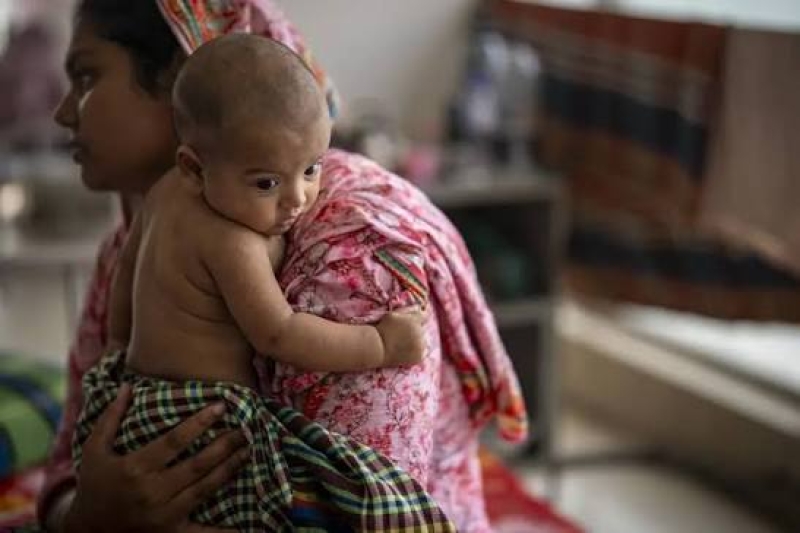
From forensic DNA testing and emergency responses to violence to livelihood training, childcare and rehabilitation, the government plans to expand services for women and children, aiming to strengthen protection and create opportunities for economic independence.
Outlined in the FY2026-27 budget document, the initiatives combine social protection with access to justice, skills development and long-term rehabilitation for vulnerable children.
The government is also continuing a food assistance programme covering 1.04 million vulnerable women and operating rehabilitation facilities for children living on the streets or facing other forms of vulnerability.
However, significant challenges remain in preventing gender-based violence, ensuring access to justice and enabling women to participate more fully in the economy.
Violence against women remains a major concern
Under the Multisectoral Programme to Prevent Violence Against Women, the government has established a National Forensic DNA Profiling Laboratory and divisional DNA screening laboratories to strengthen investigations into rape, murder and other violent crimes.
The Bangladesh Bureau of Statistics (BBS), with technical support from the United Nations Population Fund (UNFPA), conducted the Violence Against Women Survey 2024, interviewing 27,476 women aged 15 and above.
Published in October 2025, the survey found that 76% of women had experienced at least one form of intimate partner violence during their lifetime, while 49% had experienced such violence in the preceding 12 months. The reported forms of abuse included physical, sexual, emotional and economic violence, as well as controlling behaviour.
Two in three survivors did not disclose the violence they experienced, highlighting barriers to seeking help.
The findings underscore the need to complement forensic facilities with accessible reporting mechanisms, legal assistance, medical care and protection for survivors.
The government has also formed a Quick Response Team to respond immediately to cases involving violence against women and children. The initiative aims to improve coordination among relevant agencies and speed up assistance to victims.
Economic independence and social protection
Expanding women’s economic opportunities is another major component of the government’s plans.
A comprehensive database of emerging and aspiring women entrepreneurs is being compiled to identify their needs and connect them with training, credit facilities and markets.
The initiative aims to bring more women entrepreneurs into a formal support system, helping them develop income-generating activities and expand their businesses.
The second phase of the Income-Generating Activities Training Project for Women is also being implemented at the upazila level to equip women with skills that can help them earn an income.
For women in coastal areas, specialised adaptation projects are being undertaken to strengthen their ability to cope with climate-related challenges and protect their livelihoods.
These measures are particularly relevant to communities exposed to cyclones, flooding, salinity and other environmental pressures that can disrupt household incomes and deepen existing vulnerabilities.
Alongside these initiatives, the government is continuing food assistance for vulnerable women under the Vulnerable Women Benefit (VWB) programme.
According to the budget document, 1,040,000 women across 4,586 unions in 493 upazilas receive 30 kilogrammes of rice and fortified rice each month.
The programme provides household food support, but its long-term contribution to women’s economic independence will also depend on access to employment, finance and sustainable income-generating opportunities.
Daycare expansion targets working mothers
The government plans to establish modern daycare facilities to help working women balance employment and childcare responsibilities.
Twenty centres are planned in the first phase, followed by another 60 in the next phase.
The facilities are intended to provide safe childcare while enabling mothers to continue working, particularly those without access to affordable care.
Affordable and reliable childcare can help reduce the burden of unpaid care work, which often limits women’s ability to pursue paid employment.
The government is also undertaking projects to support the social security and rehabilitation of female migrant workers returning home. The initiatives aim to help returnees reintegrate into their communities and rebuild their livelihoods after overseas employment.
Access to vocational training, financial services and employment opportunities will be important in determining whether these programmes provide lasting economic security.
Support for children from early years to rehabilitation
The government’s plans also cover children’s development, protection and social security from conception through the age of eight.
Social awareness and parenting programmes are being implemented to improve parents’ understanding of early childhood development, protection and care. Such interventions seek to strengthen family support during the early years, when proper care and developmental assistance can influence children’s long-term wellbeing.
For children living on the streets or facing other forms of vulnerability, the government is pursuing rehabilitation measures aimed at returning them to their families where appropriate.
Children who have received education and training are being supported to return to their families, with financial assistance provided to the households concerned.
Special arrangements are also maintained for girls who come into conflict with the law.
Child Development Centres provide accommodation for an average of 350 girls annually, alongside legal aid, social protection and access to justice.
The government is also maintaining rehabilitation facilities for children with disabilities, including those with speech, hearing and visual impairments and autism.
According to the budget document, 33 Integrated Child Rehabilitation Centres are operating in 17 districts, with separate accommodation and livelihood facilities for boys and girls.
The planned measures span several interconnected areas, from preventing violence and providing emergency assistance to improving livelihoods and protecting vulnerable children.
Their effectiveness will depend on whether services consistently reach intended beneficiaries, adequate resources are available and the different programmes work together to deliver sustained support.