

- Net FDI in BD jumps over 200 percent in Q3 of 2025: BIDA |
- Quilt makers race against time as severe cold grips Lalmonirhat |
- Dhaka's air quality turns ‘very unhealthy’ on Monday |
- Rohingya Pin Hopes on UN Genocide Hearing for Justice |
- Trump Says Open to Meeting Venezuela’s Interim Leader |
Govt Launches Major Water Project to Protect Rangamati
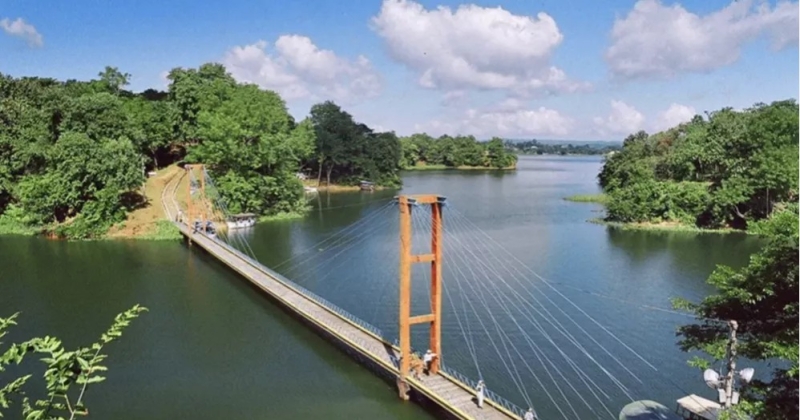
The interim government has launched a major water management initiative in the hill district of Rangamati to ensure sustainable water supply, protect riverbanks, and improve livelihoods in one of Bangladesh’s most environmentally sensitive regions.
According to officials, the project—titled Sustainable Water Management of the Karnaphuli and Associated Rivers in Rangamati Hill District—will be implemented by the Bangladesh Water Development Board under the Ministry of Water Resources. The project carries an estimated cost of Tk 687.39 crore, fully funded by the government.
Implementation is scheduled from January 2026 to June 2030 and will cover all 10 upazilas of Rangamati district.
Officials said the initiative is critical for safeguarding surface water availability in the hill district, where communities rely heavily on rivers and streams for drinking water, irrigation, fisheries, and transportation. The Karnaphuli River and its major tributaries—Kachalong, Raikhyang, and Shalak—serve as lifelines for the region, particularly during the dry season when water scarcity becomes severe.
One of the project’s key objectives is to restore year-round water flow and navigability in feeder rivers connected to Kaptai Lake through large-scale dredging. The Kachalong, Raikhyang, and Shalak rivers will be dredged to remove accumulated silt, helping to reduce sudden flooding during the monsoon while ensuring adequate water availability in the dry months.
Water resources officials said sustained river flow is essential to maintaining water levels in Kaptai Lake, which supplies water to the country’s only hydroelectric power plant. Improved water availability is also expected to boost fisheries—one of the main sources of livelihood for hill communities—and support surface irrigation for agriculture in downstream areas.
The project also includes excavation and re-excavation of river-linked canals to improve irrigation and address long-standing waterlogging in low-lying areas. Many canals in Rangamati have lost their capacity due to prolonged siltation, disrupting water distribution and limiting agricultural production, particularly during the dry season.
In addition to water management, the initiative places strong emphasis on riverbank protection. Around 13.72 kilometres of riverbanks will be reinforced to protect critical infrastructure, educational institutions, and settlements from erosion along the Karnaphuli and its tributaries.
Riverbank erosion has become a persistent challenge in Rangamati, especially during the monsoon when heavy rainfall and upstream flows cause rivers to swell and shift their courses. Officials noted that the Karnaphuli remains the sole river route connecting Barkal upazila with the Rangamati district headquarters, making bank protection essential for maintaining communication and access to essential services.
Special attention will be given to the border-adjacent Thegamukh area along the Bangladesh–India frontier, where aggressive erosion has threatened public installations, including Border Guard Bangladesh facilities, markets, and schools. Riverbank protection in the area is expected to prevent further land loss and safeguard national assets.
Project documents trace many of the region’s water challenges to changes in river flow following the construction of the Kaptai Dam in the 1960s. Since then, monsoon-borne sediment has gradually accumulated in riverbeds and Kaptai Lake, reducing depth and flow capacity. As a result, navigation becomes extremely difficult between February and April, often isolating remote communities and driving up transport costs.
The proposed interventions are based on findings from a feasibility study conducted by the Institute of Water Modelling, which identified erosion-prone zones and stressed the need for integrated dredging, river training, and canal restoration.
Officials believe the project will significantly enhance water security in Rangamati, ensuring reliable supplies for domestic use, agriculture, fisheries, and power generation. Improved river connectivity is also expected to support tourism, generate employment, and contribute to broader socio-economic development.
With climate variability increasing pressure on hill ecosystems, authorities see the initiative as a strategic investment aimed at balancing development needs with long-term water sustainability in Rangamati.