

Sunday, June 21, 2026
News update
- PM to visit India when atmosphere turns conducive: Humaiun Kobir |
- PM set to embark on maiden overseas tour with Malaysia visit Sunday |
- Food grain stocks in country exceed 20.6 lakh tons |
- Dhaka, Beijing Likely to Sign 15–17 Agreements |
- Govt Aims for Efficient Spending, More Revenue |
Mekong Cities Unite for Inclusive Green Urban Growth
GreenWatch Desk:
Think green
2025-12-29, 4:13pm
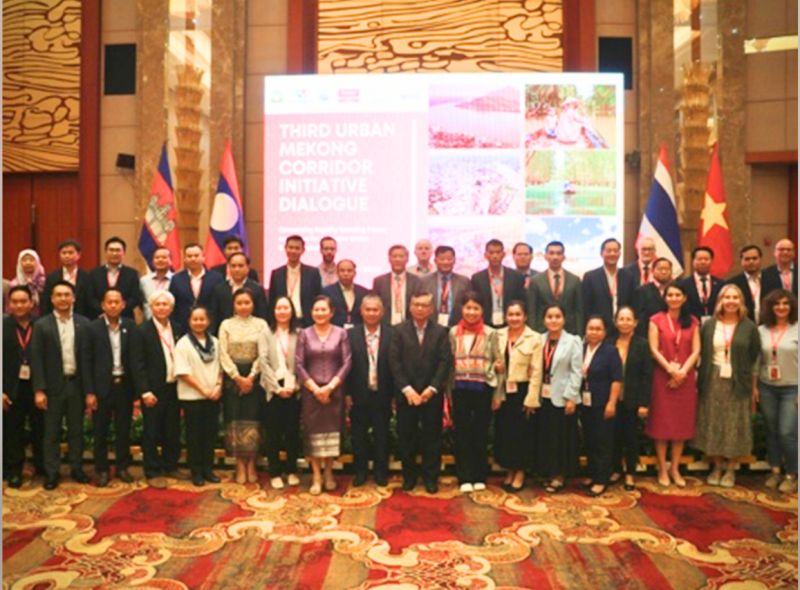
UCLG ASPAC reaffirmed its commitment to sustainable urban development in the Mekong region by convening the 3rd Urban Mekong Corridor Initiative (UMCI) Dialogue in Vientiane, Lao PDR, on December 3–4, 2025.
Hosted by the Mekong River Commission (MRC) Secretariat and Vientiane Capital Administration, and co-organised with Cities Alliance with support from the Swiss Agency for Development and Cooperation (SDC), the Dialogue built on earlier UMCI meetings held in 2024, strengthening regional cooperation among rapidly growing Mekong cities.
More than 120 participants—including governors, mayors, national and local government officials, academics, civil society representatives, and development partners—took part in wide-ranging discussions on circular economy approaches, solid waste management, nature-based solutions, and people-centred strategies to enhance urban resilience.
Enabling inclusive green urban developmentThe first day focused on the enabling conditions needed to advance inclusive green urban development. Speakers highlighted that while cities are piloting innovative solutions, their long-term impact depends on strong partnerships, supportive policy frameworks, and access to sustainable finance.
Leaders from Phnom Penh, Nong Khai and Vientiane Capital, alongside MRC representatives, shared development visions rooted in circular economy principles, environmental stewardship and social inclusion. Discussions also acknowledged persistent challenges, including infrastructure gaps and limited institutional capacity.
The day also saw the official launch of a joint Cities Alliance–MRC report, The Urban Mekong Corridor: Strengthening Regional Cooperation on Waste and Plastic Pollution in the Mekong River System, which warned that unmanaged urban waste is undermining river health, livelihoods and regional resilience.
Participants reviewed practical examples of circular economy initiatives from cities such as Vang Vieng, Kampong Cham and Pursat, showing how waste can be transformed into economic opportunity. An interactive session stressed the importance of strong project design and institutional readiness to make urban projects scalable and investment-ready.
People, place and nature at the centreDay two shifted the focus to people-centred and place-based approaches. The 2025 UMCI–CSO Awards recognised the contributions of civil society and women-led organisations in building inclusive cities, followed by discussions on women’s leadership along migration corridors.
Sessions on nature-based solutions highlighted their role in tackling flooding, urban heat and environmental degradation, while also strengthening community cohesion. Parallel discussions underscored the need for gender-responsive planning and integrating nature into urban development.
Looking aheadThe Dialogue concluded with a shared commitment to deepen regional cooperation and place communities and nature at the heart of urban planning. As Mekong cities face accelerating urbanisation and migration pressures, the partnerships and insights from the 3rd UMCI Dialogue are expected to guide local action and shape collaboration ahead of the 4th UMCI Dialogue, scheduled to be held in Vietnam in 2026.