

- Tarique Warns of Fresh Conspiracies, Vows to Defend Sovereignty |
- National Revolution and Solidarity Day Today |
- Tarique Rahman Pays Tribute at Zia, Khaleda’s Graves |
- Dhaka’s air quality 4th worst in the world this morning |
- US Launches Fresh Strikes on Iran Amid Peace Efforts |
Rohingya refugees in Bangladesh hope ICJ ruling will recognize genocide
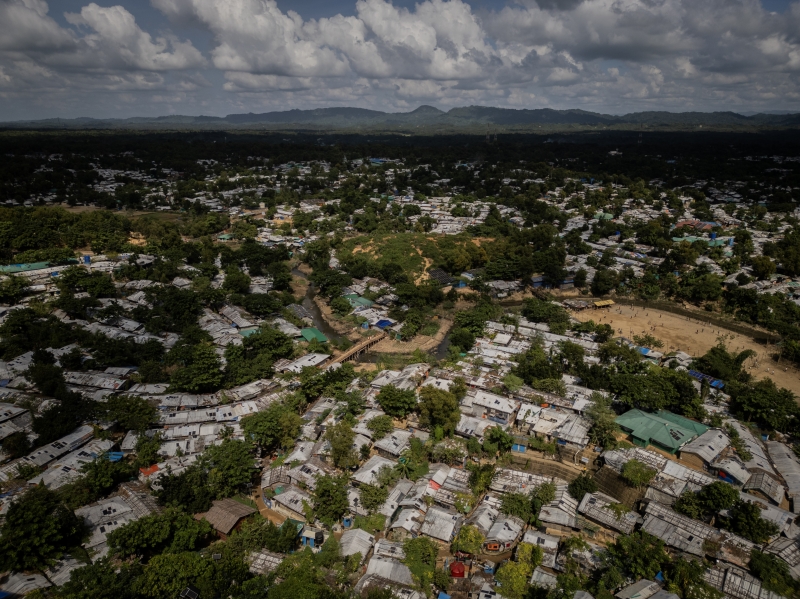
Rohingya refugees at temporary camp at Ukhiya Cos Bazar in Bangladesh. - Santi Palacios
Rohingya survivors hope Nov. 19 judgment will strengthen demands for justice, accountability and safe return to homeland in Burma
DHAKA, Bangladesh (MNTV) — Rohingya Muslim refugees living in Bangladesh are looking to a landmark ruling by the International Court of Justice (ICJ) on Nov. 19 with renewed hopes that decades of persecution in Burma will finally receive formal international recognition as genocide.
The anticipated judgment has raised expectations among refugees who survived Burma's military crackdown in 2017, which involved mass killings, sexual violence and the destruction of Rohingya villages, forcing hundreds of thousands to flee across the border into Bangladesh.
According to Bangladesh's The Daily Star, Rohingya community leaders believe a ruling recognizing genocide could strengthen their struggle for justice, increase diplomatic pressure on Burma and reinforce their demands for accountability and eventual repatriation.
The ICJ, the United Nations' highest court, is expected to deliver its judgment after seven years of proceedings in a case brought by The Gambia, which accuses Burma of violating the 1948 Genocide Convention through atrocities committed against the Rohingya Muslim minority.
Sayed Ullah, the first president of the United Council of Rohingya (UCR), said refugees had waited nearly a decade for justice and viewed the approaching judgment as an important moment in their struggle.
However, he acknowledged that enforcing an ICJ ruling could prove difficult because the court lacks direct enforcement powers. Political obstacles, including veto powers held by permanent members of the UN Security Council, could further complicate implementation.
Despite these challenges, Ullah expressed hope that the judgment would renew international attention and encourage Bangladesh and other countries to pursue solutions enabling Rohingya refugees to return home safely.
Mohammad Zubair, chairman of the Arakan Rohingya Society for Peace and Human Rights, said a finding of genocide would fulfill a longstanding demand for international acknowledgment of the atrocities committed against his community.
He argued that such recognition could carry considerable moral and diplomatic significance, encouraging UN member states to increase pressure on Burma and support accountability for those responsible.
"We are completely positive about the upcoming ruling. We have high hopes that the international community, through the ICJ, will ensure justice for our people," Zubair said.
However, he emphasized that securing justice and achieving repatriation remained separate challenges.
Bangladesh's Refugee Relief and Repatriation Commissioner Mohammad Mizanur Rahman similarly expressed hope that the judgment would strengthen the Rohingya's international standing.
He said recognition of their historical presence in Burma could help challenge the country's longstanding portrayal of Rohingya Muslims as foreigners, although the court's genocide case does not directly determine citizenship or repatriation rights.
Rahman cautioned that even a favorable ruling would not immediately enable refugees to return home but could strengthen international efforts toward a lasting solution.
More than one million Rohingya refugees remain in Bangladesh, most living in overcrowded camps after fleeing persecution in Burma, where successive authorities have denied the community citizenship and subjected it to systematic discrimination.
Reported by: MAK, Edited by: MAP