

- Iran Announces $30,000 Reward for Capturing US Troops |
- China Scientists to Visit Iran to Explore Rare Earths |
- DSCC to reduce trade licence renewal fees if NBR charges cut: Salam |
- Democratisation of economy must for success of democracy: Khosru |
- PM urges people to watch ‘confusion-makers,’ give fitting reply |
Tahsan meets Rohingya youth in Cox’s Bazar
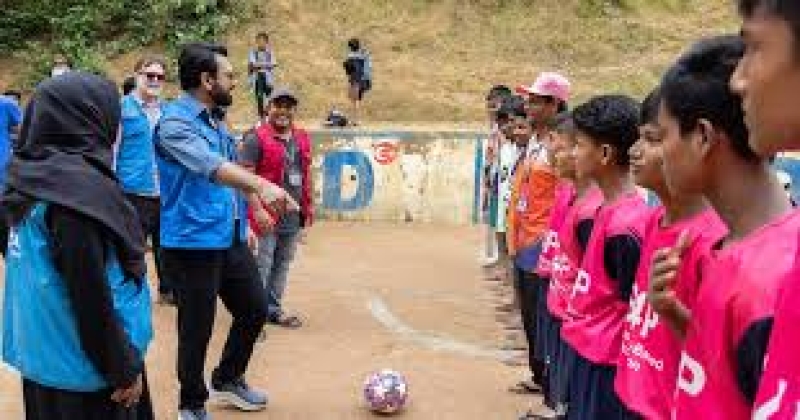
UNHCR Goodwill Ambassador Tahsan Khan met Rohingya refugee youth in Cox's Bazar on Thursday, where he heard their hopes, challenges and aspirations for the future.
During his discussions with refugees, youth spoke about the importance of maintaining hope despite years of displacement.
They shared stories about protection risks, uncertainty about the future and the daily challenges they face, while also emphasising how access to education, community support and meaningful activities help them stay resilient.
"The resilience and determination of these young people is truly inspiring," said Tahsan. "Even after years of displacement, they continue to dream, learn and work towards a better future. Their voices remind us why we must continue to stand with refugees and support solutions that allow them to live in safety and dignity."
Popular Bangladeshi singer, songwriter, and actor Tahsan also met with young refugees participating in skills development programmes, who shared how such training opportunities are helping them build practical skills, and prepare for a future when they will be able to return to their country.
"Many of the young people I met today have spent most of their lives as refugees.”said Tahsan. "Their determination shows why investing in young people matters. Hope alone is not enough. Refugees also need opportunities to develop skills and prepare for the day they can help rebuild their communities,”he said.
Bangladesh currently hosts around 1.2 million Rohingya refugees who fled violence and persecution in Myanmar.
The Rohingya are also the world's largest stateless population.
The visit comes at a time when humanitarian agencies continue to call for sustained international support for Rohingya refugees and the communities hosting them. While refugees remain unable to return safely to Myanmar, investments in education, skills development and youth engagement help preserve hope, strengthen resilience and prepare young people for the future.
Tahsan Khan reiterated his support for Rohingya refugees and renewed his call for solidarity with those forced to flee their homes, reports UNB.
"The Rohingya people I met here have not given up on their dreams or their desire to return home one day," he said.
"The international community must not give up on them either."