

- Yunus Urges Voters to Shape a ‘New Bangladesh’ |
- Bangladesh Polls: Campaign Ends as Voters Weigh Pledges |
- Bangladesh Heads to First Gen Z-Driven Competitive Poll |
- EC Lifts Mobile Phone Ban, Bars Photos Inside Booths |
- Youth participation vital to BD’s democratic future: C’wealth Group |
Jamaat Chief Emerges as Surprise Contender for Top Job
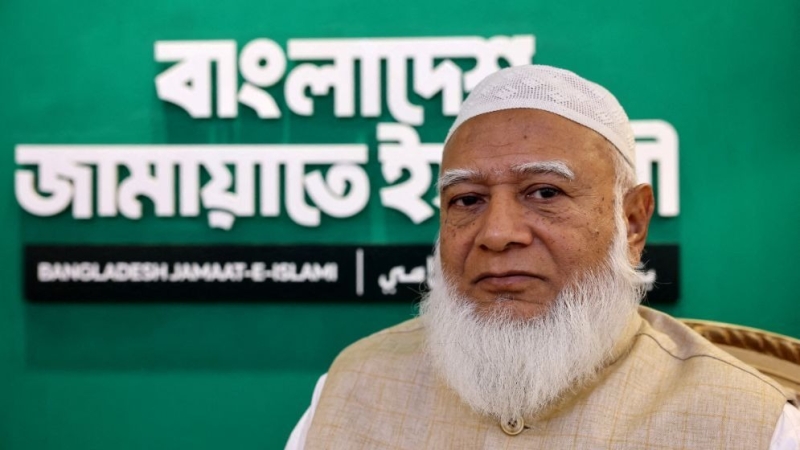
Shafiqur Rahman, ameer (President) of Jamaat-e-Islami, poses for a photograph after an interview with Reuters, in Dhaka, Bangladesh, 31 December 2025.
Once a marginal figure in national politics, Shafiqur Rahman has emerged as a serious contender for Bangladesh’s top job, with his image now visible on posters and billboards across Dhaka ahead of Thursday’s general election.
The 67-year-old doctor and chief of Jamaat-e-Islami has risen from relative obscurity to the centre of the political stage, urging voters to back what could become the country’s first Islamist-led government.
A Jamaat-led coalition is expected to mount a close challenge against the frontrunner, the Bangladesh Nationalist Party (BNP), its former ally.
Bangladesh goes to the polls on February 12 in its first national election since a Gen Z-led uprising toppled then prime minister Sheikh Hasina in 2024.
About 91 percent of Bangladesh’s 175 million people are Muslim, making it one of the world’s largest Muslim-majority nations. While Islam is the state religion, the constitution also upholds secularism, and the population is overwhelmingly Sunni.
Opinion polls suggest Jamaat, once banned for opposing Bangladesh’s 1971 independence from Pakistan, is heading for its strongest electoral performance yet—raising concerns among moderates and minority communities.
Under Hasina’s rule, Islamist groups faced a sustained crackdown. Senior Jamaat leaders were jailed, some sentenced to death over war crimes linked to 1971, and the party was banned and driven underground. Rahman himself was arrested in 2022 on allegations of assisting members of a banned militant group and spent 15 months in jail.
The political landscape shifted dramatically after the 2024 uprising. Days after Hasina fled to India, an interim government led by Nobel laureate Prof Muhammad Yunus eased restrictions on Jamaat. In 2025, a court lifted the party’s ban, allowing it to re-enter mainstream politics.
Jamaat moved quickly, launching charitable activities and flood relief operations. Rahman, recognisable by his white beard and traditional white attire, became a highly visible presence nationwide.
Born in 1958 in Moulvibazar district, Rahman began his political journey in a leftist student group before joining Islami Chhatra Shibir, Jamaat’s student wing. He formally joined Jamaat in 1984 and unsuccessfully contested parliamentary elections in 1996, 2001 and 2018. He became party chief in 2020.
His wife, Amina Begum, a doctor like Rahman, served as a lawmaker in 2018. Their two daughters and son are also doctors. Rahman chairs a family-owned hospital in Sylhet.
Analysts say he capitalised on the leadership vacuum following the uprising.
“In the months after the uprising, there was no visible national leader,” said Dhaka University professor Shafi Md Mostafa. “Rahman travelled extensively, drew attention, and within a short time emerged as a frontrunner.”
On the campaign trail, Rahman has portrayed Jamaat as a clean and moral alternative, emphasising governance, anti-corruption and social justice. In December, the party allied with the Gen Z-backed National Citizen Party, broadening its appeal among younger voters.
Campaign posters inspired by popular culture have appeared nationwide, featuring Rahman with the slogan “Dadu is coming”, using the Bengali word for grandfather.
Seen by supporters as a softer face of Jamaat, Rahman has pledged equal rights for all religions. However, his views on women have sparked controversy. Jamaat has not fielded any female candidates, and Rahman has argued that women should work fewer hours to prioritise family life.
A recent social media post attributed to him, which critics said demeaned women working outside the home, triggered protests at several universities. Jamaat later claimed the account had been hacked.
Rahman maintains that Jamaat is moderate and flexible, but firmly rooted in Islamic values.
“Our principles are based on Quranic values,” he said. “Those values are for the benefit of all humanity.”