

- ‘Antalya Pact’ at COP31 falls as EU brinkmanship derails plan |
- Beyond Israel’s Election: Palestine’s Self-determination and the ME |
- Gaza war has undone 77 years of human development, UN warns |
- Hasina Plans to Return Home on 16 December |
- 5.3-Magnitude Quake Hits Nepal, Tremors Felt in Bangladesh |
Govt discussing Hasina’s return with India, not with her: Zahed
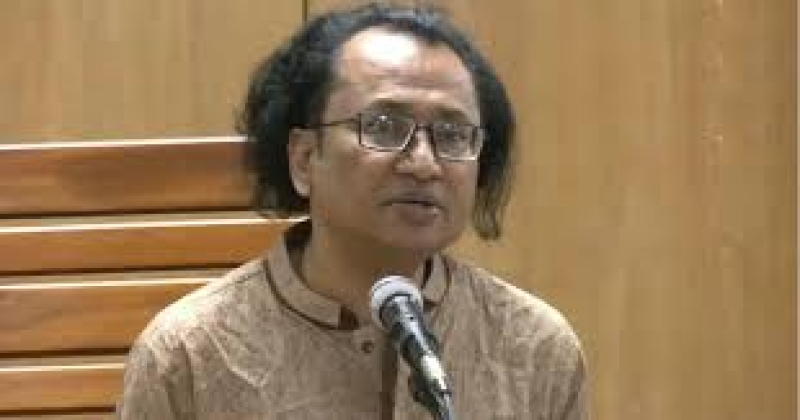
Prime Minister’s Information and Broadcasting Adviser Zahed Ur Rahman on Tuesday said the government had no communication with former prime minister Sheikh Hasina over her return and was holding discussions with India on the issue.
The adviser made the remarks while responding to a question at a briefing at the Secretariat about a Reuters report quoting Hasina's spokesperson that she intended to return to Bangladesh by a Biman Bangladesh Airlines flight on December 16.
Describing Hasina as a convicted criminal, he said the judicial process against her had been completed and she had been found guilty and sentenced, rather than merely facing allegations.
There should be no legal obstacle to the extradition of Sheikh Hasina if she wants to return to Bangladesh, Zahed Ur Rahman said.
“Bangladesh wants her back and Hasina herself wants to return, so India could extradite her as the positions of both sides are now aligned,” said
The adviser said India had previously cited legal issues regarding her extradition, but he did not see any such obstacle now if Hasina herself wanted to return.
“If Sheikh Hasina wants to come to Bangladesh, I don't think there is any reason for her to go to court or face any legal complications. Her lawyers might try various things if she does not want to come. But if she wants to return, India can simply extradite her and let her come. I don't see any problem now,” he said.
Asked about allegations among Awami League leaders and activists that the government might prevent Hasina from returning at the last moment, Zahed said Hasina herself could request India to extradite her if she believed the government did not want her back.
Such a move, he said, would also make the government's position clear.
He also said Hasina's stated intention to return on December 16 might be an attempt to demonstrate the significance of her decision to her political followers.
“It's a bluff to the political people,” he said.
Extradition treaty, not prisoner exchange
Explaining the agreement between Bangladesh and India, Zahed said the two countries had an extradition treaty, not a prisoner exchange agreement.
He said prisoner exchange generally implied that one country would hand over a prisoner in return for another, whereas extradition did not involve any such exchange.
Asked about arguments that Hasina had not been taken to India by the Indian authorities but had instead been left there by the then Bangladesh government, the adviser said Bangladesh was effectively without a government at the time.
He said there was no government in place until the interim government, led by Dr Muhammad Yunus, took oath.
Therefore, he said, it would not be appropriate to use that argument to shift responsibility onto the current elected government, reports UNB.