

- Disaster Risk Reduction Fair and Field Drill held in Kalapara |
- Dhaka’s air ‘unhealthy’, ranks 10th globally on Sunday morning |
- Malaysian PM postpones planned visit to Bangladesh, Thailand |
- PM stresses skills-based, tech-driven higher education to tackle unemployment |
- Multilateralism Needs a New Deal, Can Anyone Deliver it? |
A plea for Bangladesh-Iran Comprehensive Relations
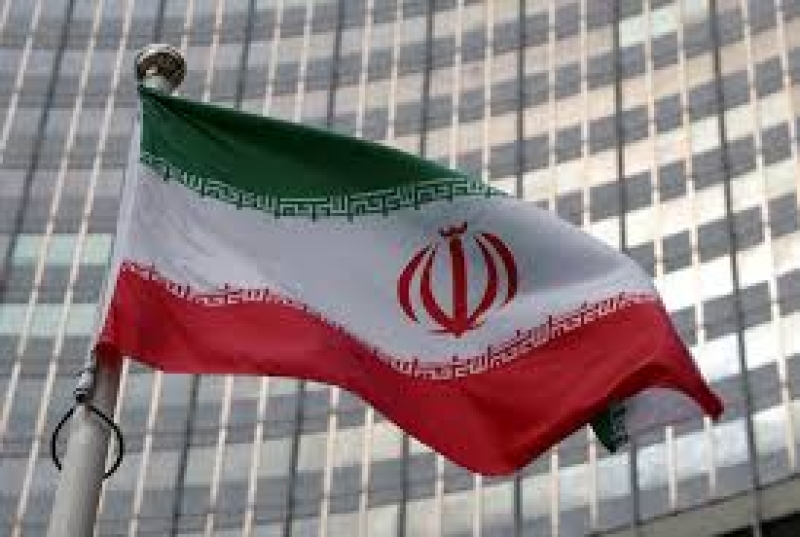
Iran flag
Muhammad Azizur Rahman
Iran represents the modern incarnation of Persia, which was home to one of the earliest successful urban civilizations, dating back to 5000 BCE. As one of the first civilizational states, Iran is currently engaged in a significant geopolitical struggle with the United States and Israel, following an unprovoked attack on February 28, 2026. The resilience and bravery of the Iranian people appear to be challenging the dominance of these two nuclear powers. In an era where Western civilization faces numerous challenges, Iran, alongside China, Russia, and North Korea—the so-called CRINK axis—stands ready to contribute to the emergence of a Multipolar World characterized by localized regional security frameworks.
Historically, during the golden age of Islam, Iran was a leader in Muslim science, literature, and made unparalleled contributions to Islam, particularly in the fields of Hadith collection, Fiqh application, and Islamic historiography. For Bangladesh and its people, Iran holds deep historical and religious significance, especially through the Sufi tradition that played a crucial role in the introduction of Islam to our ancestors. Although Bengal was conquered by a Turko-Afgan general (Ikhtiyaruddin Muhammad Bakhtiyar Khiliji) the cultural and religious landscape was predominantly shaped by Persian influences. Notably, the last independent Nawab of Bengal, Sirajud Dawla, and his grandfather, Nawab Ali Vardi Khan, were of Persian descent. Thus, Bengal can be viewed as the easternmost extension of the Persian cultural sphere.
Given this rich historical and cultural connection, it is politically and strategically imperative for Bangladesh to establish relations with Iran at both the political and state levels without delay. Such relations would be highly beneficial for Bangladesh.
It's very important that the political and intellectual classes of Bangladesh understand the far reaching strategic significance of the emergence of Iran as a powerful Asian power which even Russia and China are now taking into their cognisance and calculations.
It's noteworthy to say that Iran produces 200,000 to 234,000 engineering graduates every year, of which 70% are female graduates. No wonder that Iran has successfully tested Mach 12 hypersonic missile which Russia, China or the USA do not even have in their missile armoury. That says it all.
Persian Civilisation Reintroduces the Multipolar World
The 6400-year-old Persian civilisation's contribution to Islam generally and to Bengal particularly is of immense importance. Especially so in view of the current illegal war waged against Iran by USA and Zionist apartheid settler colonial state Israel. Iran alone is not only fighting for the Muslim ummah but also the Global South to create a multipolar world order free from western hegemony and its rapacious plundering of the Global South's resources and wealth. That is why the world progressive public opinion is in solidarity with the Iranian nation because they can quite clearly see how the brave and knowledge based Iranian nation, with a huge hinterland of culture and civilisation, is still standing tall seeing off two nuclear powers. The following will highlight some of the historic contributions by Persian civilisation.
One persistent thought I have is that had Iran remained Sunni, it may have behaved similarly to the Arab monarchies and military leaders, such as those in Saudi Arabia and Egypt, who are often perceived as puppets of the United States. The revered concept of martyrdom serves as a significant motivator for Shiites, a sentiment largely absent among Sunnis. However, considering the nature of Persians, it is also plausible that they could have emerged as leaders of the Sunni community, reminiscent of the Abbasid era, engaging in an anti-American struggle as Sunnis. Such a scenario could have propelled them to a position of leadership over the entire Sunni world, uniting the Muslim population in a collective anti-American and anti-Zionist campaign under their strategic guidance. I reflected on how, approximately five years ago, I recognised the pivotal role Iran would play in the alliance of Iran, China, and Russia as they seek to shape the next millennium of human civilisation, extending beyond the 21st century. I possess a strong rationale for such a prediction.
Several incidents have captured my attention, indicating that the 21st century has not commenced favourably for America, the last bastion of Western civilisation. Following the collapse of the Soviet Union in 1991, America emerged as the world's sole superpower, fostering a belief in its enduring hegemony well into the foreseeable future, possibly even into the third millennium. However, the bursting of the dot-com bubble in the first year of the 21st century created significant turmoil in the financial sector. This was soon followed by the tragic events of September 11, 2001, which some believe were orchestrated by internal actors aiming to undermine the potential rise of Muslim influence. The Wall Street crash of 2008 further complicated the situation, nearly dismantling the American financial structure. Since then, there has been widespread speculation regarding a significant financial upheaval in America and the West. While such a crisis has not materialised as anticipated, it has manifested as an unprovoked invasion of Iran by the United States and Israel, which appears to threaten American hegemony and could herald the decline of Western dominance in human civilisation for at least a millennium, if not longer. The East is poised to rise with remarkable strength and glory, potentially diminishing Western supremacy for a very extended period.
The Iranians are fighting the American imperialists alone on the battlefield. Although they receive satellite-based accurate coordinates of enemy positions from Russia and China, the actions on the ground, the ballistic missiles targeting enemy locations, and the drone swarms disabling and neutralising enemy air defense systems are all developed indigenously and deployed by Iranians themselves.
1) Throughout the war thus far, the Iranians have demonstrated their capacity to innovate weaponry and develop a war strategy and tactics that are unmatched, to the extent that it is now widely acknowledged that Iran has already won the conflict. Donald Trump is now contemplating the Tactical Nuclear Option, which effectively acknowledges the reality of their defeat.
2) We often distance ourselves from them due to their Shia beliefs. This stems from a rather peculiar historical event involving a young ruler of Persia named Safavid, who, for reasons unknown, imposed the Ithna Ashari variant of Shiism on the Persian population through severe persecution, transforming Persia from 95% Sunni to 95% Shia, with Sunnis reduced to a mere 5%. This situation contrasts sharply with that of the Roman Emperor Constantine, who established the Roman Empire’s identity through Christianity, resulting in Roman Catholicism. Thus, rather than Safavid Islam, the accepted Shia identity for Persians became Ithna Ashari, or the Twelvers. Consequently, even after being forcibly converted to Ithna Ashari Shism, the Iranians remain committed and stubborn Muslims who have preserved their original identities.
3) The Safavid Dynasty was established in 1501. Prior to that date, Persians were predominantly Sunni as explained in the previous paragraph, including many of the intellectuals who contributed significantly across various fields of science, technology, and Islamic scholarship.
4) In the realm of research and development, they surpass numerous nations globally, including those in Europe. They are as astute as they have historically been, excelling in science, technology, and Islamic knowledge and literature.
5) Despite enduring the most severe American sanctions over the past 47 years since the 1979 Revolution, they have achieved remarkable progress in rebuilding Iran, that tells us the Persians are a genetically a unique, genius nation supremely creative, innovative and at the same time adaptive.
Additionally, I have been curious about the scientific and philosophical contributions of many scholars from the Golden Age of Islam under the Abbasid Caliphate. What I discovered was astonishing. I realised that almost the entirety of scientific and philosophical endeavour during this period was overwhelmingly dominated by the Persians. Some names are familiar to us—such as Ibn Sina (medicine), Ibn Rushd (Aristotelian logic), Al-Khwarizmi (algorithms—the universally accepted method for solving mathematical problems), Jabir ibn Hayyan (chemistry), and many others. The list is indeed extensive. While the names may appear Arabic, the individuals were predominantly Persian.
In the realms of art and literature, they excelled immensely. The most renowned epic, the Shahnameh, was composed by the poet Ferdowsi over a span of 35 years. An extraordinary characteristic of this epic is that Ferdowsi employed no non-Persian words, not even any Arabic words. The term "Ferdows" derives from an ancient Persian root word, "paridayjah," which over centuries assimilated into Arabic and is used in the Quran to denote the highest-status heaven, the Jannatul Ferdows. The tragic love story of Laili and Majnun was penned by the 12th-century Persian poet Nizami Ganjavi in 1188. Although the narrative is based on the tragic love story from 7th-century Arabian folklore, it was immortalised as a masterwork of Persian literature by Nizami Ganjavi. The legend is inspired by the life of a real 7th-century Bedouin poet named Qays ibn al-Mulawwah from the Arabian Peninsula. An Arab folktale serves as the theme for a historical tragedy written by a Persian poet, not an Arab poet! The English term "paradise" also shares the same root. I believe that both Shakespeare and the Bengali fiction writer Sharat Chandra Chatterjee must have drawn inspiration from this masterwork, as the themes resonate: the tragedy of young lovers thwarted by societal norms—akin to Romeo and Juliet and Devdas (and Paru). The other legendary poet was Shaikh Saadi Shirazi, whose 4 line Rubayat in praise of the prophet Muhammad (peace be upon him) “Balagal Ula be Kamalihi- Kashafadduza be Jamalihi, Hasunat Jamiu Khisalihi, Sallu Alaihi wa Alehi” written in magnificent Arabic. The legendary storybook, Arabian Nights, is in fact Persian Nights: the two principal characters, the storyteller Shahrazad and her sister Duniarzad, bear Persian names, not Arabic. Sindbad the Sailor is a Persian name, as is Ali Baba—half Arabic (Ali) and half Persian (Baba). This could be elaborated upon extensively. The original title was "Alif Laila wa Laila," which is in Arabic. The translated title "Arabian Nights" derives from the Arabic name; however, the majority of the stories are of Persian origin, with very few that are non-Persian.
In the context of Islam itself, the contributions of Persians to Islamic history, Hadith collection, Fiqh methodology, and other areas are substantial. Imam Abu Hanifa was Persian, and the first widely used reference for Islamic history, Tarikh Al-Tabari, hailed from Tabristan in Persia. Imam Bukhari, Imam Tirmidhi, and many others were either Persians or Persian-speaking residents of Greater Persia.
Remarkably, the first Arabic grammar was also authored by a Persian. Can we imagine a similar scenario occurring with the grammar of the Bengali language being written by a non-Bengali individual? An Englishman by name Nathaniel Halhead did write a Bengali Grammar in English that was meant for the English-speaking people of the East India company to facilitate their ability to communicate with local Bengalis – part of the colonial project. The Persian person writing the Arabic Grammar was for a totally different reason. For them Arabic was not just any language, it was the language of the Scripture through which the Creator transmitted his Guidance of the holy book to the humanity through revelation to the prophet. With such a status Arabic is the most sublime language of languages human beings ever had and will have.
I could elaborate further on this topic, but my primary aim is to acknowledge and appreciate the significant role that the Persians have played in upholding and advancing Islam in civilisational terms. It is noteworthy that, despite being conquered by Islam, they embraced the faith and moved forward, carrying and promoting the banner of Islam, surpassing the Arabs in many respects. Beyond the Prophet and the Khulafae Rashidin, Arab contributions in such areas have been relatively sparse.
The Persians represent a 6400-year-old civilisation. They were the first Iron Age empire to achieve such success that subsequent empires modelled themselves on the Persian paradigm. The Abbasid Caliphate was essentially a Persian empire, with the Arabs serving as titular heads. Khalifa Harun al-Rashid's prime minister was Yahya Barmaki, a Persian. The individual who ultimately defeated the last Umayyad Khalifa, Hisham ibn Abdul Malek, was Abu Muslim Khorasani. The Khorasanis were non-Arabs, including Persians and other groups. Without Abu Muslim, the Abbasids would not have succeeded. The Arabs' reward for him was treachery, as he was assassinated under the pretext of a meeting with Al-Mansur. Likewise, Khalifa Harun al-Rashid, unbeknownst to anyone, orchestrated the assassination of Yahya Barmaki, who was not only his prime minister but also his tutor, akin to Aristotle for Alexander the Great.
The founding of Baitul Hikma (House of Wisdom) stands as a monumental example of knowledge-seeking. It was Khalifa Al-Mamoon who established it, incorporating books from the personal libraries of his father, Harun al-Rashid, and grandfather, Al-Mansur. This may have been influenced by his Persian heritage, as he was the son of Khalifa Harun al-Rashid and his Persian concubine; under Islamic law, children born of concubines are entitled to full legitimacy and inheritance rights.
What of us, the Muslims of Bangladesh and Indian Muslims at large today? The majority of Muslims in Bengal converted to Islam through the influence of Sufis, who emerged from a distinct current of Islam in Persia. The culture of Bengali Muslims is predominantly shaped by the Persian interpretation of Islam. Terms such as Khoda, Namaj, and Roza are not derived from Arabic but from Persian. Furthermore, the individual who decisively countered the influence of deviant Greek philosophies on Muslim thinkers was the highly esteemed Mujaddid, Imam al-Ghazali, through his book Tahafutul Falasifa (Fall of philosophy)
It is also worth noting that the last independent Nawab of Bengal, Nawab Shirazuddaula, and his grandfather, Nawab Ali Bordi Khan, were of Persian descent and Shia. So was Ayodya’s Nawab Wajed Ali
There are many more points to consider in forming our perspective on the relationship between Persians and Islam. The more I explore, the more positive contributions I discover that enhance the status of the Persian people in relation to Islam at large and Bengal Muslim’s Islamic religious and cultural identity in particular.
In the article “BENGAL: Persian Muslim elements in the history of Bengal” in the Encyclopedia Iranica, written by Richard Eaton, the author of the book: Rise of Islam and the Bengal Frontier, 1204 -1760”, in the concluding paragraph writes: “For the past seven centuries, Persian culture has exerted a powerful influence on the social, political, and cultural life of Bengal. In view of the extensive range of these influences that resulted from a sustained exposure to Iran, it may legitimately be said that Bengal represents the easternmost extension of the Persian cultural world. The final proof of this lies in the deep penetration of Perso-Arabic vocabulary into the Bengali language. A recent dictionary compiled a total of 5,186 words and expressions of Perso-Arabic origin found in ordinary Bengali.”
With all these historical facts before us, the ongoing conflict involving Iran against imperialist America reveals several significant insights:
Iran is engaged in this battle independently and alone, although receiving satellite-based intelligence from Russia and China. The actions on the ground, including innovative weaponry and strategic military tactics developed by themselves, have led to a consensus that Iran has effectively won the war, prompting discussions of tactical nuclear options by Donald Trump, which signify an acknowledgment of defeat as well.
We often distance ourselves from Iran due to sectarian differences, a consequence of the Safavid dynasty's imposition of the Ethna Ashari variant of Shiism, which transformed Persia from a predominantly Sunni population to a Shia one. Unlike the Roman Emperor Constantine, who imposed a unified identity on Christianity, giving birth to Roman Catholicism not Christianity as such, but the Safavid influence did not create a Safavid Islam which would have been a blasphemy, but a distinctive known Shiite identity for Persians without erasing their original characteristics.
Prior to the establishment of the Safavid dynasty in 1501, Persians were exclusively Sunni, including the many intellectuals who contributed to various fields of science and Islamic thought. In terms of research and development, Iran continues to excel, demonstrating remarkable ingenuity in science, technology, and Islamic scholarship.
I firmly believe that establishing relations with Iran at both the political as well as state levels without any delay is politically imperative, which will be highly beneficial to Bangladesh.
(Muhammad Azizur Rahman, a former lecturer in Physics at the Rajshahi University is now a retired businessman residing in the UK. He is a keen student of Geopolitics, Geoeconomics and Geostrategy.)