

- Malaysian PM postpones planned visit to Bangladesh, Thailand |
- PM stresses skills-based, tech-driven higher education to tackle unemployment |
- Multilateralism Needs a New Deal, Can Anyone Deliver it? |
- Measles deaths hit low; US, Mexico, Bolivia lose free status |
- Leather Foundation launched: Fund sought to revive tanneries |
Govt Targets Inflation Rate of Around 6%: Finance Minister
GreenWatch Desk:
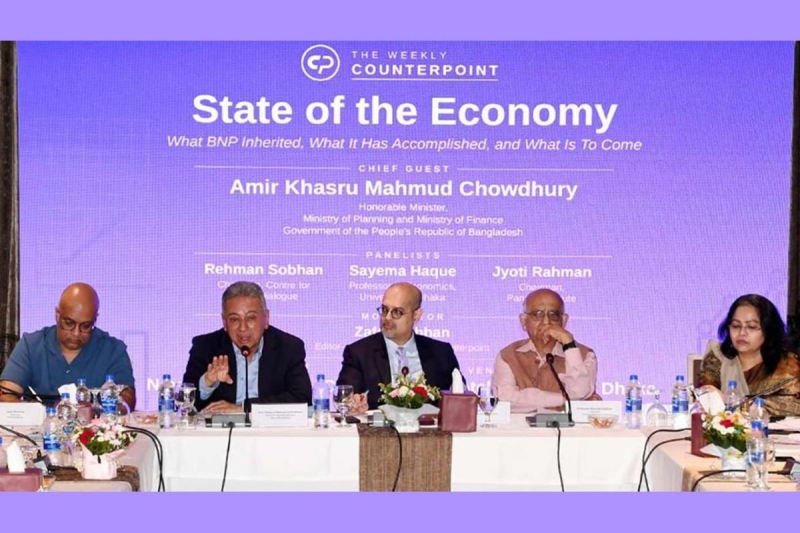
Finance Minister Amir Khosru Mahmud Chowdhury has said Bangladesh's economy is beginning to recover through efforts to control inflation, introduce alternative financing initiatives and implement institutional reforms.
He said overall inflation had declined from 9.42% in May to 8.27% in October. The government aims to reduce inflation by a further 2–3 percentage points, bringing it close to 6%.
The finance minister made the remarks while speaking as the chief guest at a seminar titled “State of the Economy: What BNP Inherited, What It Has Accomplished and What Is to Come” at a hotel in the capital on Saturday.
He said inflation was at the centre of the government's economic policymaking. It has two components: domestic and imported inflation. Higher international prices of oil and gas have increased fertiliser and transportation costs, limiting the government's ability to control imported inflation.
However, to reduce domestic inflation, the government has lowered duties and taxes on food products and raw materials used by food-producing industries, he said.
The finance minister said inflation had reached around 9.70% under the previous administration before falling to 8.27% in October. During the same period, food inflation declined from 14.10% to 6.40%, he added.
To ease the pressure of rising prices on low-income people, the government is expanding its social safety net programmes, he said. Currently, 5 million families receive Tk2,500 each per month through family cards. The government plans to gradually expand the programme to cover 20 million families.
He also mentioned government support for farmers in purchasing seeds and fertilisers, rice distribution programmes and the approval of six hospitals for workers.
The government is also working to introduce universal healthcare, prioritise preventive healthcare and develop the pharmaceutical industry, he said.
On the country's debt situation, the finance minister said that despite the burden of past borrowing and rising expenditure, all debt instalments were being paid on time. Bangladesh had not defaulted on any debt repayment, he said.
He added that a separate debt management department was being established to ensure transparency and accountability in debt management. Through the department, citizens would be able to access information on the country's actual debt situation and per capita debt.