

- Bangladesh Heads to First Gen Z-Driven Competitive Poll |
- EC Lifts Mobile Phone Ban, Bars Photos Inside Booths |
- Youth participation vital to BD’s democratic future: C’wealth Group |
- Stocks retreat on week’s first trading day as turnover drops |
- Free education for girls up to honours if BNP wins: Zubaida Rahman |
Govt approves BPSC amendment ordinance, key national policies
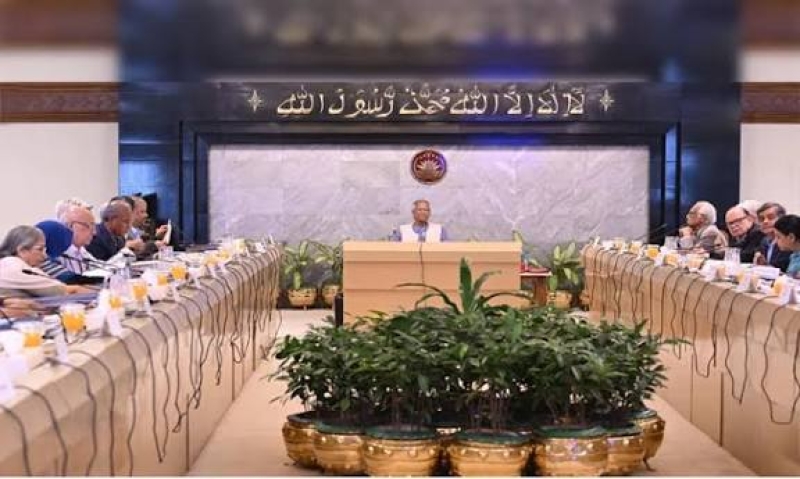
The Council of Advisers today approved the drafts of the Bangladesh Public Service Commission (BPSC) (Amendment) Ordinance, 2026, the Bangladesh National Qualifications Framework (BNQF) Policy, 2026 and the National Fisheries Policy, 2026.
The approvals were given at a special meeting of the Council of Advisers at the Chief Advisers' Office (CAO) in Tejgaon, with Chief Adviser Professor Muhammad Yunus in the chair.
The Council also approved a proposal to ratify the Implementing Agreement between the Qatar Armed Forces and the Bangladesh Armed Forces concerning the deputation (secondment) of officers, military personnel and civilians.
Besides, policy-level approval was given to recommendations submitted by the Bangladesh Economic Zones Authority (BEZA) from the report of a committee on the establishment of a Bangladesh Free Trade Zone.
Chief Adviser's Press Secretary Shafiqul Alam later briefed the media at the Foreign Service Academy, outlining the outcomes of the meeting.
Explaining the BNQF Policy, Alam said the framework has been designed as a dynamic and inclusive qualification pathway. The key objectives of the policy are to clearly define qualifications across all streams of education-general, technical and madrasah-at every level.
Te policy, he said, aims to create an open and flexible qualification system that supports lifelong learning through recognition of prior learning and learning transfers, enhances employability, and facilitates both vertical and horizontal mobility of workers across institutions, sectors and countries.
The framework will ensure national, regional and international recognition of qualifications, enable comparability and equivalence of learning outcomes, and establish clear entry and exit pathways between different education systems.
The BNQF Policy is intended to guide human capital development and help determine learners' education and career trajectories, reports BSS.