

- 8 workers burnt in N’gan Akij Cement factory boiler blast |
- Ex-Shibir activist shot dead in Fatikchhari |
- Class X student brutally murdered in capital’s Banasree |
- 'Bodycams' to be used at risky polling centres: IGP Baharul |
- 7,359 people killed in road accidents in 2025: Road Safety Foundation |
Despite ample supply, winter vegetables costly in Lalmonirhat
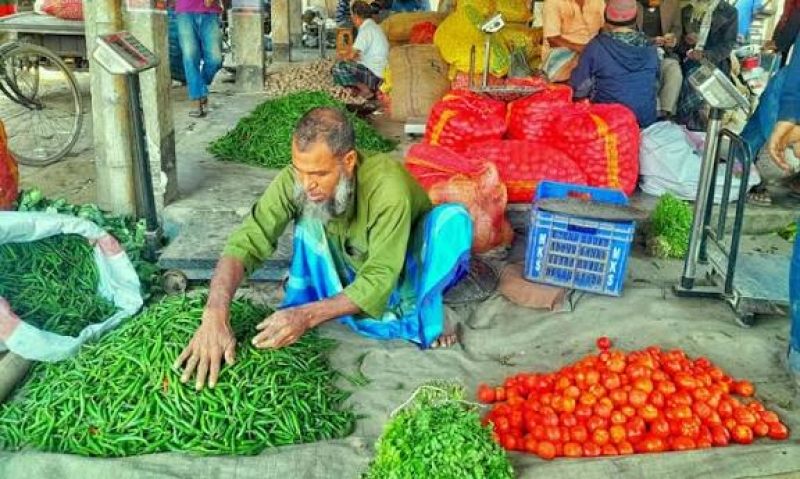
Prices of winter vegetables are still relatively high despite adequate supply at kitchen markets in Lalmonirhat, adding to the woes of people with fixed income already overburdened with soaring prices of daily essentials.
During the peak winter season, kitchen markets in five upazilas of the district including—Patgram, Hatibandha, Kaliganj, Aditmari and Lalmonirhat Sadar—are brimming with winter vegetables.
Cauliflower, cabbage, beans, carrots, radish, tomatoes, spinach and other winter produce are available in abundance, yet their prices remain sharp.
During a recent visit to the market on Saturday (Jan 10) this UNB Correspondent found that potatoes are being sold at Tk 30–40 per kg, eggplant at Tk 50–60 per kg, tomatoes at Tk 70 per kg, carrots at Tk 40 per kg, beans at Tk 60 per kg, pumpkin at Tk 50 per piece, raw bananas at Tk 30 per dozen, ladies finger beans at Tk 60 per kg, pointed gourd Tk 60 per kg, bottle gourd Tk 40–60 per piece depending on size, cauliflower at Tk 40 per piece, cabbage at Tk 50 per piece, papaya at Tk 30 per kg, radish Tk 40 per kg, sponge gourd at Tk 50 per piece, bitter gourd at Tk 50 per kg, red spinach at Tk 20 per bunch and mustard leaves at Tk 20 per bunch.
Customers are negotiating prices with vendors, often moving from one stall to another in search of better deals.
Consumers said the high prices of vegetables throughout the year put pressure on household budgets and while winter usually brings some relief, the relief is minimal this year.
Salma Begum, a housewife from Shialkhowa, said that earlier they used to buy a few vegetables for 200–300 taka. Now, with the same amount of money, one can't even fill a bag with vegetables and even the variety in the family's meals is decreasing.
Another buyer, Samad Mia, an office employee at an organisation, said that because vegetable prices are high, they no longer have the opportunity to eat vegetables regularly. Winter was supposed to be truly comfortable for middle-class people like us, but now it is not.
Saiful Islam, a vegetable seller, said, “Production usually rises in winter, but this year cold weather has affected supply, keeping prices relatively high.”
Mohammad Helal Mia, a seller from Namuri market, added, farmers should have brought more vegetables to the market, but the sudden cold has disrupted supply, reports UNB.
Another seller said that although higher prices increase profit per unit, fewer buyers mean overall sales remain unsatisfactory.
“If the price is lower, people buy more. This way, our products don't remain unsold either,” he said.
According to the stakeholders, if weather conditions are not favorable, vegetable prices may remain high throughout the winter season.