

- FY27 Budget Reflects Public Aspirations: Khosru |
- 3 Red Cards Mar Mexico vs South Africa World Cup Opener |
- Hwang In-beom inspires South Korea's 2-1 victory over Czech Republic |
- TIN mandatory for opening bank Ac; excise duty ceiling Tk 4 lakh |
- Tk 9.38 lakh crore budget with Tk 2.43 cr deficit placed |
Chief Justice Syed Refaat Ahmed retires today
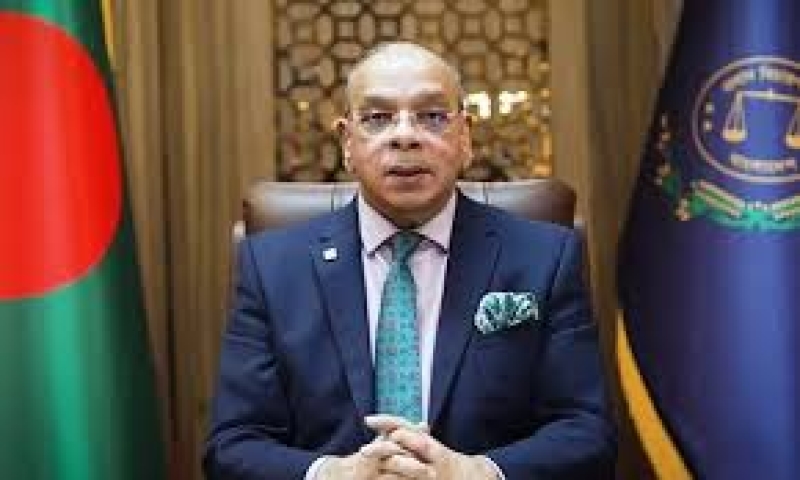
The country's 25th Chief Justice Dr Syed Refaat Ahmed will retire today upon attaining the age of 67, as mandated by the Constitution.
Meanwhile, Justice Zubayer Rahman Chowdhury of the Appellate Division of the Supreme Court has already been appointed as the country's 26th Chief Justice.
Dr Syed Refaat Ahmed took oath as the Chief Justice on August 11, 2024, following the July Mass Uprising.
A former student of Dhaka University, Dr Ahmed obtained his law degree with first-class honours from Wadham College, University of Oxford, UK. He later earned a Master of Arts in Law and Diplomacy (MALD) and a PhD from the Fletcher School at Tufts University in the United States.
Syed Refaat Ahmed served in the United Nations High Commissioner for Refugees (UNHCR) as an immigration law expert.
Syed Refaat became a lawyer in the Dhaka District Court in 1984 and in the High Court Division in 1986. On 27 April 2003, he was appointed an Additional Judge of the High Court and became a permanent judge two years later.
He is the son of Barrister Ishtiaq Ahmed, former Attorney General and adviser to the Caretaker Government on two occasions, and Dr Sufia Ahmed, the first female National Professor of Bangladesh and a language movement veteran who received the Ekushey Padak.
Soon after assuming office as Chief Justice, Dr Ahmed announced a roadmap for the country's judiciary. During his tenure, he took several milestone steps, including establishing a separate secretariat for the judiciary and formulating specific laws for judicial appointments, reports BSS.