

- Journalism Plays Critical Role in Disaster Response: UN |
- Iran Launches Fresh Ballistic Missile Attack On UAE |
- Only tourist police box on Kuakata beach about to disappear into sea |
- High Court Rejects Plea to Suspend Presidential Poll |
- PM calls for broader tax net, people-friendly revenue system |
Journalism Plays Critical Role in Disaster Response: UN
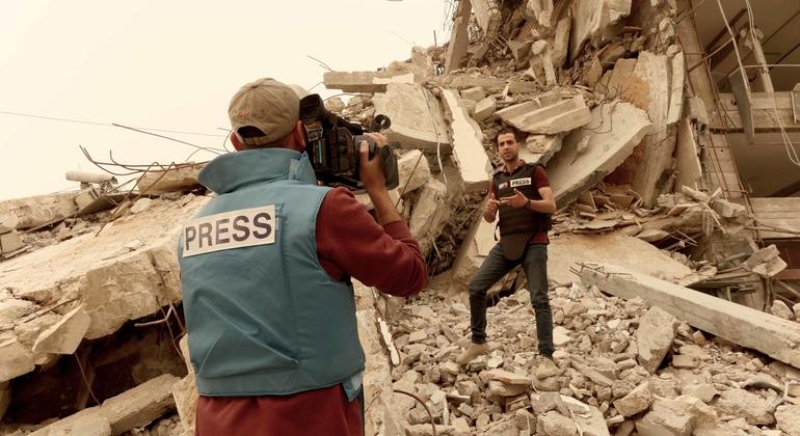
Palestinian journalists cover the impact of the war in Gaza. (file)
A free press can play a critical role in saving lives, strengthening disaster preparedness and improving humanitarian responses, according to a new UN report.
A single New York Times article about a disaster generated an additional $500,000 in official aid, highlighting the tangible impact journalism can have during emergencies.
The report, titled The Value of Journalism: Global Evidence on Why Media Matters to Economies, National Security and Crises, was released Tuesday by the UN Educational, Scientific and Cultural Organization (UNESCO).
It examines the role of journalism in responding to disasters, public health emergencies, human rights crises and climate-related threats.
According to the report, press freedom is associated with lower risks of conflict, repression and human rights violations across countries. Trusted journalism can also help counter false information, strengthen government accountability and ensure affected communities can access essential assistance.
Good reporting can contribute to more effective disaster responses by highlighting urgent needs and putting pressure on governments and local authorities to act. Investigative journalism can also serve as a watchdog over humanitarian organisations, helping expose abuses and improve the delivery of aid.
Environmental reporting can similarly lead to stronger protection of ecosystems. In Thailand, reporting on wastewater discharge from a landfill prompted authorities to intervene, while investigations into illegal sand mining in Uganda contributed to a nationwide ban.
The report cited several other examples of journalism producing measurable public benefits.
In Burkina Faso, radio programmes warning caregivers about infant malaria, pneumonia and diarrhoea increased the rate at which children were taken to health centres. The programmes were associated with an average annual reduction of 7.15 percent in deaths among children under five, potentially saving an estimated 2,967 lives.
In California, a campaign by journalists at the Los Angeles Times contributed to the introduction of new building codes designed to make Los Angeles more resilient to earthquakes.
Research into radio broadcasting after a major earthquake also found that it helped reconnect separated families, encourage children to return to school and spread information about hygiene, safe drinking water and shelter.
In Nigeria, radio programmes aimed at countering COVID-19 misinformation and vaccine hesitancy helped regular listeners identify and challenge false narratives.
Countering disinformation
The report also warns that false information, rumours and disinformation can worsen crises by undermining communities' ability to prepare, respond and recover. In some cases, misinformation can even prevent humanitarian assistance from reaching people in need.
False reporting can also intensify conflicts and contribute to attacks against humanitarian workers. During the COVID-19 pandemic, the World Health Organization described the spread of harmful misinformation as an “infodemic”.
One study estimated that COVID-19 disinformation contributed to nearly 2.3 million cases and 66,000 hospitalisations in the United States in 2021, resulting in billions of dollars in additional hospitalisation costs and thousands of avoidable deaths.
Trusted journalism, the report said, can help counter such narratives by providing reliable information and conveying expert advice.
Journalism can boost aid
News coverage can also influence humanitarian funding and charitable donations.
British journalist Michael Buerk's reporting from Ethiopia during the 1984 famine for the BBC is credited with helping raise more than $200 million for famine relief.
A photograph by Turkish photojournalist Nilüfer Demir of the drowned Syrian child Alan Kurdi in 2015 drew worldwide attention to the refugee crisis and was followed by a sharp increase in donations to some humanitarian organisations.
Journalism can also expose problems within the aid sector itself. Investigations surrounding the #AidToo scandal revealed allegations of abuse of power and a culture of impunity involving humanitarian organisations working in Haiti.
The report concludes that journalism is not merely a source of information during crises. Independent and trusted reporting can help save lives, mobilise resources, strengthen accountability and enable communities to respond more effectively to disasters and emergencies.